 Add to Chrome
 Add to Firefox
 Add to Edge
An Essay concerning machine understanding
May 03, 2024
Artificial intelligence systems exhibit many useful capabilities, but they appear to lack understanding. This essay describes how we could go about constructing a machine capable of understanding. As John Locke (1689) pointed out words are signs for ideas, which we can paraphrase as thoughts and concepts. To understand a word is to know and be able to work with the underlying concepts for which it is an indicator. Understanding between a speaker and a listener occurs when the speaker casts his or her concepts into words and the listener recovers approximately those same concepts. Current models rely on the listener to construct any potential meaning. The diminution of behaviorism as a psychological paradigm and the rise of cognitivism provide examples of many experimental methods that can be used to determine whether and to what extent a machine might understand and to make suggestions about how that understanding might be instantiated.

Probably Reasonable Search in eDiscovery
Jan 28, 2022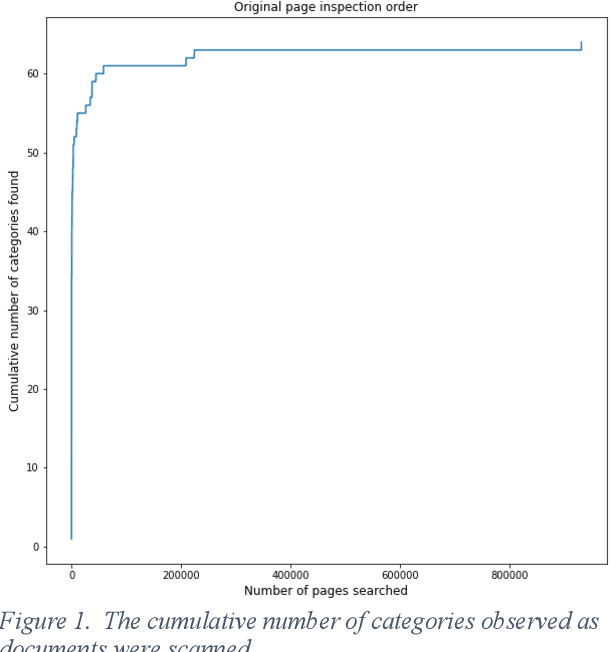
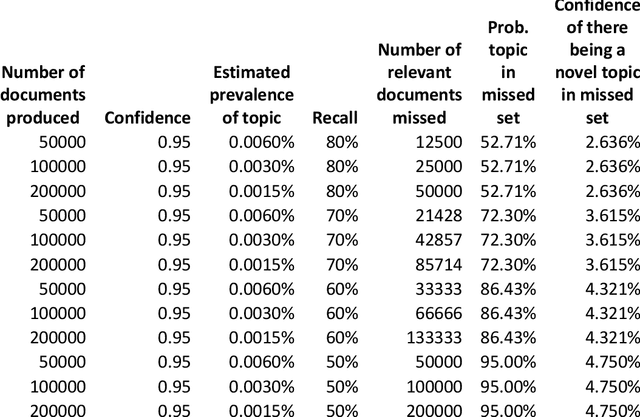
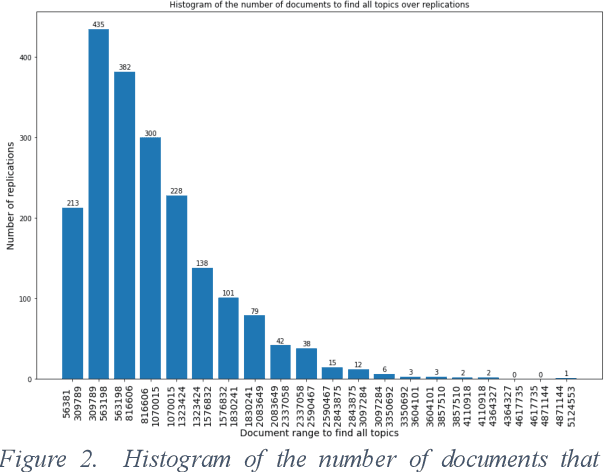
In eDiscovery, a party to a lawsuit or similar action must search through available information to identify those documents and files that are relevant to the suit. Search efforts tend to identify less than 100% of the relevant documents and courts are frequently asked to adjudicate whether the search effort has been reasonable, or whether additional effort to find more of the relevant documents is justified. This article provides a method for estimating the probability that significant additional information will be found from extended effort. Modeling and two data sets indicate that the probability that facts/topics exist among the so-far unidentified documents that have not been observed in the identified documents is low for even moderate levels of Recall.