 Add to Chrome
 Add to Firefox
 Add to Edge
Data Analytics using Ontologies of Management Theories: Towards Implementing 'From Theory to Practice'
Aug 28, 2016


We explore how computational ontologies can be impactful vis-a-vis the developing discipline of "data science." We posit an approach wherein management theories are represented as formal axioms, and then applied to draw inferences about data that reside in corporate databases. That is, management theories would be implemented as rules within a data analytics engine. We demonstrate a case study development of such an ontology by formally representing an accounting theory in First-Order Logic. Though quite preliminary, the idea that an information technology, namely ontologies, can potentially actualize the academic cliche, "From Theory to Practice," and be applicable to the burgeoning domain of data analytics is novel and exciting.

Towards an Ontology-Driven Blockchain Design for Supply Chain Provenance
Aug 28, 2016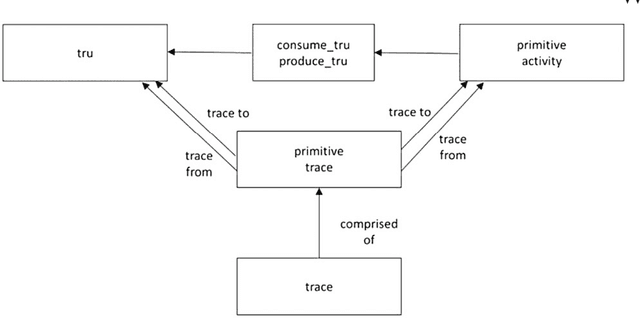


An interesting research problem in our age of Big Data is that of determining provenance. Granular evaluation of provenance of physical goods--e.g. tracking ingredients of a pharmaceutical or demonstrating authenticity of luxury goods--has often not been possible with today's items that are produced and transported in complex, inter-organizational, often internationally-spanning supply chains. Recent adoption of Internet of Things and Blockchain technologies give promise at better supply chain provenance. We are particularly interested in the blockchain as many favoured use cases of blockchain are for provenance tracking. We are also interested in applying ontologies as there has been some work done on knowledge provenance, traceability, and food provenance using ontologies. In this paper, we make a case for why ontologies can contribute to blockchain design. To support this case, we analyze a traceability ontology and translate some of its representations to smart contracts that execute a provenance trace and enforce traceability constraints on the Ethereum blockchain platform.