 Add to Chrome
 Add to Firefox
 Add to Edge
Unsupervised Learning for Missing Modalities in Multimodal Learning
Jun 14, 2026
This paper addresses the missing-modality challenge in multi-modal learning by introducing Unsupervised Learning for Missing Modalities in Multi-Modal Learning (UL4M4), a flexible framework that imputes missing feature embeddings in a task-independent manner before supervised prediction. We propose modality-specific normalization and a novel partial-modality distance metric to enable fair clustering of incomplete observations, capturing cross-modal structures while preserving scale-invariance across varying dimensionalities and modality counts. Cluster centers from this unsupervised stage guide an iterative greedy imputation process for any missing modalities during training or inference, supporting arbitrary numbers of modalities and arbitrary missing patterns per sample. The imputation module is lightweight, uses frozen encoders, and decouples from the downstream task, allowing easy integration with any fusion/prediction architecture. Extensive experiments under diverse and highly incomplete regimes demonstrate UL4M4's robustness, achieving, to the best of our knowledge, the first consistent F1-Micro scores above 0.7 on challenging missing configurations even when more than 50\% of modality slots are missing. Results are also stable across cluster sizes and significantly outperform state-of-the-art baselines. Code is available here: https://github.com/h-ismkhan/Multimodal-Learning-with-Missing-Modalities-via-Unsupervised-Learning.

Reinforcement Learning-Guided Retrieval with Soft Fusion for Robust Multimodal Imitation Learning under Missing Modalities
Jun 13, 2026Robotic systems perceive the world through multiple input modalities -- including visual camera streams and natural language instructions -- and must select appropriate actions based on these signals. However, assuming the permanent availability of all input devices is unrealistic, as sensors may fail, become occluded, or drop out entirely during deployment. Robust handling of such missing-modality scenarios is therefore essential for real-world robot operation. This paper introduces RL4IL, a reinforcement learning guided method for imitation learning that selects the most suitable action for a given observation by identifying the most relevant expert demonstrations from a training library. A reinforcement learning policy, trained via Proximal Policy Optimisation over Breadth-First Search candidate sets, ranks candidate demonstrations and a soft cross-attention fusion head aggregates their action signals to produce the final prediction. When a modality is missing at inference time, a dedicated per-modality RL retrieval policy identifies donor demonstrations from the training library, and a soft imputation head reconstructs the missing embedding via cross-attention over the top-ranked donors -- without requiring any retraining of the system. Experiments on three LIBERO benchmark suites demonstrate that RL4IL substantially outperforms state-of-the-art imitation learning methods under sensor dropout conditions, while requiring no policy network training. The code can be found at https://github.com/h-ismkhan/Reinforcement-Learning-via-kNN-for-Robotic-Learning-with-Missing-Camera
An initialization method for the k-means using the concept of useful nearest centers
May 10, 2017
The aim of the k-means is to minimize squared sum of Euclidean distance from the mean (SSEDM) of each cluster. The k-means can effectively optimize this function, but it is too sensitive for initial centers (seeds). This paper proposed a method for initialization of the k-means using the concept of useful nearest center for each data point.
Study of Some Recent Crossovers Effects on Speed and Accuracy of Genetic Algorithm, Using Symmetric Travelling Salesman Problem
Apr 10, 2015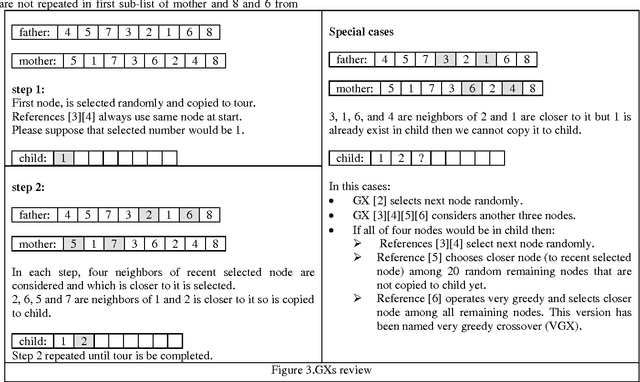
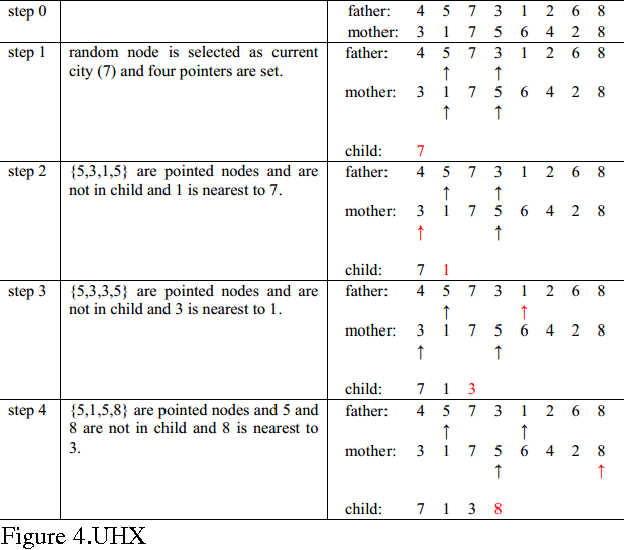
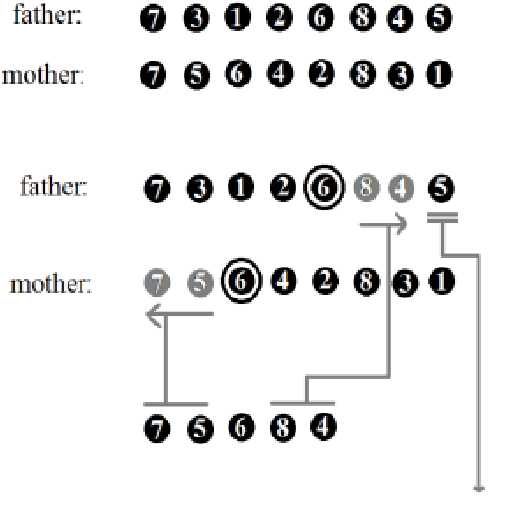
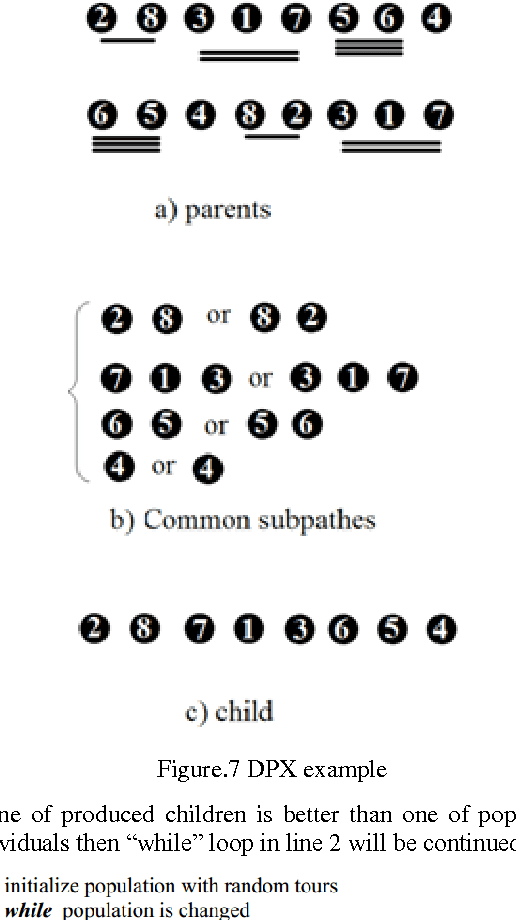
The Travelling Salesman Problem (TSP) is one of the most famous optimization problems. The Genetic Algorithm (GA) is one of metaheuristics that have been applied to TSP. The Crossover and mutation operators are two important elements of GA. There are many TSP solver crossover operators. In this paper, we state implementation of some recent TSP solver crossovers at first and then we use each of them in GA to solve some Symmetric TSP (STSP) instances and finally compare their effects on speed and accuracy of presented GA.
Using Ants as a Genetic Crossover Operator in GLS to Solve STSP
Nov 12, 2014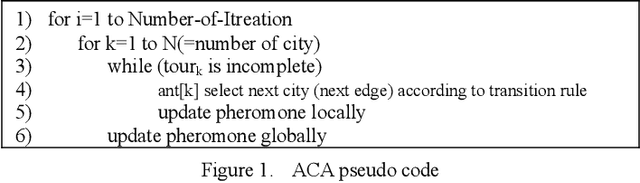
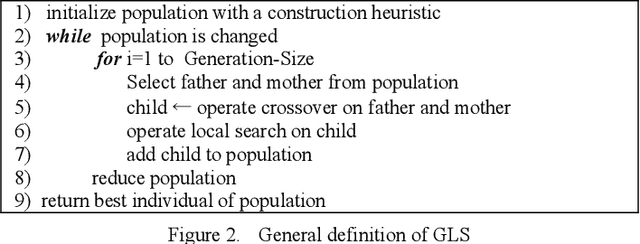
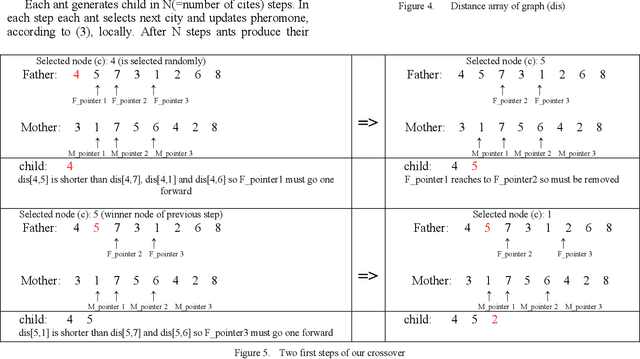
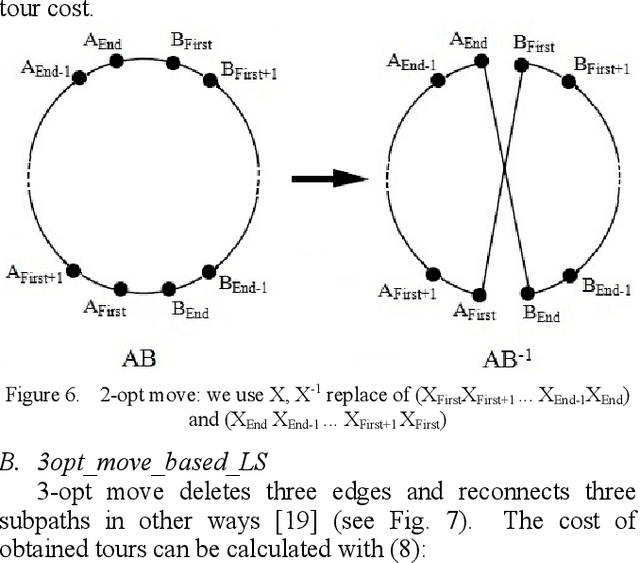
Ant Colony Algorithm (ACA) and Genetic Local Search (GLS) are two optimization algorithms that have been successfully applied to the Traveling Salesman Problem (TSP). In this paper we define new crossover operator then redefine ACAs ants as operate according to defined crossover operator then put forward our GLS that uses these ants to solve Symmetric TSP (STSP) instances.
Accelerating the ANT Colony Optimization By Smart ANTs, Using Genetic Operator
Nov 11, 2014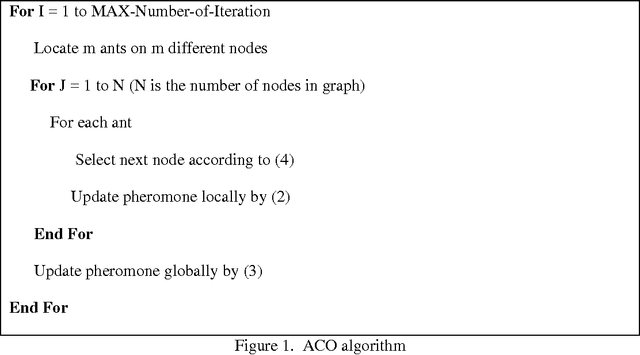
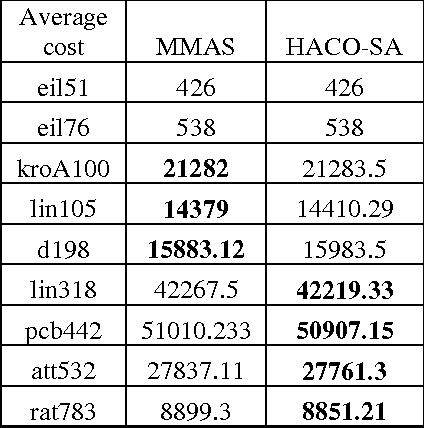
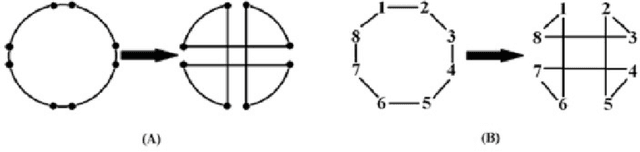
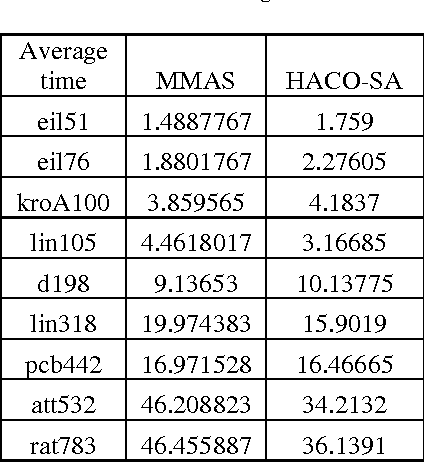
This paper research review Ant colony optimization (ACO) and Genetic Algorithm (GA), both are two powerful meta-heuristics. This paper explains some major defects of these two algorithm at first then proposes a new model for ACO in which, artificial ants use a quick genetic operator and accelerate their actions in selecting next state. Experimental results show that proposed hybrid algorithm is effective and its performance including speed and accuracy beats other version.
Developing Improved Greedy Crossover to Solve Symmetric Traveling Salesman Problem
Sep 24, 2012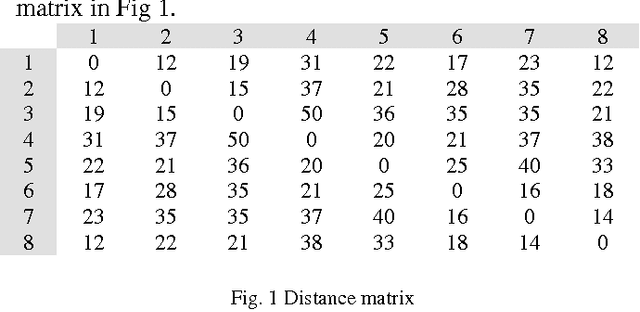
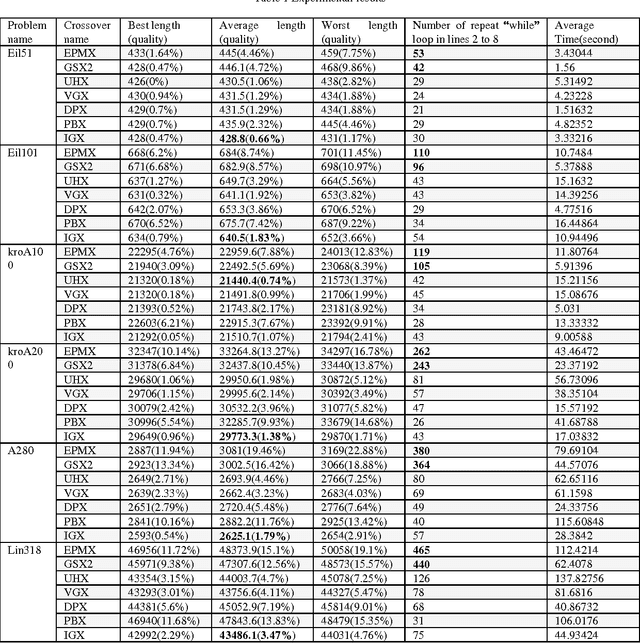
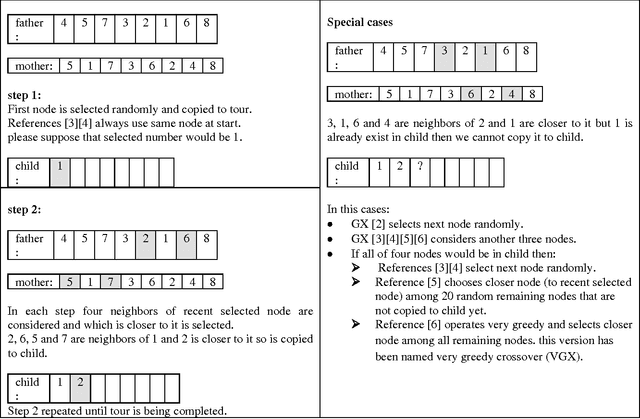
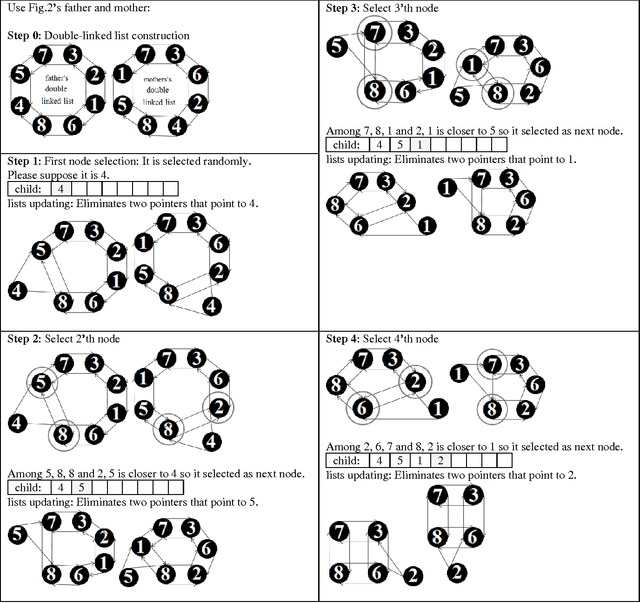
The Traveling Salesman Problem (TSP) is one of the most famous optimization problems. Greedy crossover designed by Greffenstette et al, can be used while Symmetric TSP (STSP) is resolved by Genetic Algorithm (GA). Researchers have proposed several versions of greedy crossover. Here we propose improved version of it. We compare our greedy crossover with some of recent crossovers, we use our greedy crossover and some recent crossovers in GA then compare crossovers on speed and accuracy.