 Add to Chrome
 Add to Firefox
 Add to Edge
Self-Supervised Learning for Android Malware Detection on a Time-Stamped Dataset
Apr 24, 2026
Android malware detectors built with machine learning often suffer from temporal bias: models are trained and evaluated without respecting apps' actual release times, inflating accuracy and weakening real-world robustness. We address this by constructing a time-stamped dataset of benign and malicious Android apps and introducing a timestamp-verification procedure to ensure temporal accuracy. We then propose a detection framework that uses Bootstrap Your Own Latent (BYOL) for self-supervised pre-training to learn obfuscation-resilient representations, followed by supervised classification. Under time-aware evaluation, the method attains 98% accuracy and 89% F1. We further characterize malware behavior by analyzing true positives and false negatives using VirusTotal and the MITRE ATT&CK framework. To support reproducibility and further innovation, we release our dataset and source code.

Evaluation of dynamic characteristics of power grid based on GNN and application on knowledge graph
Nov 28, 2023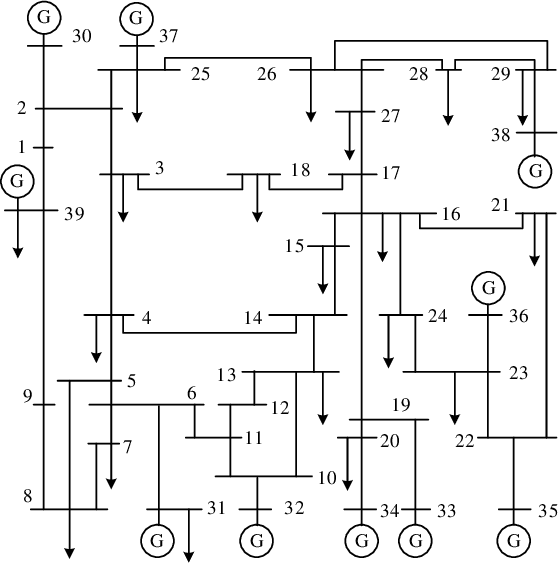
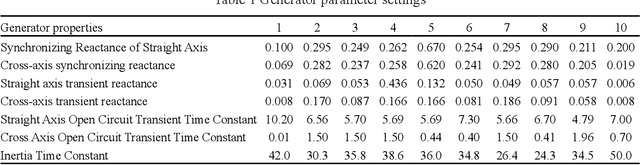
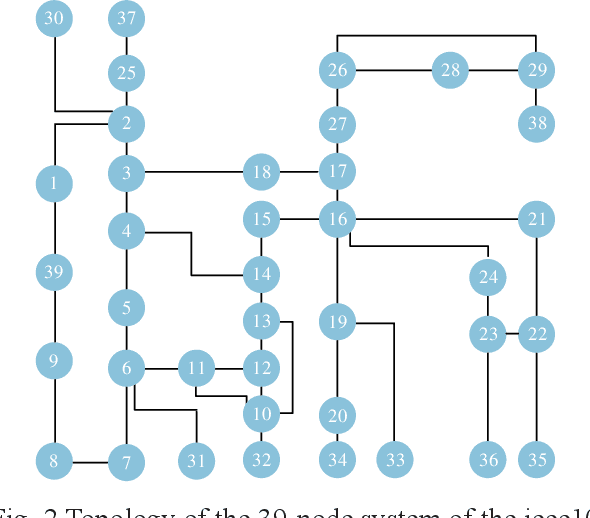
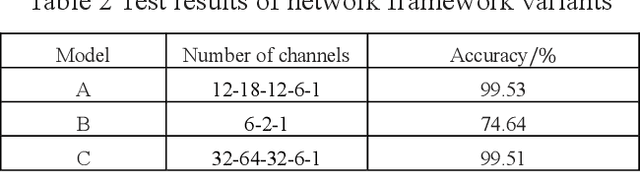
A novel method for detecting faults in power grids using a graph neural network (GNN) has been developed, aimed at enhancing intelligent fault diagnosis in network operation and maintenance. This GNN-based approach identifies faulty nodes within the power grid through a specialized electrical feature extraction model coupled with a knowledge graph. Incorporating temporal data, the method leverages the status of nodes from preceding and subsequent time periods to aid in current fault detection. To validate the effectiveness of this GNN in extracting node features, a correlation analysis of the output features from each node within the neural network layer was conducted. The results from experiments show that this method can accurately locate fault nodes in simulated scenarios with a remarkable 99.53% accuracy. Additionally, the graph neural network's feature modeling allows for a qualitative examination of how faults spread across nodes, providing valuable insights for analyzing fault nodes.