 Add to Chrome
 Add to Firefox
 Add to Edge
An Interpretable Local Editing Model for Counterfactual Medical Image Generation
Feb 28, 2026
Counterfactual medical image generation have emerged as a critical tool for enhancing AI-driven systems in medical domain by answering "what-if" questions. However, existing approaches face two fundamental limitations: First, they fail to prevent unintended modifications, resulting collateral changes in demographic attributes when only disease features should be affected. Second, they lack interpretability in their editing process, which significantly limits their utility in real-world medical applications. To address these limitations, we present InstructX2X, a novel interpretable local editing model for counterfactual medical image generation featuring Region-Specific Editing. This approach restricts modifications to specific regions, effectively preventing unintended changes while simultaneously providing a Guidance Map that offers inherently interpretable visual explanations of the editing process. Additionally, we introduce MIMIC-EDIT-INSTRUCTION, a dataset for counterfactual medical image generation derived from expert-verified medical VQA pairs. Through extensive experiments, InstructX2X achieve state-of-the-art performance across all major evaluation metrics. Our model successfully generates high-quality counterfactual chest X-ray images along with interpretable explanations.

HEISIR: Hierarchical Expansion of Inverted Semantic Indexing for Training-free Retrieval of Conversational Data using LLMs
Mar 06, 2025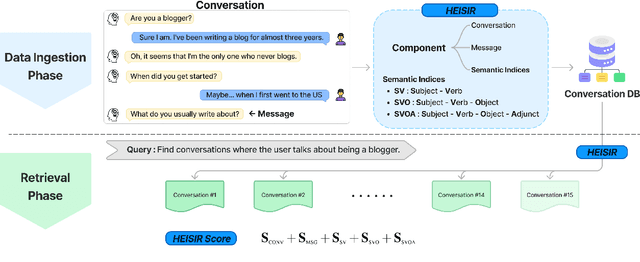
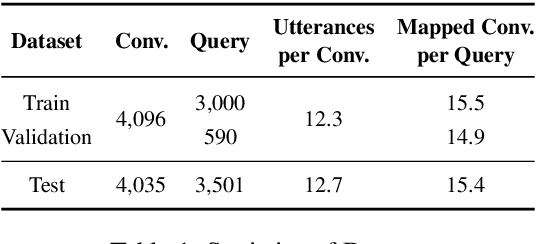
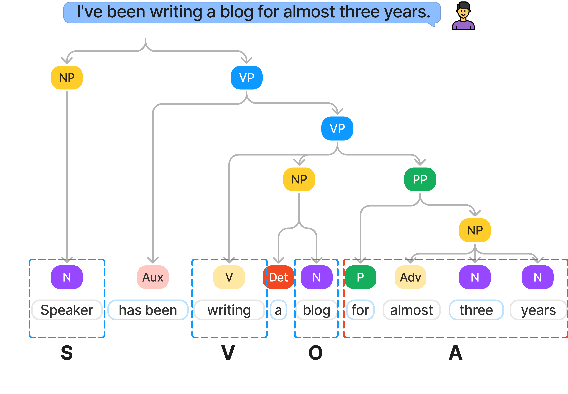
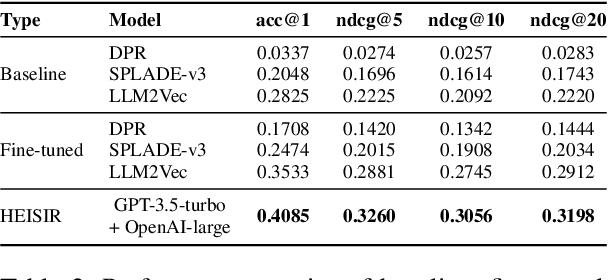
The growth of conversational AI services has increased demand for effective information retrieval from dialogue data. However, existing methods often face challenges in capturing semantic intent or require extensive labeling and fine-tuning. This paper introduces HEISIR (Hierarchical Expansion of Inverted Semantic Indexing for Retrieval), a novel framework that enhances semantic understanding in conversational data retrieval through optimized data ingestion, eliminating the need for resource-intensive labeling or model adaptation. HEISIR implements a two-step process: (1) Hierarchical Triplets Formulation and (2) Adjunct Augmentation, creating semantic indices consisting of Subject-Verb-Object-Adjunct (SVOA) quadruplets. This structured representation effectively captures the underlying semantic information from dialogue content. HEISIR achieves high retrieval performance while maintaining low latency during the actual retrieval process. Our experimental results demonstrate that HEISIR outperforms fine-tuned models across various embedding types and language models. Beyond improving retrieval capabilities, HEISIR also offers opportunities for intent and topic analysis in conversational data, providing a versatile solution for dialogue systems.