 Add to Chrome
 Add to Firefox
 Add to Edge
Backtranslation Augmented Direct Preference Optimization for Neural Machine Translation
Apr 28, 2026
Contemporary neural machine translation (NMT) systems are almost exclusively built by training on supervised parallel data. Despite the tremendous progress achieved, these systems still exhibit persistent translation errors. This paper proposes that a post-training paradigm based on reinforcement learning (RL) can effectively rectify such mistakes. We introduce a novel framework that requires only a general text corpus and an expert translator which can be either human or an AI system to provide iterative feedback. In our experiments, we focus specifically on English-to-German translation as a representative high-resource language pair. Crucially, we implement this RL-based post-training using Direct Preference Optimization (DPO). Applying our DPO-driven framework to the gemma3-1b model yields a significant improvement in translation quality, elevating it's COMET score from 0.703 to 0.747 on the English to German task. The results demonstrate that DPO offers an efficient and stable pathway for enhancing pre-trained NMT models through preference-based post-training.

Leveraging Online Data to Enhance Medical Knowledge in a Small Persian Language Model
May 21, 2025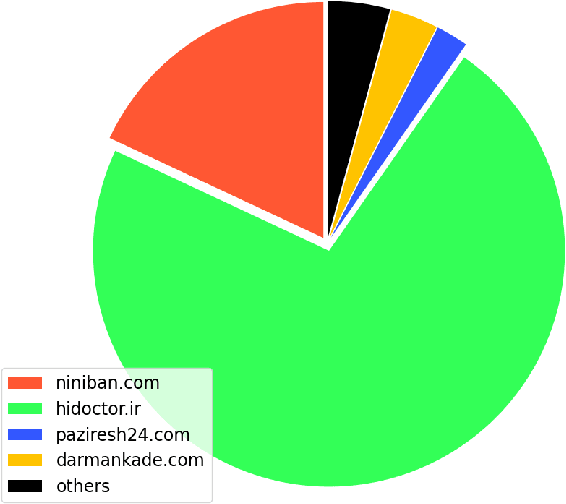
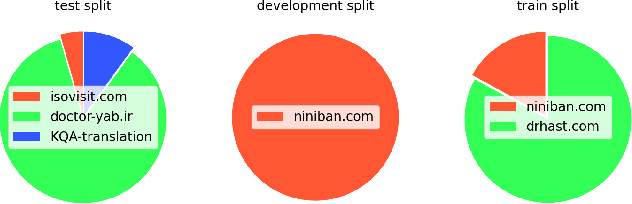
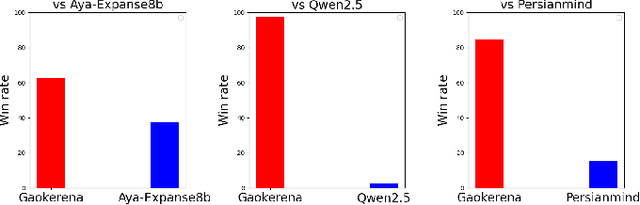
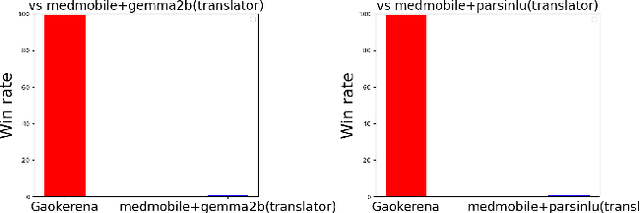
The rapid advancement of language models has demonstrated the potential of artificial intelligence in the healthcare industry. However, small language models struggle with specialized domains in low-resource languages like Persian. While numerous medical-domain websites exist in Persian, no curated dataset or corpus has been available making ours the first of its kind. This study explores the enhancement of medical knowledge in a small language model by leveraging accessible online data, including a crawled corpus from medical magazines and a dataset of real doctor-patient QA pairs. We fine-tuned a baseline model using our curated data to improve its medical knowledge. Benchmark evaluations demonstrate that the fine-tuned model achieves improved accuracy in medical question answering and provides better responses compared to its baseline. This work highlights the potential of leveraging open-access online data to enrich small language models in medical fields, providing a novel solution for Persian medical AI applications suitable for resource-constrained environments.