 Add to Chrome
 Add to Firefox
 Add to Edge
Hyperbolic Graph Embeddings: a Survey and an Evaluation on Anomaly Detection
Dec 21, 2025
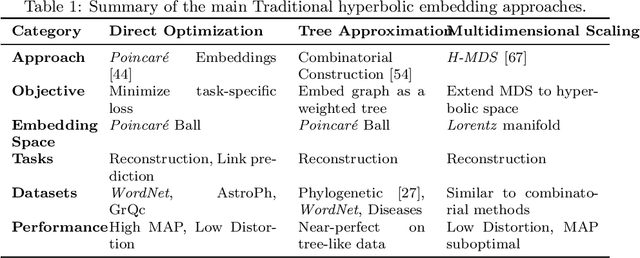
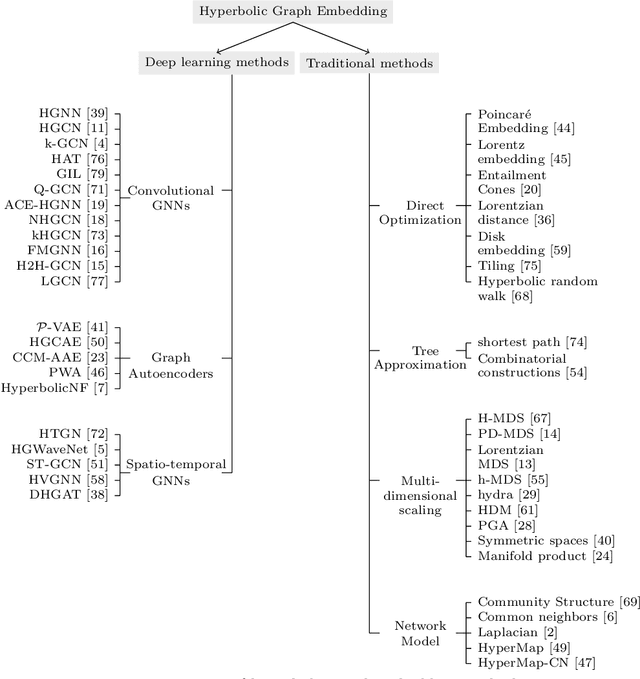
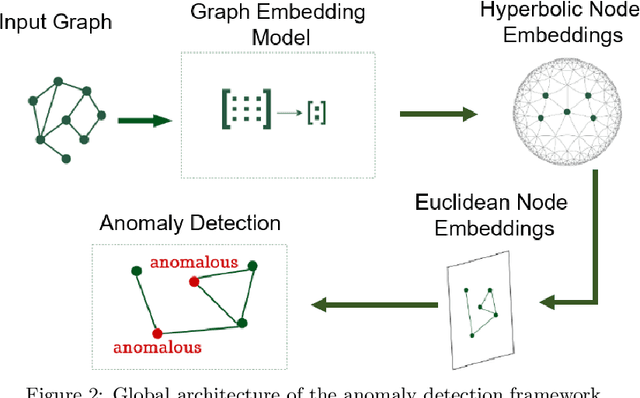
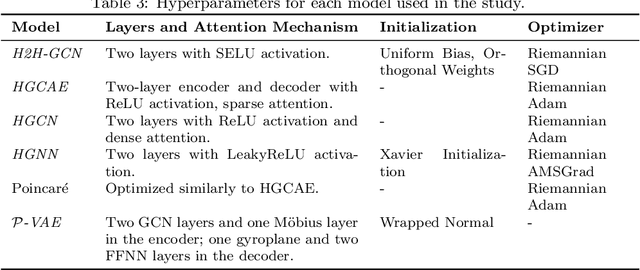
This survey reviews hyperbolic graph embedding models, and evaluate them on anomaly detection, highlighting their advantages over Euclidean methods in capturing complex structures. Evaluating models like \textit{HGCAE}, \textit{\(\mathcal{P}\)-VAE}, and \textit{HGCN} demonstrates high performance, with \textit{\(\mathcal{P}\)-VAE} achieving an F1-score of 94\% on the \textit{Elliptic} dataset and \textit{HGCAE} scoring 80\% on \textit{Cora}. In contrast, Euclidean methods like \textit{DOMINANT} and \textit{GraphSage} struggle with complex data. The study emphasizes the potential of hyperbolic spaces for improving anomaly detection, and provides an open-source library to foster further research in this field.

CONTINUUM: Detecting APT Attacks through Spatial-Temporal Graph Neural Networks
Jan 07, 2025
Advanced Persistent Threats (APTs) represent a significant challenge in cybersecurity due to their sophisticated and stealthy nature. Traditional Intrusion Detection Systems (IDS) often fall short in detecting these multi-stage attacks. Recently, Graph Neural Networks (GNNs) have been employed to enhance IDS capabilities by analyzing the complex relationships within networked data. However, existing GNN-based solutions are hampered by high false positive rates and substantial resource consumption. In this paper, we present a novel IDS designed to detect APTs using a Spatio-Temporal Graph Neural Network Autoencoder. Our approach leverages spatial information to understand the interactions between entities within a graph and temporal information to capture the evolution of the graph over time. This dual perspective is crucial for identifying the sequential stages of APTs. Furthermore, to address privacy and scalability concerns, we deploy our architecture in a federated learning environment. This setup ensures that local data remains on-premise while encrypted model-weights are shared and aggregated using homomorphic encryption, maintaining data privacy and security. Our evaluation shows that this system effectively detects APTs with lower false positive rates and optimized resource usage compared to existing methods, highlighting the potential of spatio-temporal analysis and federated learning in enhancing cybersecurity defenses.