 Add to Chrome
 Add to Firefox
 Add to Edge
Personalized Scorer Modeling: A Learning-Based Framework for Deriving Robust Sleep Stage Labels from Multiple Experts
Aug 12, 2026
Sleep stage classification is important for the diagnosis and management of sleep disorders, yet most automatic staging studies evaluate models against a single reference hypnogram despite known inter-scorer variability. This study investigates whether multi-scored datasets can be used to construct more reliable reference labels from the collective behavior of multiple experts. We use the publicly available DOD-H and DOD-O datasets. EEG (C3-M2) and chin EMG signals were segmented into 30-s epochs, and 30 features were extracted from each modality, yielding 60 features for EEG+EMG. We propose a learning-based hypnogram (LBH) that models the stage-specific behavior of each scorer using confusion matrices derived from machine-learning models. After column normalization, these matrices estimate the probability of each true sleep stage given each scorer's label; probabilities are aggregated across scorers to assign the final label for each epoch. LBH was evaluated with random forest, support vector machine, and multilayer perceptron classifiers under EEG-only and EEG+EMG settings, and compared with the dataset hypnogram (DH) and best-scorer hypnogram (BSH). LBH consistently improved overall performance. The best results were obtained with random forest and EEG+EMG, reaching 86.07% accuracy, 85.46% precision, and 85.29% F1-score on DOD-H, and 86.04% accuracy, 85.21% precision, and 84.70% F1-score on DOD-O. These findings suggest that personalized scorer modeling can improve reference hypnogram construction without discarding information from individual experts.

Class Activation Mapping in Explainable Computer Vision: A Method-Centered Review of CNN, Transformer, and Foundation-Model-Era Visual Explanations
Aug 12, 2026Class activation mapping (CAM) is one of the most widely used visual explanation families in explainable artificial intelligence. Its purpose is intuitive: it converts internal model evidence into a heatmap that highlights the image regions, convolutional channels, tokens, or patches that support a target class or concept. Since the first CAM formulation in 2016, the field has moved far beyond global-average-pooled CNN classifiers. CAM-style methods now include gradient-based post-hoc explanations, gradient-free score and ablation methods, high-resolution upscaling, weakly supervised localization and segmentation, transformer token attribution, causal and debiasing methods, and foundation-model-era approaches that use CLIP, DINO, SAM, or feature-distribution comparisons. This review synthesizes a strict corpus of 57 method-centered papers published from 2016 onward. The paper develops a taxonomy that separates methods by attribution mechanism, architectural dependence, and evaluation objective. It then reviews gradient-based CAMs, recent and hybrid CAM-style methods, and model-based or architecture-aware methods. Across the corpus, the main trend is clear: the field is shifting from explaining one class score in one low-resolution CNN layer toward comparative, multi-layer, probabilistic, token-aware, and foundation-model-aware explanations. At the same time, evaluation remains fragmented. Faithfulness, localization, robustness, computational cost, and human trust are often measured with different protocols. The review therefore emphasizes not only what each method contributes, but also which gap it leaves open and which later methods attempt to close that gap.
FCM-DNN: diagnosing coronary artery disease by deep accuracy Fuzzy C-Means clustering model
Feb 28, 2022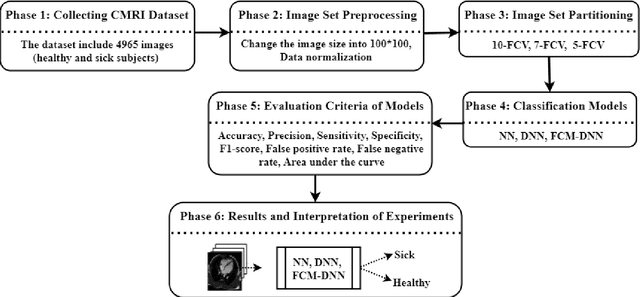
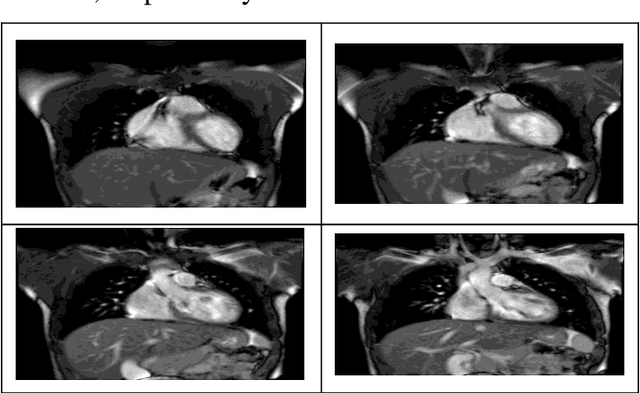

Cardiovascular disease is one of the most challenging diseases in middle-aged and older people, which causes high mortality. Coronary artery disease (CAD) is known as a common cardiovascular disease. A standard clinical tool for diagnosing CAD is angiography. The main challenges are dangerous side effects and high angiography costs. Today, the development of artificial intelligence-based methods is a valuable achievement for diagnosing disease. Hence, in this paper, artificial intelligence methods such as neural network (NN), deep neural network (DNN), and Fuzzy C-Means clustering combined with deep neural network (FCM-DNN) are developed for diagnosing CAD on a cardiac magnetic resonance imaging (CMRI) dataset. The original dataset is used in two different approaches. First, the labeled dataset is applied to the NN and DNN to create the NN and DNN models. Second, the labels are removed, and the unlabeled dataset is clustered via the FCM method, and then, the clustered dataset is fed to the DNN to create the FCM-DNN model. By utilizing the second clustering and modeling, the training process is improved, and consequently, the accuracy is increased. As a result, the proposed FCM-DNN model achieves the best performance with a 99.91% accuracy specifying 10 clusters, i.e., 5 clusters for healthy subjects and 5 clusters for sick subjects, through the 10-fold cross-validation technique compared to the NN and DNN models reaching the accuracies of 92.18% and 99.63%, respectively. To the best of our knowledge, no study has been conducted for CAD diagnosis on the CMRI dataset using artificial intelligence methods. The results confirm that the proposed FCM-DNN model can be helpful for scientific and research centers.
Coronary Artery Disease Diagnosis; Ranking the Significant Features Using Random Trees Model
Jan 16, 2020
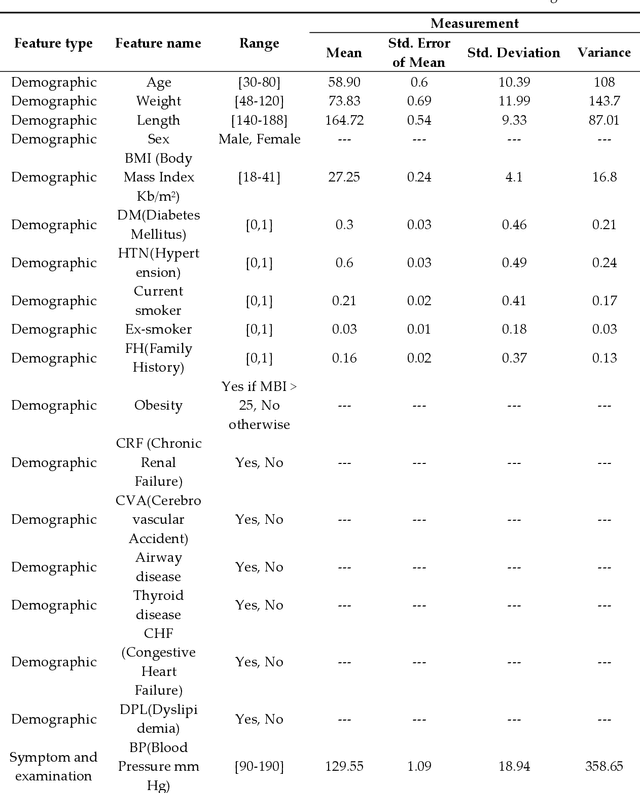
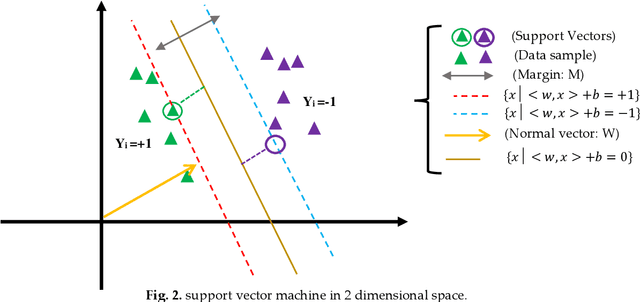
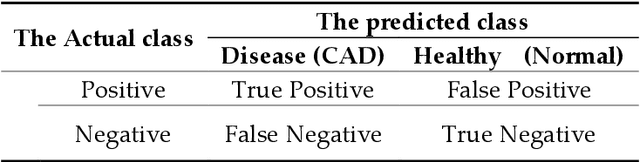
Heart disease is one of the most common diseases in middle-aged citizens. Among the vast number of heart diseases, the coronary artery disease (CAD) is considered as a common cardiovascular disease with a high death rate. The most popular tool for diagnosing CAD is the use of medical imaging, e.g., angiography. However, angiography is known for being costly and also associated with a number of side effects. Hence, the purpose of this study is to increase the accuracy of coronary heart disease diagnosis through selecting significant predictive features in order of their ranking. In this study, we propose an integrated method using machine learning. The machine learning methods of random trees (RTs), decision tree of C5.0, support vector machine (SVM), decision tree of Chi-squared automatic interaction detection (CHAID) are used in this study. The proposed method shows promising results and the study confirms that RTs model outperforms other models.