 Add to Chrome
 Add to Firefox
 Add to Edge
T2I-BiasBench: A Multi-Metric Framework for Auditing Demographic and Cultural Bias in Text-to-Image Models
Apr 14, 2026
Text-to-image (T2I) generative models achieve impressive visual fidelity but inherit and amplify demographic imbalances and cultural biases embedded in training data. We introduce T2I-BiasBench, a unified evaluation framework of thirteen complementary metrics that jointly captures demographic bias, element omission, and cultural collapse in diffusion models - the first framework to address all three dimensions simultaneously. We evaluate three open-source models - Stable Diffusion v1.5, BK-SDM Base, and Koala Lightning - against Gemini 2.5 Flash (RLHF-aligned) as a reference baseline. The benchmark comprises 1,574 generated images across five structured prompt categories. T2I-BiasBench integrates six established metrics with seven additional measures: four newly proposed (Composite Bias Score, Grounded Missing Rate, Implicit Element Missing Rate, Cultural Accuracy Ratio) and three adapted (Hallucination Score, Vendi Score, CLIP Proxy Score). Three key findings emerge: (1) Stable Diffusion v1.5 and BK-SDM exhibit bias amplification (>1.0) in beauty-related prompts; (2) contextual constraints such as surgical PPE substantially attenuate professional-role gender bias (Doctor CBS = 0.06 for SD v1.5); and (3) all models, including RLHF-aligned Gemini, collapse to a narrow set of cultural representations (CAS: 0.54-1.00), confirming that alignment techniques do not resolve cultural coverage gaps. T2I-BiasBench is publicly released to support standardized, fine-grained bias evaluation of generative models. The project page is available at: https://gyanendrachaubey.github.io/T2I-BiasBench/

RibCageImp: A Deep Learning Framework for 3D Ribcage Implant Generation
Nov 14, 2024
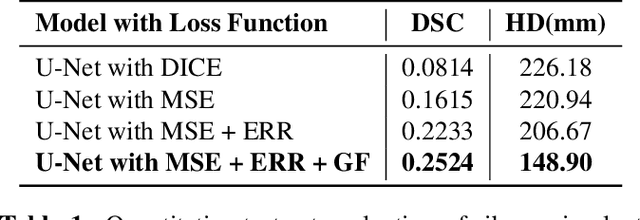
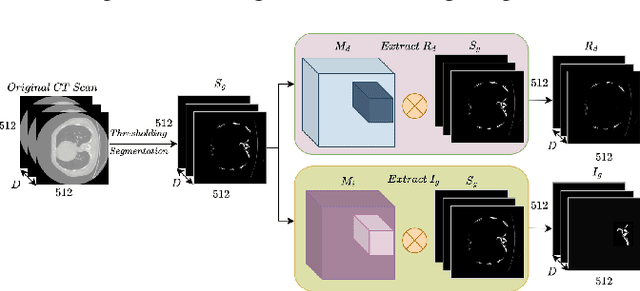
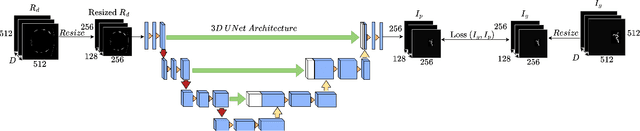
The recovery of damaged or resected ribcage structures requires precise, custom-designed implants to restore the integrity and functionality of the thoracic cavity. Traditional implant design methods rely mainly on manual processes, making them time-consuming and susceptible to variability. In this work, we explore the feasibility of automated ribcage implant generation using deep learning. We present a framework based on 3D U-Net architecture that processes CT scans to generate patient-specific implant designs. To the best of our knowledge, this is the first investigation into automated thoracic implant generation using deep learning approaches. Our preliminary results, while moderate, highlight both the potential and the significant challenges in this complex domain. These findings establish a foundation for future research in automated ribcage reconstruction and identify key technical challenges that need to be addressed for practical implementation.