 Add to Chrome
 Add to Firefox
 Add to Edge
MSGS: Multispectral 3D Gaussian Splatting
Apr 14, 2026
We present a multispectral extension to 3D Gaussian Splatting (3DGS) for wavelength-aware view synthesis. Each Gaussian is augmented with spectral radiance, represented via per-band spherical harmonics, and optimized under a dual-loss supervision scheme combining RGB and multispectral signals. To improve rendering fidelity, we perform spectral-to-RGB conversion at the pixel level, allowing richer spectral cues to be retained during optimization. Our method is evaluated on both public and self-captured real-world datasets, demonstrating consistent improvements over the RGB-only 3DGS baseline in terms of image quality and spectral consistency. Notably, it excels in challenging scenes involving translucent materials and anisotropic reflections. The proposed approach maintains the compactness and real-time efficiency of 3DGS while laying the foundation for future integration with physically based shading models.
* Published in IEEE ISMAR 2025 Adjunct

SSD-GS: Scattering and Shadow Decomposition for Relightable 3D Gaussian Splatting
Apr 14, 2026We present SSD-GS, a physically-based relighting framework built upon 3D Gaussian Splatting (3DGS) that achieves high-quality reconstruction and photorealistic relighting under novel lighting conditions. In physically-based relighting, accurately modeling light-material interactions is essential for faithful appearance reproduction. However, existing 3DGS-based relighting methods adopt coarse shading decompositions, either modeling only diffuse and specular reflections or relying on neural networks to approximate shadows and scattering. This leads to limited fidelity and poor physical interpretability, particularly for anisotropic metals and translucent materials. To address these limitations, SSD-GS decomposes reflectance into four components: diffuse, specular, shadow, and subsurface scattering. We introduce a learnable dipole-based scattering module for subsurface transport, an occlusion-aware shadow formulation that integrates visibility estimates with a refinement network, and an enhanced specular component with an anisotropic Fresnel-based model. Through progressive integration of all components during training, SSD-GS effectively disentangles lighting and material properties, even for unseen illumination conditions, as demonstrated on the challenging OLAT dataset. Experiments demonstrate superior quantitative and perceptual relighting quality compared to prior methods and pave the way for downstream tasks, including controllable light source editing and interactive scene relighting. The source code is available at: https://github.com/irisfreesiri/SSD-GS.
Federated Diabetes Prediction in Canadian Adults Using Real-world Cross-Province Primary Care Data
Aug 21, 2024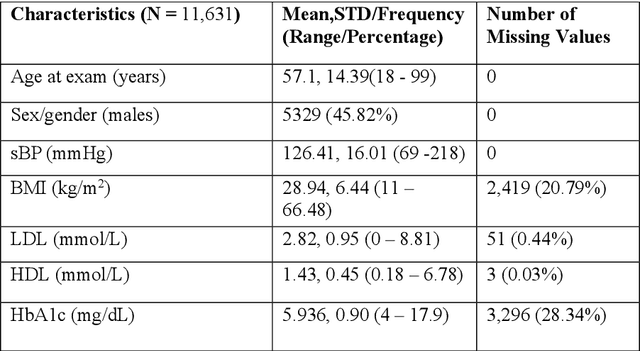
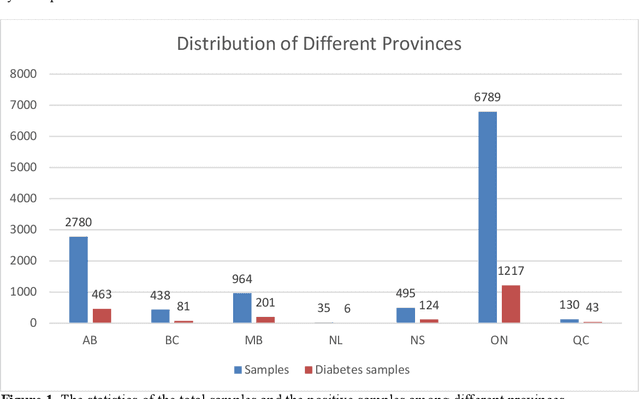
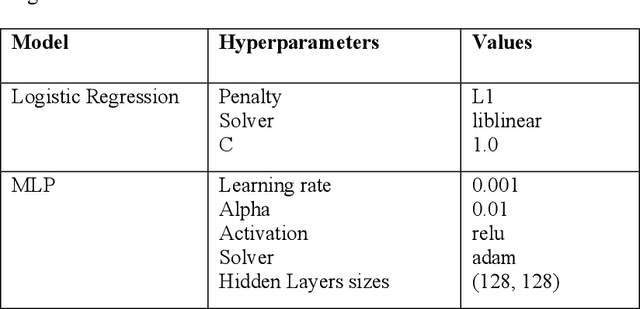
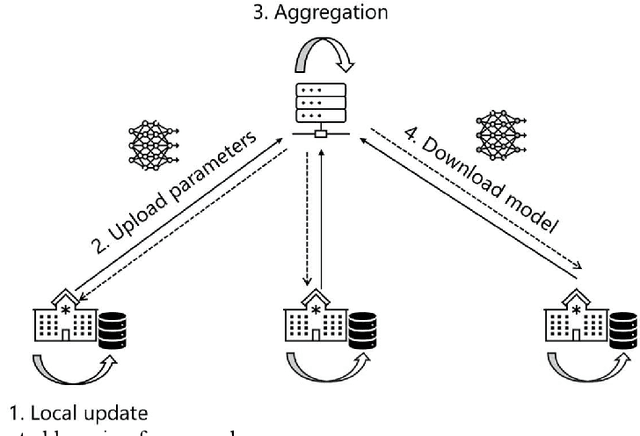
Integrating Electronic Health Records (EHR) and the application of machine learning present opportunities for enhancing the accuracy and accessibility of data-driven diabetes prediction. In particular, developing data-driven machine learning models can provide early identification of patients with high risk for diabetes, potentially leading to more effective therapeutic strategies and reduced healthcare costs. However, regulation restrictions create barriers to developing centralized predictive models. This paper addresses the challenges by introducing a federated learning approach, which amalgamates predictive models without centralized data storage and processing, thus avoiding privacy issues. This marks the first application of federated learning to predict diabetes using real clinical datasets in Canada extracted from the Canadian Primary Care Sentinel Surveillance Network (CPCSSN) without crossprovince patient data sharing. We address class-imbalance issues through downsampling techniques and compare federated learning performance against province-based and centralized models. Experimental results show that the federated MLP model presents a similar or higher performance compared to the model trained with the centralized approach. However, the federated logistic regression model showed inferior performance compared to its centralized peer.