 Add to Chrome
 Add to Firefox
 Add to Edge
Where Does Authorship Signal Emerge in Encoder-Based Language Models?
May 19, 2026
Authorship attribution models fine-tuned with the same pretrained encoder, data, and loss can differ four-fold in performance depending only on their scoring mechanism. We use mechanistic interpretability tools to explain this gap. Stylistic features such as word length, punctuation density, and function-word frequency are equally available at every layer in every model, including in an off-the-shelf control encoder, hence the gap not coming from representation quality. Instead, causal intervention shows that the scorer determines where the encoder consolidates authorship signal. Mean pooling forces consolidation by early to mid layers, while late interaction defers it to later layers. We further derive this difference from the gradient structure of each scorer, and training dynamics reveal distinct learning trajectories that follow from that difference.

Harvesting Textual and Structured Data from the HAL Publication Repository
Jul 30, 2024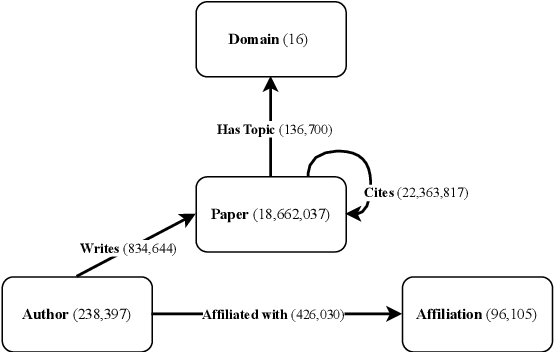

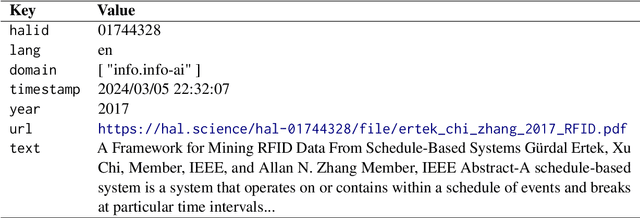

HAL (Hyper Articles en Ligne) is the French national publication repository, used by most higher education and research organizations for their open science policy. As a digital library, it is a rich repository of scholarly documents, but its potential for advanced research has been underutilized. We present HALvest, a unique dataset that bridges the gap between citation networks and the full text of papers submitted on HAL. We craft our dataset by filtering HAL for scholarly publications, resulting in approximately 700,000 documents, spanning 34 languages across 13 identified domains, suitable for language model training, and yielding approximately 16.5 billion tokens (with 8 billion in French and 7 billion in English, the most represented languages). We transform the metadata of each paper into a citation network, producing a directed heterogeneous graph. This graph includes uniquely identified authors on HAL, as well as all open submitted papers, and their citations. We provide a baseline for authorship attribution using the dataset, implement a range of state-of-the-art models in graph representation learning for link prediction, and discuss the usefulness of our generated knowledge graph structure.