 Add to Chrome
 Add to Firefox
 Add to Edge
Image scaling by de la Vallée-Poussin filtered interpolation
Sep 28, 2021
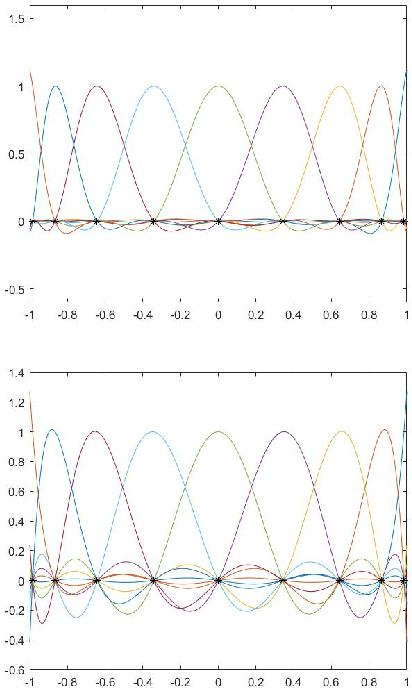
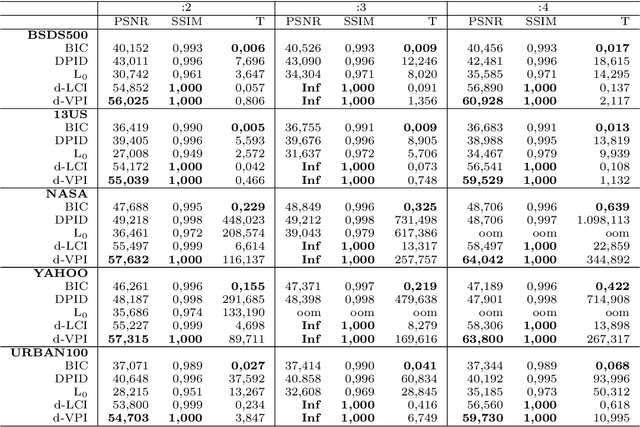
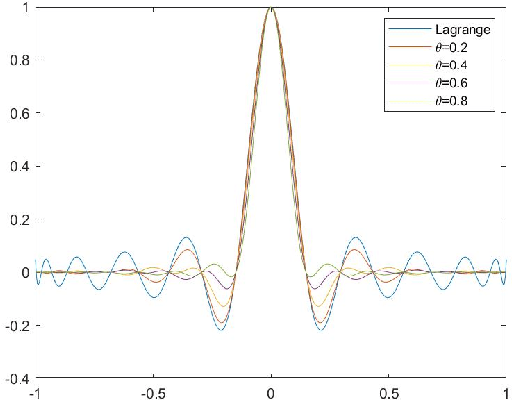
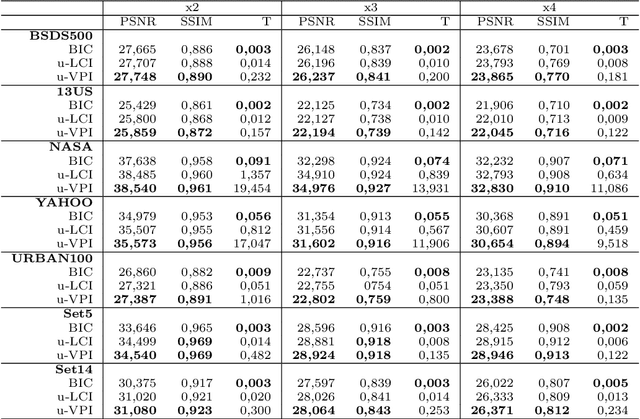
We present a new image scaling method both for downscaling and upscaling, running with any scale factor or desired size. It is based on the sampling of an approximating bivariate polynomial, which globally interpolates the data and is defined by a filter of de la Vall\'ee Poussin type whose action ray is suitable regulated to improve the approximation. The method has been tested on a significant number of different image datasets. The results are evaluated in qualitative and quantitative terms and compared with other available competitive methods. The perceived quality of the resulting scaled images is such that important details are preserved, and the appearance of artifacts is low. Very high-quality measure values in downscaling and the competitive ones in upscaling evidence the effectiveness of the method. Good visual quality, limited computational effort, and moderate memory demanding make the method suitable for real-world applications.

Saliency-based segmentation of dermoscopic images using color information
Nov 26, 2020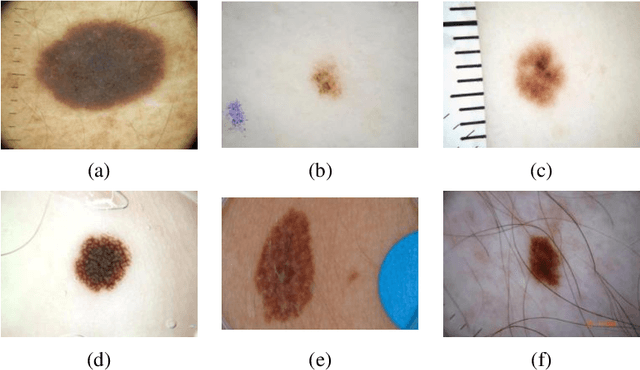
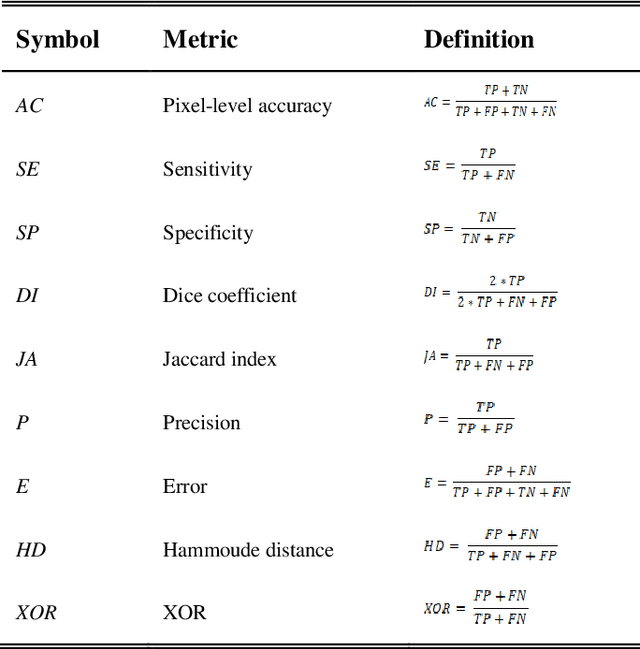
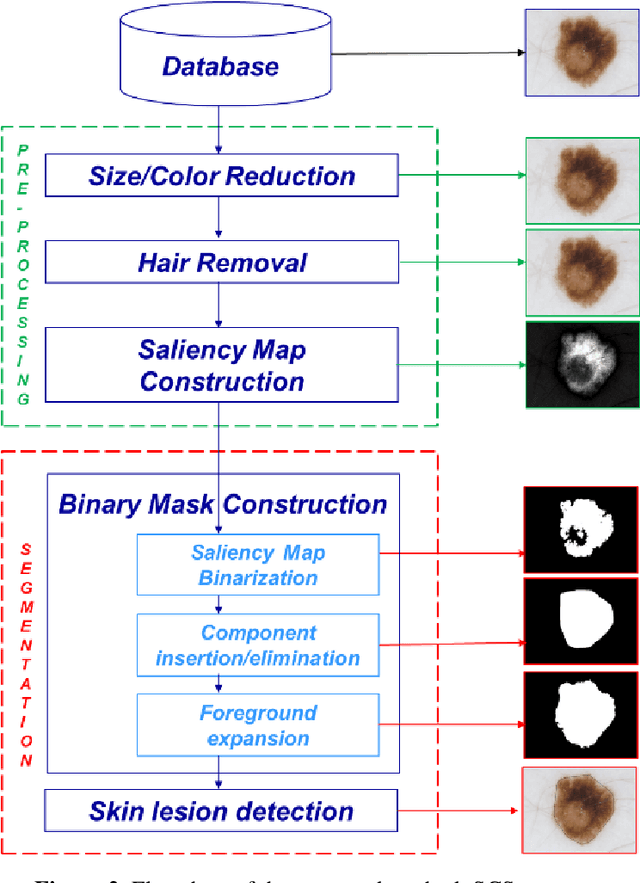
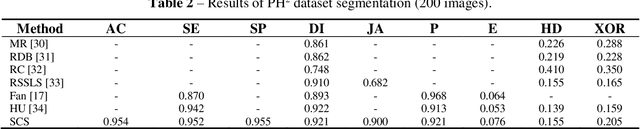
Skin lesion segmentation is one of the crucial steps for an efficient non-invasive computer-aided early diagnosis of melanoma. In this paper, we investigate how saliency and color information can be usefully employed to determine the lesion region. Unlike most existing saliency-based methods, to discriminate against the skin lesion from the surrounding regions we enucleate some properties related to saliency and color information and we propose a novel segmentation process using binarization coupled with new perceptual criteria based on these properties. To refine the accuracy of the proposed method, the segmentation step is preceded by a pre-processing aimed at reducing the computation burden, removing artifacts, and improving contrast. We have assessed the method on two public databases including 1497 dermoscopic images and compared its performance with that of classical saliency-based methods and with that of some more recent saliency-based methods specifically applied to dermoscopic images. Results of qualitative and quantitative evaluations of the proposed method are promising as the obtained skin lesion segmentation is accurate and the method performs satisfactorily in comparison to other existing saliency-based segmentation methods.
Evaluation of quality measures for color quantization
Nov 25, 2020
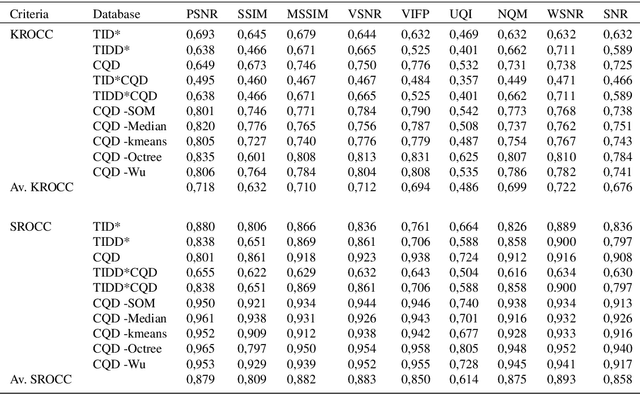
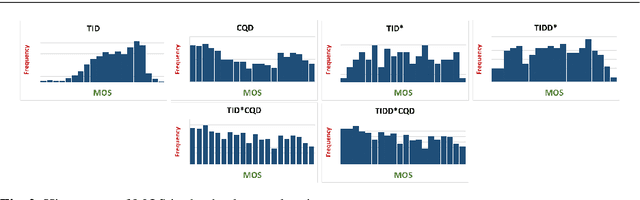
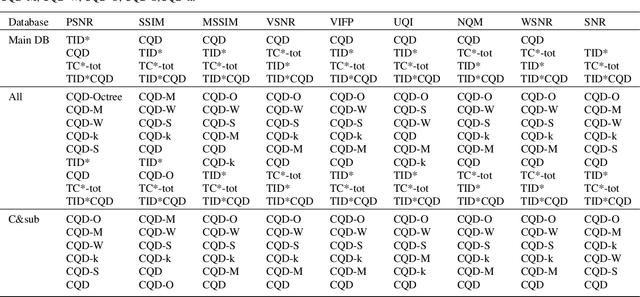
Visual quality evaluation is one of the challenging basic problems in image processing. It also plays a central role in the shaping, implementation, optimization, and testing of many methods. The existing image quality assessment methods focused on images corrupted by common degradation types while little attention was paid to color quantization. This in spite there is a wide range of applications requiring color quantization assessment being used as a preprocessing step when color-based tasks are more efficiently accomplished on a reduced number of colors. In this paper, we propose and carry-out a quantitative performance evaluation of nine well-known and commonly used full-reference image quality assessment measures. The evaluation is done by using two publicly available and subjectively rated image quality databases for color quantization degradation and by considering suitable combinations or subparts of them. The results indicate the quality measures that have closer performances in terms of their correlation to the subjective human rating and show that the evaluation of the statistical performance of the quality measures for color quantization is significantly impacted by the selected image quality database while maintaining a similar trend on each database. The detected strong similarity both on individual databases and on databases obtained by integration provides the ability to validate the integration process and to consider the quantitative performance evaluation on each database as an indicator for performance on the other databases. The experimental results are useful to address the choice of suitable quality measures for color quantization and to improve their future employment.