 Add to Chrome
 Add to Firefox
 Add to Edge
Neuro-Symbolic Artificial Intelligence: A Task-Directed Survey in the Black-Box Models Era
Mar 03, 2026
The integration of symbolic computing with neural networks has intrigued researchers since the first theorizations of Artificial intelligence (AI). The ability of Neuro-Symbolic (NeSy) methods to infer or exploit behavioral schema has been widely considered as one of the possible proxies for human-level intelligence. However, the limited semantic generalizability and the challenges in declining complex domains with pre-defined patterns and rules hinder their practical implementation in real-world scenarios. The unprecedented results achieved by connectionist systems since the last AI breakthrough in 2017 have raised questions about the competitiveness of NeSy solutions, with particular emphasis on the Natural Language Processing and Computer Vision fields. This survey examines task-specific advancements in the NeSy domain to explore how incorporating symbolic systems can enhance explainability and reasoning capabilities. Our findings are meant to serve as a resource for researchers exploring explainable NeSy methodologies for real-life tasks and applications. Reproducibility details and in-depth comments on each surveyed research work are made available at https://github.com/disi-unibo-nlp/task-oriented-neuro-symbolic.git.
* Accepted for publication at IJCAI-25. Please cite the definitive, copyrighted, peer reviewed and edited version of this Article published in IJCAI 25, pp. 4196-4176, 2025. DOI: https://doi.org/10.24963/ijcai.2025/1157

Zero-Shot Warning Generation for Misinformative Multimodal Content
Feb 02, 2025

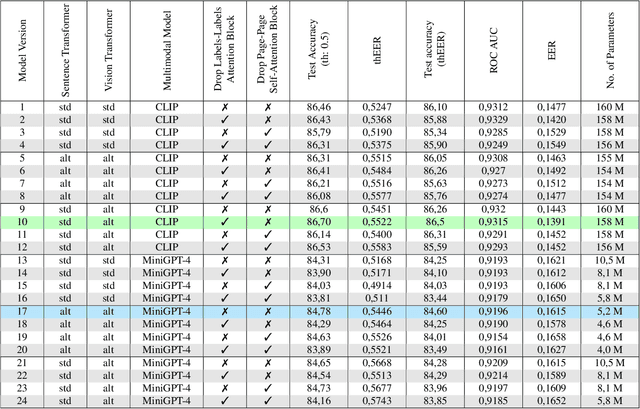

The widespread prevalence of misinformation poses significant societal concerns. Out-of-context misinformation, where authentic images are paired with false text, is particularly deceptive and easily misleads audiences. Most existing detection methods primarily evaluate image-text consistency but often lack sufficient explanations, which are essential for effectively debunking misinformation. We present a model that detects multimodal misinformation through cross-modality consistency checks, requiring minimal training time. Additionally, we propose a lightweight model that achieves competitive performance using only one-third of the parameters. We also introduce a dual-purpose zero-shot learning task for generating contextualized warnings, enabling automated debunking and enhancing user comprehension. Qualitative and human evaluations of the generated warnings highlight both the potential and limitations of our approach.