 Add to Chrome
 Add to Firefox
 Add to Edge
A Latent Risk-Aware Machine Learning Approach for Predicting Operational Success in Clinical Trials based on TrialsBank
Mar 30, 2026
Clinical trials are characterized by high costs, extended timelines, and substantial operational risk, yet reliable prospective methods for predicting trial success before initiation remain limited. Existing artificial intelligence approaches often focus on isolated metrics or specific development stages and frequently rely on variables unavailable at the trial design phase, limiting real-world applicability. We present a hierarchical latent risk-aware machine learning framework for prospective prediction of clinical trial operational success using a curated subset of TrialsBank, a proprietary AI-ready database developed by Sorintellis, comprising 13,700 trials. Operational success was defined as the ability to initiate, conduct, and complete a clinical trial according to planned timelines, recruitment targets, and protocol specifications through database lock. This approach decomposes operational success prediction into two modeling stages. First, intermediate latent operational risk factors are predicted using more than 180 drug- and trial-level features available before trial initiation. These predicted latent risks are then integrated into a downstream model to estimate the probability of operational success. A staged data-splitting strategy was employed to prevent information leakage, and models were benchmarked using XGBoost, CatBoost, and Explainable Boosting Machines. Across Phase I-III, the framework achieves strong out-of-sample performance, with F1-scores of 0.93, 0.92, and 0.91, respectively. Incorporating latent risk drivers improves discrimination of operational failures, and performance remains robust under independent inference evaluation. These results demonstrate that clinical trial operational success can be prospectively forecasted using a latent risk-aware AI framework, enabling early risk assessment and supporting data-driven clinical development decision-making.

Deep Learning Model Reuse in the HuggingFace Community: Challenges, Benefit and Trends
Jan 24, 2024
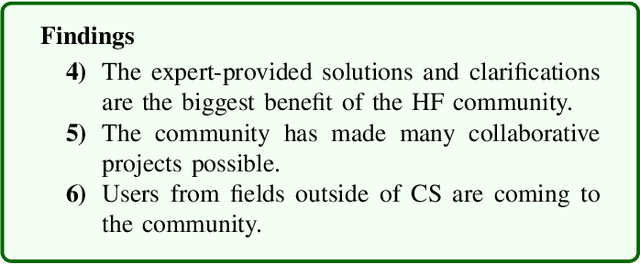
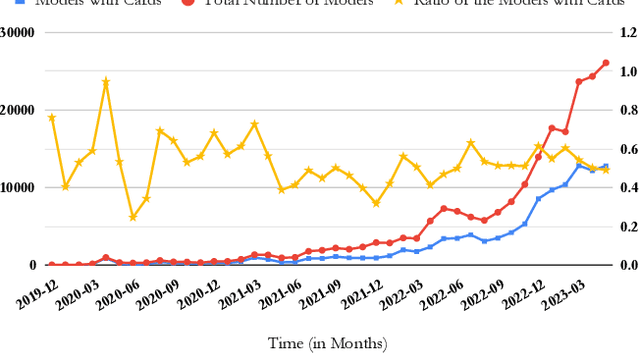
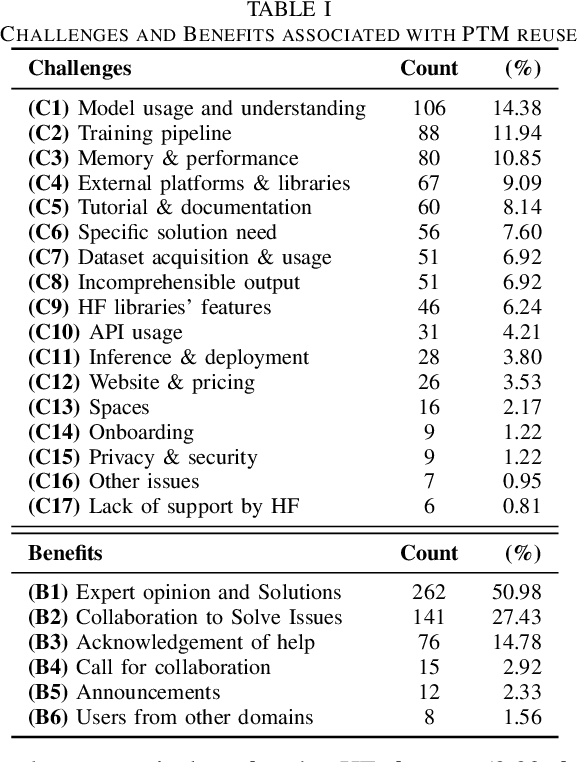
The ubiquity of large-scale Pre-Trained Models (PTMs) is on the rise, sparking interest in model hubs, and dedicated platforms for hosting PTMs. Despite this trend, a comprehensive exploration of the challenges that users encounter and how the community leverages PTMs remains lacking. To address this gap, we conducted an extensive mixed-methods empirical study by focusing on discussion forums and the model hub of HuggingFace, the largest public model hub. Based on our qualitative analysis, we present a taxonomy of the challenges and benefits associated with PTM reuse within this community. We then conduct a quantitative study to track model-type trends and model documentation evolution over time. Our findings highlight prevalent challenges such as limited guidance for beginner users, struggles with model output comprehensibility in training or inference, and a lack of model understanding. We also identified interesting trends among models where some models maintain high upload rates despite a decline in topics related to them. Additionally, we found that despite the introduction of model documentation tools, its quantity has not increased over time, leading to difficulties in model comprehension and selection among users. Our study sheds light on new challenges in reusing PTMs that were not reported before and we provide recommendations for various stakeholders involved in PTM reuse.