 Add to Chrome
 Add to Firefox
 Add to Edge
Beyond Epistemia: Epistemic Schizologia and Large Language Models as Techno-Semiotic Machines
Jul 28, 2026
Quattrociocchi and colleagues warn that the fluent outputs of large language models may allow linguistic plausibility to substitute for epistemic evaluation, producing the condition they call *Epistemia*: the experience of possessing knowledge without undertaking the practices through which judgment would ordinarily be warranted. This article accepts that diagnosis but challenges its explanatory framework, which compares an embodied, socially situated human knower with an isolated generative model thereby locating epistemic legitimacy in capacities internal to autonomous agents. Drawing on Carlo Sini's philosophy of practices, writing, signs, and technics, we propose instead to understand a large language model (LLM) as a *techno-semiotic machine* that automates a phase of written semiosis by producing plausible linguistic configurations from the sedimented archive of human writing. From this perspective, *Epistemia* is one consequence of a broader phenomenon that we call *epistemic schizologia*: the socio-technical cleavage between signs as linguistically accomplished expressions and signs as moments within socially embedded circuits of interpretation, evidence, criticism, verification, and responsibility. This cleavage is reinforced by *eikotic closure*, through which a plausible continuation is presented with the finality of an epistemic result, and by algorithmic authority and epistemic self-misrecognition. The relevant unit is therefore not the model alone but the complete practice in which generated inscriptions are prompted, interpreted, verified, contested, used, and made consequential. This reframing preserves the distinction between linguistic production and responsible understanding while grounding a design programme centred on inspectable genealogy, contestability, distributed responsibility, epistemic agency, and the evaluation of hybrid human--AIpractices.

Semi-structured data extraction and modelling: the WIA Project
Sep 30, 2013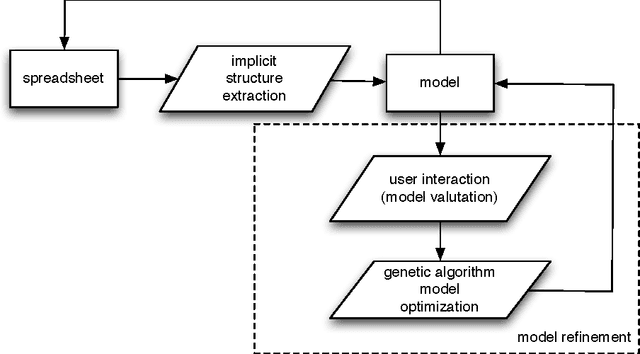
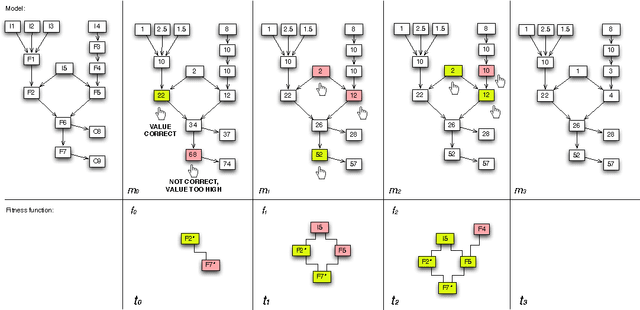
Over the last decades, the amount of data of all kinds available electronically has increased dramatically. Data are accessible through a range of interfaces including Web browsers, database query languages, application-specific interfaces, built on top of a number of different data exchange formats. All these data span from un-structured to highly structured data. Very often, some of them have structure even if the structure is implicit, and not as rigid or regular as that found in standard database systems. Spreadsheet documents are prototypical in this respect. Spreadsheets are the lightweight technology able to supply companies with easy to build business management and business intelligence applications, and business people largely adopt spreadsheets as smart vehicles for data files generation and sharing. Actually, the more spreadsheets grow in complexity (e.g., their use in product development plans and quoting), the more their arrangement, maintenance, and analysis appear as a knowledge-driven activity. The algorithmic approach to the problem of automatic data structure extraction from spreadsheet documents (i.e., grid-structured and free topological-related data) emerges from the WIA project: Worksheets Intelligent Analyser. The WIA-algorithm shows how to provide a description of spreadsheet contents in terms of higher level of abstractions or conceptualisations. In particular, the WIA-algorithm target is about the extraction of i) the calculus work-flow implemented in the spreadsheets formulas and ii) the logical role played by the data which take part into the calculus. The aim of the resulting conceptualisations is to provide spreadsheets with abstract representations useful for further model refinements and optimizations through evolutionary algorithms computations.
* In Proceedings Wivace 2013, arXiv:1309.7122