 Add to Chrome
 Add to Firefox
 Add to Edge
Generating Hadamard matrices with transformers
Apr 13, 2026
We present a new method for constructing Hadamard matrices that combines transformer neural networks with local search in the PatternBoost framework. Our approach is designed for extremely sparse combinatorial search problems and is particularly effective for Hadamard matrices of Goethals--Seidel type, where Fourier methods permit fast scoring and optimisation. For orders between $100$ and $250$, it produces large numbers of inequivalent Hadamard matrices, and in harder cases it succeeds where local search from random initialisation fails. The largest example found by our method has order $244$. In addition to these new constructions, our experiments reveal that the transformer can discover and exploit useful hidden symmetry in the search space.

PatternBoost: Constructions in Mathematics with a Little Help from AI
Nov 01, 2024We introduce PatternBoost, a flexible method for finding interesting constructions in mathematics. Our algorithm alternates between two phases. In the first ``local'' phase, a classical search algorithm is used to produce many desirable constructions. In the second ``global'' phase, a transformer neural network is trained on the best such constructions. Samples from the trained transformer are then used as seeds for the first phase, and the process is repeated. We give a detailed introduction to this technique, and discuss the results of its application to several problems in extremal combinatorics. The performance of PatternBoost varies across different problems, but there are many situations where its performance is quite impressive. Using our technique, we find the best known solutions to several long-standing problems, including the construction of a counterexample to a conjecture that had remained open for 30 years.
Equivariant neural networks and piecewise linear representation theory
Aug 01, 2024Equivariant neural networks are neural networks with symmetry. Motivated by the theory of group representations, we decompose the layers of an equivariant neural network into simple representations. The nonlinear activation functions lead to interesting nonlinear equivariant maps between simple representations. For example, the rectified linear unit (ReLU) gives rise to piecewise linear maps. We show that these considerations lead to a filtration of equivariant neural networks, generalizing Fourier series. This observation might provide a useful tool for interpreting equivariant neural networks.
Is deep learning a useful tool for the pure mathematician?
Apr 25, 2023
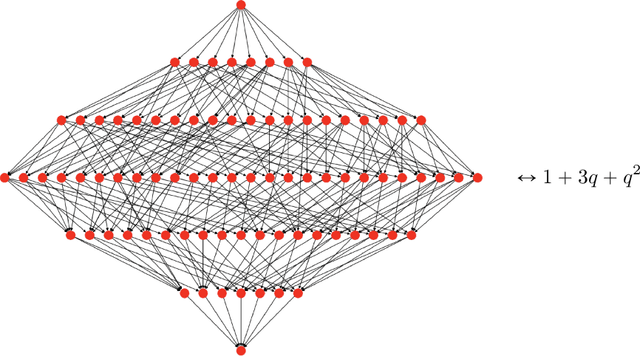
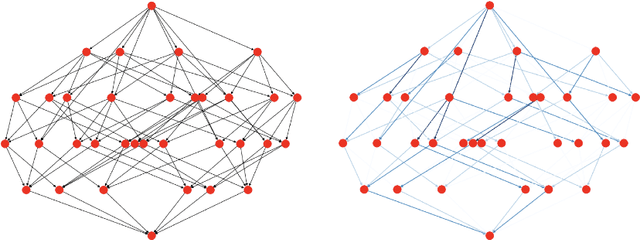
A personal and informal account of what a pure mathematician might expect when using tools from deep learning in their research.