 Add to Chrome
 Add to Firefox
 Add to Edge
Reducing Technician Search Burden: A Multimodal RAG for Cessna 172 Maintenance Manual
Aug 19, 2026
Proper use of the aircraft maintenance manual is essential for correct maintenance, providing procedures, diagrams, cautions, and specifications. However, technicians often avoid consulting it because it is difficult to navigate and time-consuming under strict schedules. Retrieval augmented generation (RAG) models have recently been introduced in aircraft maintenance, yet existing models focus solely on textual retrieval. This research therefore targeted the Cessna 172 Maintenance Manual (C172-MM), widely used in general aviation, and developed a multimodal manual retriever (MMR) capable of retrieving multimodal manual pages. Retrieval performance was evaluated using synthetic queries covering procedures, diagrams, caution/safety information, and specifications; the MMR achieved 93.37% recall@5. Beyond retrieval, a multimodal RAG (MRAG) pipeline was examined, in which retrieved pages were input to a vision-language model that generated responses to the synthetic queries, achieving 87.20% semantic similarity to ground-truth answers. Three practical feasibilities were also assessed: inference time, operational cost, and interpretability. Average retrieval time for five pages was 11.93 seconds and response generation took 4.95 seconds, at $0.0091 per query, while interpretability was validated through heatmap visualizations. These results indicate that the MRAG pipeline for the C172-MM can reduce the time technicians spend searching manuals and retrieving multimodal information.

Exploring the Efficacy of ChatGPT in Analyzing Student Teamwork Feedback with an Existing Taxonomy
May 09, 2023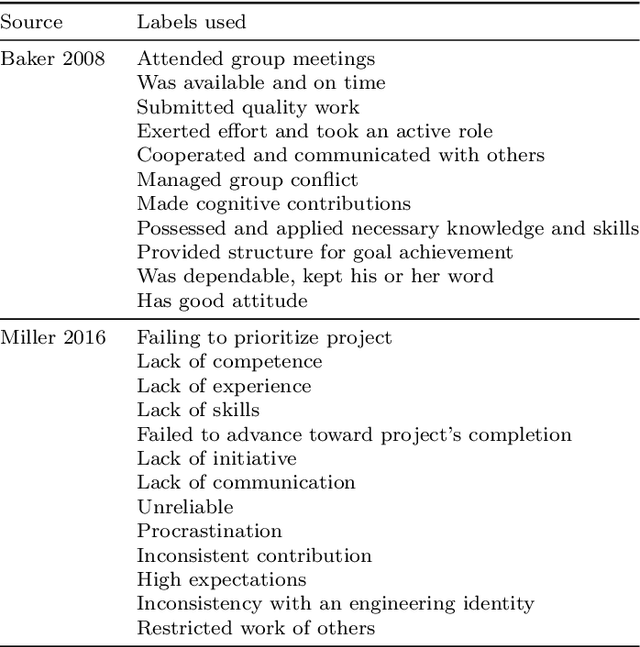
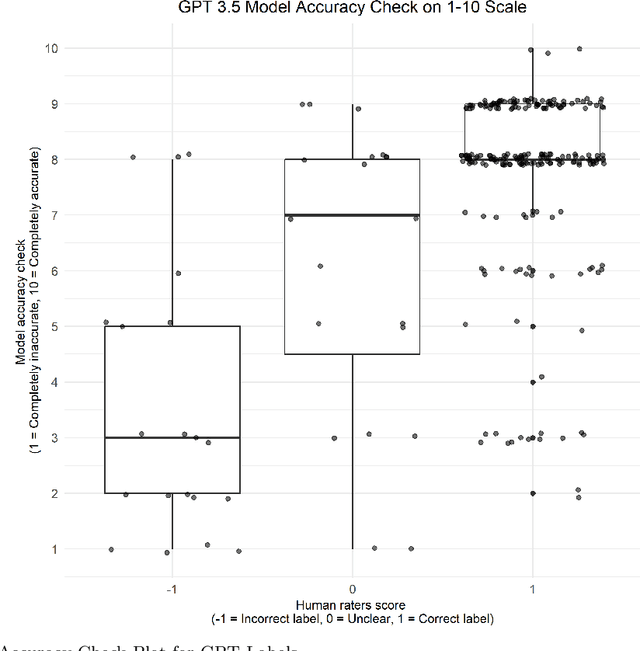
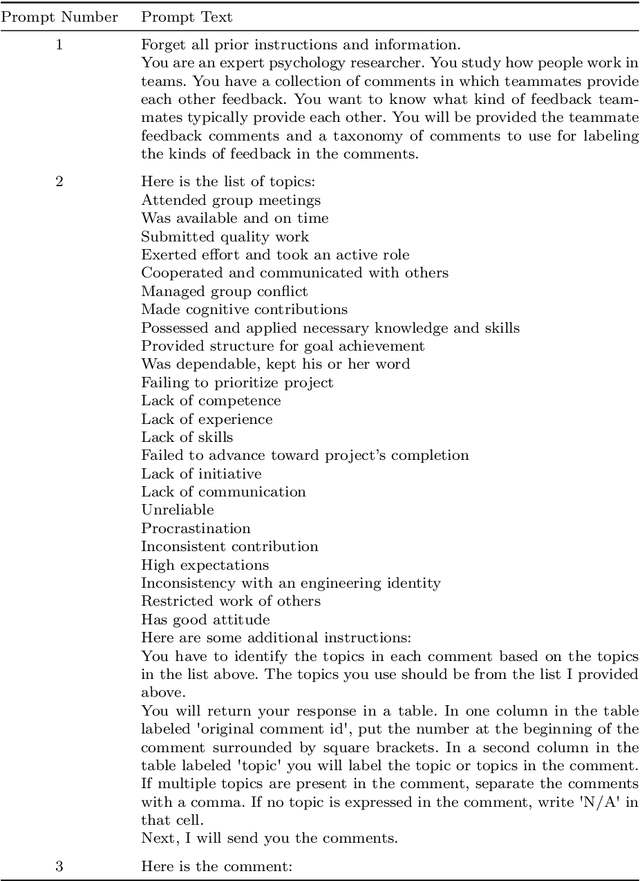
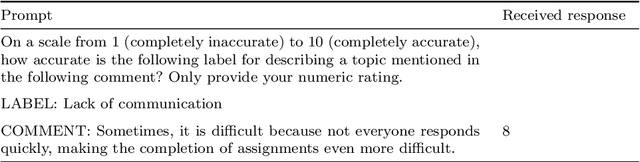
Teamwork is a critical component of many academic and professional settings. In those contexts, feedback between team members is an important element to facilitate successful and sustainable teamwork. However, in the classroom, as the number of teams and team members and frequency of evaluation increase, the volume of comments can become overwhelming for an instructor to read and track, making it difficult to identify patterns and areas for student improvement. To address this challenge, we explored the use of generative AI models, specifically ChatGPT, to analyze student comments in team based learning contexts. Our study aimed to evaluate ChatGPT's ability to accurately identify topics in student comments based on an existing framework consisting of positive and negative comments. Our results suggest that ChatGPT can achieve over 90\% accuracy in labeling student comments, providing a potentially valuable tool for analyzing feedback in team projects. This study contributes to the growing body of research on the use of AI models in educational contexts and highlights the potential of ChatGPT for facilitating analysis of student comments.