 Add to Chrome
 Add to Firefox
 Add to Edge
Optimizing BCI Rehabilitation Protocols for Stroke: Exploring Task Design and Training Duration
Oct 09, 2025
Stroke is a leading cause of long-term disability and the second most common cause of death worldwide. Although acute treatments have advanced, recovery remains challenging and limited. Brain-computer interfaces (BCIs) have emerged as a promising tool for post-stroke rehabilitation by promoting neuroplasticity. However, clinical outcomes remain variable, and optimal protocols have yet to be established. This study explores strategies to optimize BCI-based rehabilitation by comparing motor imagery of affected hand movement versus rest, instead of the conventional left-versus-right motor imagery. This alternative aims to simplify the task and address the weak contralateral activation commonly observed in stroke patients. Two datasets, one from healthy individuals and one from stroke patients, were used to evaluate the proposed approach. The results showed improved performance using both FBCSP and EEGNet. Additionally, we investigated the impact of session duration and found that shorter training sessions produced better BCI performance than longer sessions.

CNN-based Approaches For Cross-Subject Classification in Motor Imagery: From The State-of-The-Art to DynamicNet
May 17, 2021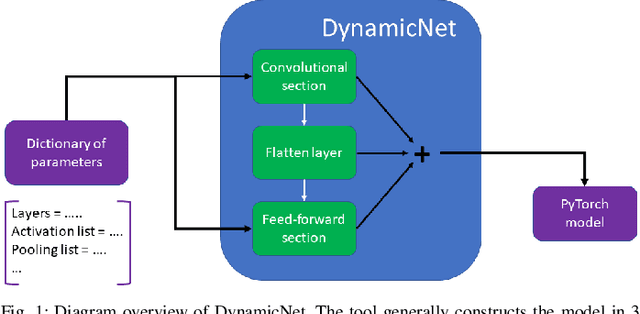
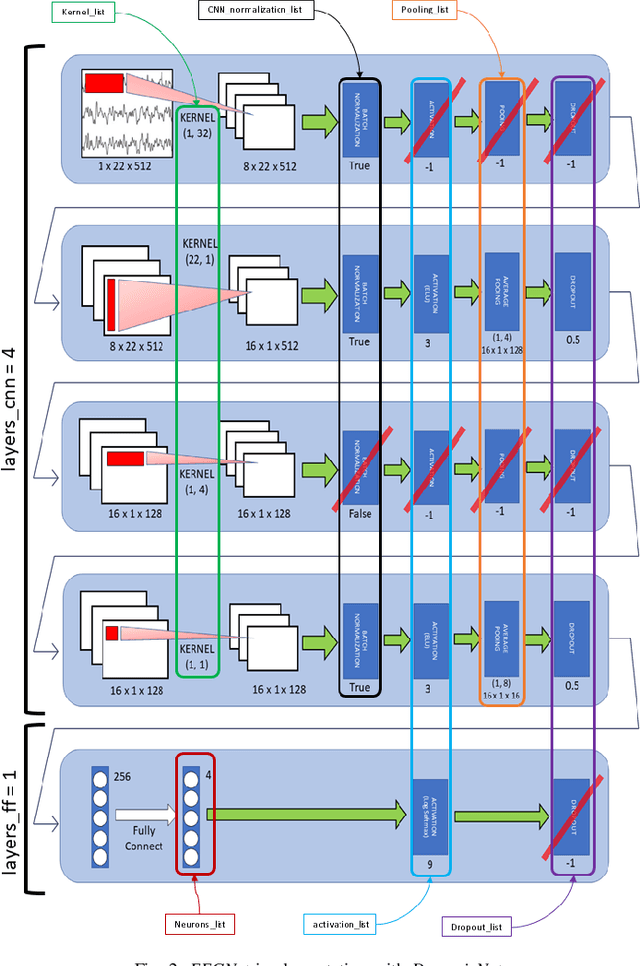


Motor imagery (MI)-based brain-computer interface (BCI) systems are being increasingly employed to provide alternative means of communication and control for people suffering from neuro-motor impairments, with a special effort to bring these systems out of the controlled lab environments. Hence, accurately classifying MI from brain signals, e.g., from electroencephalography (EEG), is essential to obtain reliable BCI systems. However, MI classification is still a challenging task, because the signals are characterized by poor SNR, high intra-subject and cross-subject variability. Deep learning approaches have started to emerge as valid alternatives to standard machine learning techniques, e.g., filter bank common spatial pattern (FBCSP), to extract subject-independent features and to increase the cross-subject classification performance of MI BCI systems. In this paper, we first present a review of the most recent studies using deep learning for MI classification, with particular attention to their cross-subject performance. Second, we propose DynamicNet, a Python-based tool for quick and flexible implementations of deep learning models based on convolutional neural networks. We show-case the potentiality of DynamicNet by implementing EEGNet, a well-established architecture for effective EEG classification. Finally, we compare its performance with FBCSP in a 4-class MI classification over public datasets. To explore its cross-subject classification ability, we applied three different cross-validation schemes. From our results, we demonstrate that DynamicNet-implemented EEGNet outperforms FBCSP by about 25%, with a statistically significant difference when cross-subject validation schemes are applied.