 Add to Chrome
 Add to Firefox
 Add to Edge
Do Language Models Track Entities Across State Changes?
May 28, 2026
Entity tracking (ET), the ability to keep track of states, is a fundamental skill that underlies complex reasoning. An increasing amount of work investigates how transformer language models (LMs) solve entity binding $\textit{without}$ state changes. However, there is limited understanding of how non-toy LMs address ET problems of realistic difficulties expressed in natural language. To this end, we investigate the mechanisms underlying ET in more complex scenarios featuring multiple state-changing operations. We find that LMs do not incrementally track world states across tokens or query-relevant states across layers, but simply aggregate relevant information in parallel at the last token when the query becomes evident. We further investigate mechanisms of individual operations ($\texttt{PUT}$, $\texttt{REMOVE}$, $\texttt{MOVE}$) to characterize this non-incremental ET mechanism. Surprisingly, LMs implement the $\texttt{REMOVE}$ operation with a fragile global suppression tag; this global removal mechanism predicts various failure modes that we confirm behaviorally. We provide a mechanistic solution of nullifying this tag to partially address this issue. Overall, our findings reveal that LMs solve a fundamentally sequential task using a non-sequential strategy. More broadly, our work illustrates how behavioral and mechanistic analyses can fruitfully interact. Behavioral results inform mechanistic hypotheses, and insights from mechanistic analyses help build stronger behavioral evaluations by predicting failure modes missing from existing evaluations.

Finding Highly Interpretable Prompt-Specific Circuits in Language Models
Feb 13, 2026Understanding the internal circuits that language models use to solve tasks remains a central challenge in mechanistic interpretability. Most prior work identifies circuits at the task level by averaging across many prompts, implicitly assuming a single stable mechanism per task. We show that this assumption can obscure a crucial source of structure: circuits are prompt-specific, even within a fixed task. Building on attention causal communication (ACC) (Franco & Crovella, 2025), we introduce ACC++, refinements that extract cleaner, lower-dimensional causal signals inside attention heads from a single forward pass. Like ACC, our approach does not require replacement models (e.g., SAEs) or activation patching; ACC++ further improves circuit precision by reducing attribution noise. Applying ACC++ to indirect object identification (IOI) in GPT-2, Pythia, and Gemma 2, we find there is no single circuit for IOI in any model: different prompt templates induce systematically different mechanisms. Despite this variation, prompts cluster into prompt families with similar circuits, and we propose a representative circuit for each family as a practical unit of analysis. Finally, we develop an automated interpretability pipeline that uses ACC++ signals to surface human-interpretable features and assemble mechanistic explanations for prompt families behavior. Together, our results recast circuits as a meaningful object of study by shifting the unit of analysis from tasks to prompts, enabling scalable circuit descriptions in the presence of prompt-specific mechanisms.
Singular Vectors of Attention Heads Align with Features
Feb 13, 2026Identifying feature representations in language models is a central task in mechanistic interpretability. Several recent studies have made an implicit assumption that feature representations can be inferred in some cases from singular vectors of attention matrices. However, sound justification for this assumption is lacking. In this paper we address that question, asking: why and when do singular vectors align with features? First, we demonstrate that singular vectors robustly align with features in a model where features can be directly observed. We then show theoretically that such alignment is expected under a range of conditions. We close by asking how, operationally, alignment may be recognized in real models where feature representations are not directly observable. We identify sparse attention decomposition as a testable prediction of alignment, and show evidence that it emerges in a manner consistent with predictions in real models. Together these results suggest that alignment of singular vectors with features can be a sound and theoretically justified basis for feature identification in language models.
Evaluating LLP Methods: Challenges and Approaches
Oct 29, 2023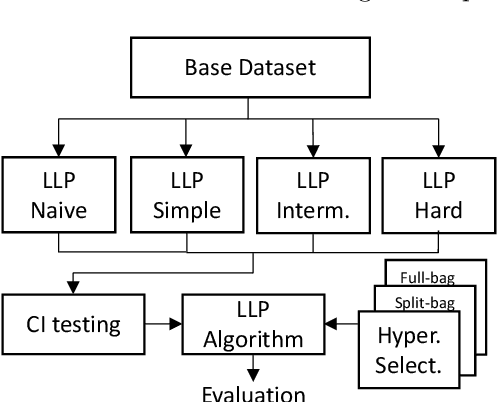
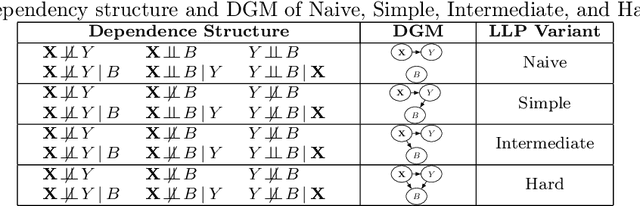
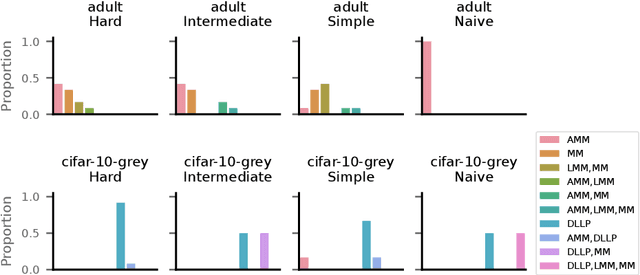
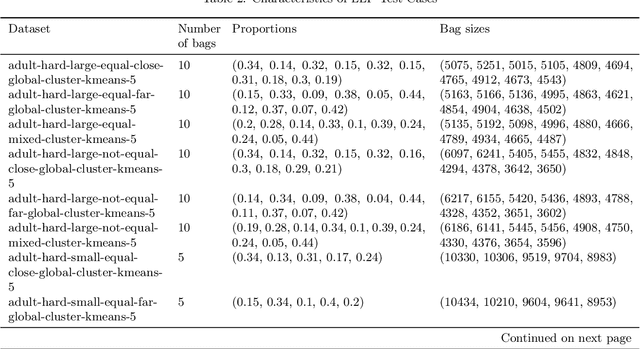
Learning from Label Proportions (LLP) is an established machine learning problem with numerous real-world applications. In this setting, data items are grouped into bags, and the goal is to learn individual item labels, knowing only the features of the data and the proportions of labels in each bag. Although LLP is a well-established problem, it has several unusual aspects that create challenges for benchmarking learning methods. Fundamental complications arise because of the existence of different LLP variants, i.e., dependence structures that can exist between items, labels, and bags. Accordingly, the first algorithmic challenge is the generation of variant-specific datasets capturing the diversity of dependence structures and bag characteristics. The second methodological challenge is model selection, i.e., hyperparameter tuning; due to the nature of LLP, model selection cannot easily use the standard machine learning paradigm. The final benchmarking challenge consists of properly evaluating LLP solution methods across various LLP variants. We note that there is very little consideration of these issues in prior work, and there are no general solutions for these challenges proposed to date. To address these challenges, we develop methods capable of generating LLP datasets meeting the requirements of different variants. We use these methods to generate a collection of datasets encompassing the spectrum of LLP problem characteristics, which can be used in future evaluation studies. Additionally, we develop guidelines for benchmarking LLP algorithms, including the model selection and evaluation steps. Finally, we illustrate the new methods and guidelines by performing an extensive benchmark of a set of well-known LLP algorithms. We show that choosing the best algorithm depends critically on the LLP variant and model selection method, demonstrating the need for our proposed approach.