 Add to Chrome
 Add to Firefox
 Add to Edge
Probing Ethical Framework Representations in Large Language Models: Structure, Entanglement, and Methodological Challenges
Mar 24, 2026
When large language models make ethical judgments, do their internal representations distinguish between normative frameworks, or collapse ethics into a single acceptability dimension? We probe hidden representations across five ethical frameworks (deontology, utilitarianism, virtue, justice, commonsense) in six LLMs spanning 4B--72B parameters. Our analysis reveals differentiated ethical subspaces with asymmetric transfer patterns -- e.g., deontology probes partially generalize to virtue scenarios while commonsense probes fail catastrophically on justice. Disagreement between deontological and utilitarian probes correlates with higher behavioral entropy across architectures, though this relationship may partly reflect shared sensitivity to scenario difficulty. Post-hoc validation reveals that probes partially depend on surface features of benchmark templates, motivating cautious interpretation. We discuss both the structural insights these methods provide and their epistemological limitations.

dhSegment: A generic deep-learning approach for document segmentation
Apr 27, 2018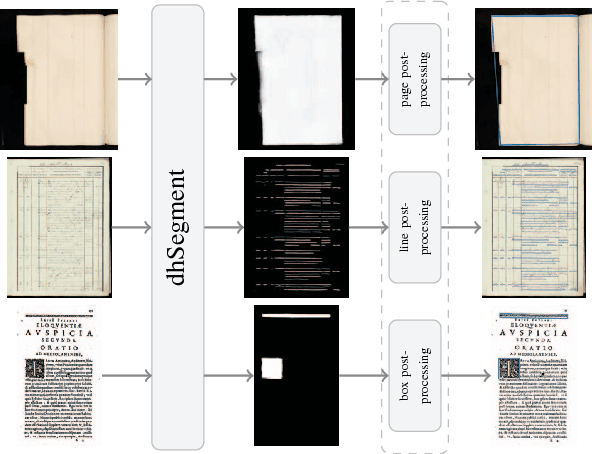
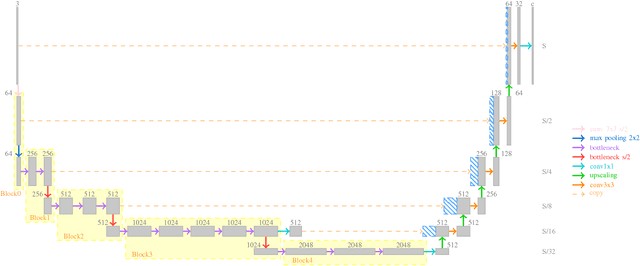


In recent years there have been multiple successful attempts tackling document processing problems separately by designing task specific hand-tuned strategies. We argue that the diversity of historical document processing tasks prohibits to solve them one at a time and shows a need for designing generic approaches in order to handle the variability of historical series. In this paper, we address multiple tasks simultaneously such as page extraction, baseline extraction, layout analysis or multiple typologies of illustrations and photograph extraction. We propose an open-source implementation of a CNN-based pixel-wise predictor coupled with task dependent post-processing blocks. We show that a single CNN-architecture can be used across tasks with competitive results. Moreover most of the task-specific post-precessing steps can be decomposed in a small number of simple and standard reusable operations, adding to the flexibility of our approach.