 Add to Chrome
 Add to Firefox
 Add to Edge
From Shallow Bayesian Neural Networks to Gaussian Processes: General Convergence, Identifiability and Scalable Inference
Feb 26, 2026
In this work, we study scaling limits of shallow Bayesian neural networks (BNNs) via their connection to Gaussian processes (GPs), with an emphasis on statistical modeling, identifiability, and scalable inference. We first establish a general convergence result from BNNs to GPs by relaxing assumptions used in prior formulations, and we compare alternative parameterizations of the limiting GP model. Building on this theory, we propose a new covariance function defined as a convex mixture of components induced by four widely used activation functions, and we characterize key properties including positive definiteness and both strict and practical identifiability under different input designs. For computation, we develop a scalable maximum a posterior (MAP) training and prediction procedure using a Nyström approximation, and we show how the Nyström rank and anchor selection control the cost-accuracy trade-off. Experiments on controlled simulations and real-world tabular datasets demonstrate stable hyperparameter estimates and competitive predictive performance at realistic computational cost.

Reverse-BSDE Monte Carlo
May 11, 2025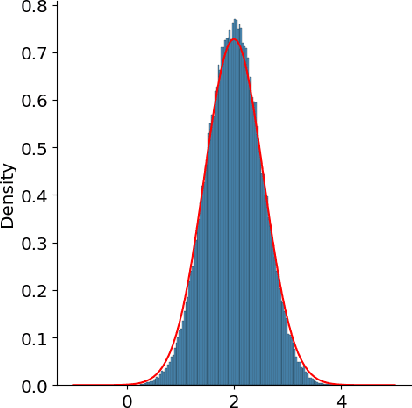
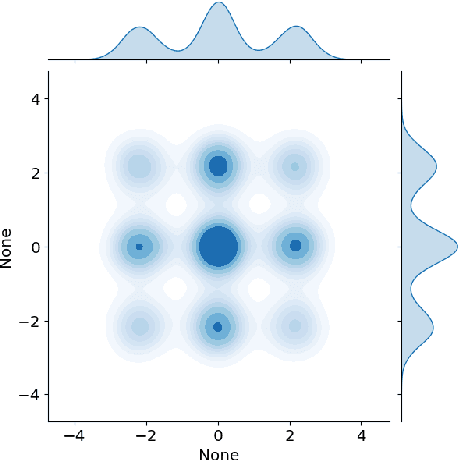
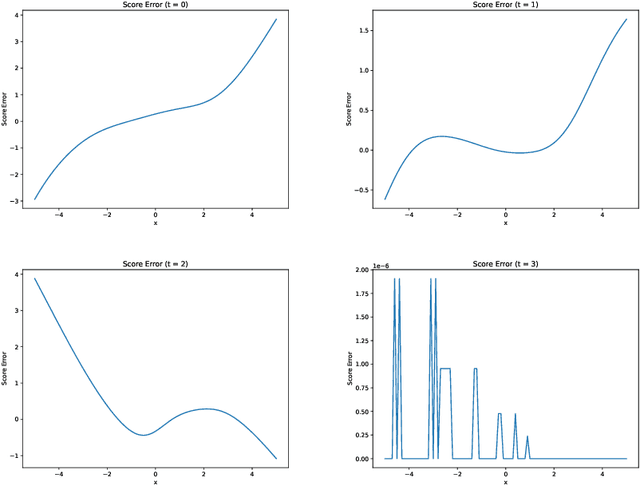
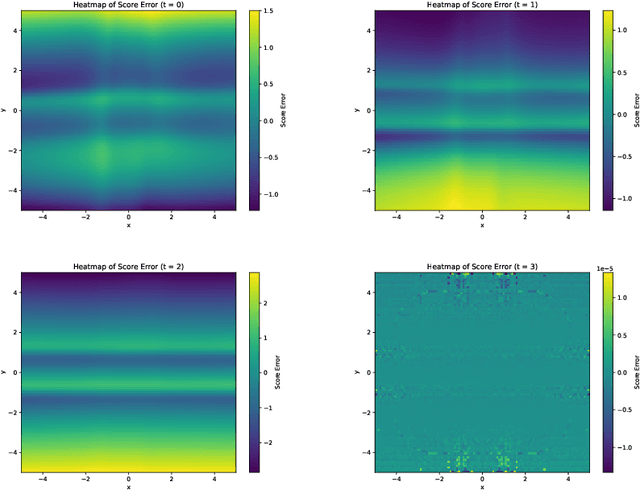
Recently, there has been a growing interest in generative models based on diffusions driven by the empirical robustness of these methods in generating high-dimensional photorealistic images and the possibility of using the vast existing toolbox of stochastic differential equations. %This remarkable ability may stem from their capacity to model and generate multimodal distributions. In this work, we offer a novel perspective on the approach introduced in Song et al. (2021), shifting the focus from a "learning" problem to a "sampling" problem. To achieve this, we reformulate the equations governing diffusion-based generative models as a Forward-Backward Stochastic Differential Equation (FBSDE), which avoids the well-known issue of pre-estimating the gradient of the log target density. The solution of this FBSDE is proved to be unique using non-standard techniques. Additionally, we propose a numerical solution to this problem, leveraging on Deep Learning techniques. This reformulation opens new pathways for sampling multidimensional distributions with densities known up to a normalization constant, a problem frequently encountered in Bayesian statistics.