 Add to Chrome
 Add to Firefox
 Add to Edge
AIRE-Prune: Asymptotic Impulse-Response Energy for State Pruning in State Space Models
Jan 31, 2026
State space models (SSMs) often sacrifice capacity, search space, or stability to offset the memory and compute costs of large state dimensions. We introduce a structured post-training pruning method for SSMs -- AIRE-Prune (Asymptotic Impulse-Response Energy for State PRUN(E)) -- that reduces each layer's state dimension by directly minimizing long-run output-energy distortion. AIRE-Prune assigns every state a closed-form asymptotic impulse-response energy-based score, i.e., the total impulse-response energy it contributes over an infinite horizon (time), and normalizes these scores layer-wise to enable global cross-layer comparison and selection. This extends modal truncation from single systems to deep stacks and aligns pruning with asymptotic response energy rather than worst-case gain. Across diverse sequence benchmarks, AIRE-Prune reveals substantial redundancy in SISO and MIMO SSMs with average pruning of 60.8%, with average accuracy drop of 0.29% without retraining, while significantly lowering compute. Code: https://github.com/falcon-arrow/AIRE-Prune.

Quick-Draw Bandits: Quickly Optimizing in Nonstationary Environments with Extremely Many Arms
May 30, 2025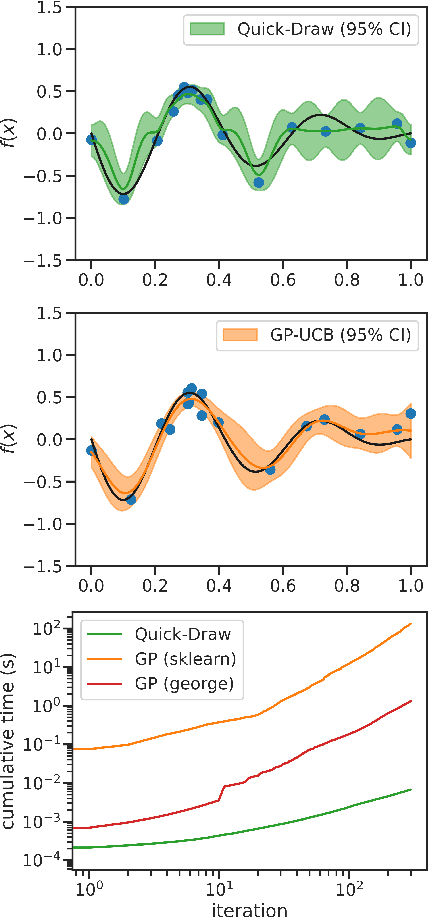
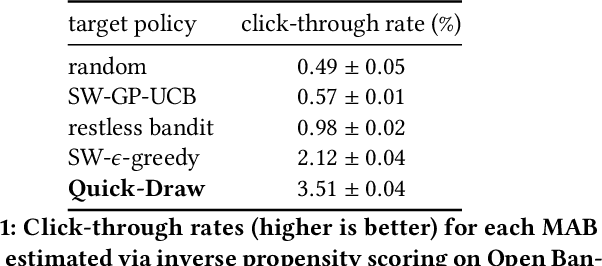
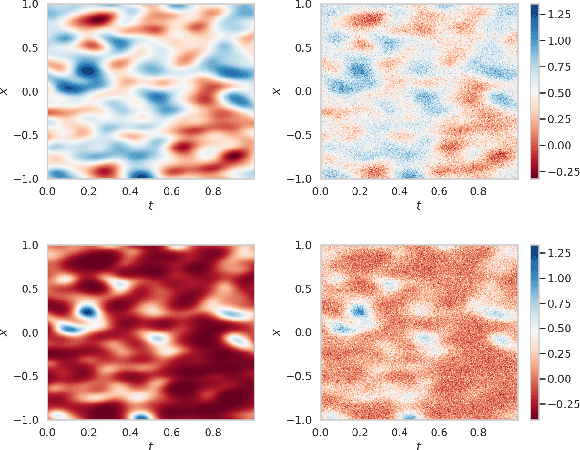
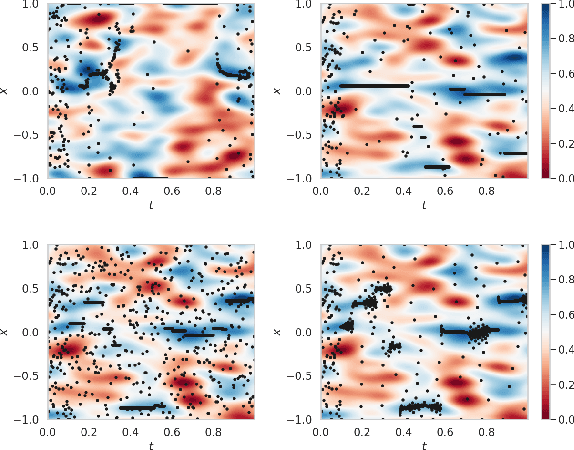
Canonical algorithms for multi-armed bandits typically assume a stationary reward environment where the size of the action space (number of arms) is small. More recently developed methods typically relax only one of these assumptions: existing non-stationary bandit policies are designed for a small number of arms, while Lipschitz, linear, and Gaussian process bandit policies are designed to handle a large (or infinite) number of arms in stationary reward environments under constraints on the reward function. In this manuscript, we propose a novel policy to learn reward environments over a continuous space using Gaussian interpolation. We show that our method efficiently learns continuous Lipschitz reward functions with $\mathcal{O}^*(\sqrt{T})$ cumulative regret. Furthermore, our method naturally extends to non-stationary problems with a simple modification. We finally demonstrate that our method is computationally favorable (100-10000x faster) and experimentally outperforms sliding Gaussian process policies on datasets with non-stationarity and an extremely large number of arms.