 Add to Chrome
 Add to Firefox
 Add to Edge
Automated reproducibility assessments in the social and behavioral sciences using large language models
Jun 11, 2026
Reproducibility in the social and behavioral sciences is typically evaluated by independent researchers who reanalyze the original data to assess whether the published findings can be recovered. However, such approaches are resource-intensive and difficult to scale. Here, we show that large language models (LLMs) can automate reproducibility assessments. Using N=76 published studies with predefined claims from the behavioral and social sciences, we compare LLM-generated analysis with the original findings and human reanalysis. For 7 studies, the LLM could not produce a viable effect size estimate. For the remaining studies, our LLM pipeline recovered the original effect sizes in 41% of studies using a +/-0.05 tolerance in Cohen's d. Further, our LLM pipeline reached the same qualitative conclusion as the original study in 96% of cases, where conclusions indicate whether the reanalysis supports the original claim. For comparison, human reanalysts recovered the original effect sizes in 34% of studies and reached the same qualitative conclusion in 74% of cases. Together, these results show that LLMs can serve as a scalable tool for automated reproducibility assessment and provide a foundation for systematic auditing of empirical results in the social and behavioral sciences.

Classification ensembles for multivariate functional data with application to mouse movements in web surveys
May 26, 2022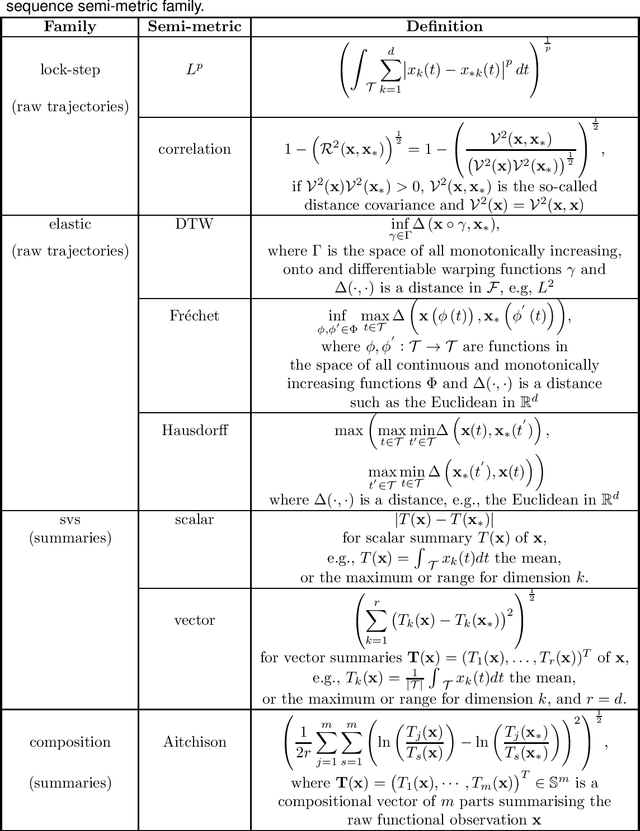
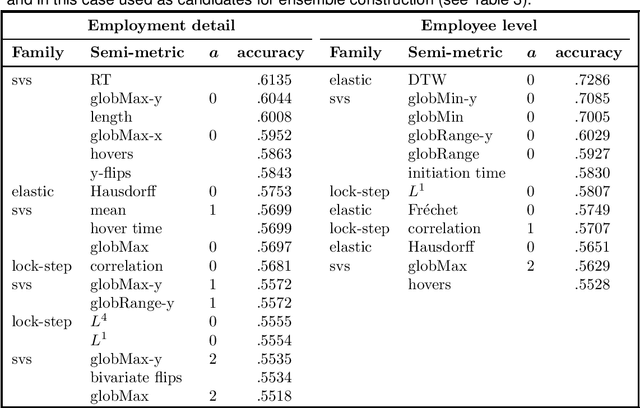
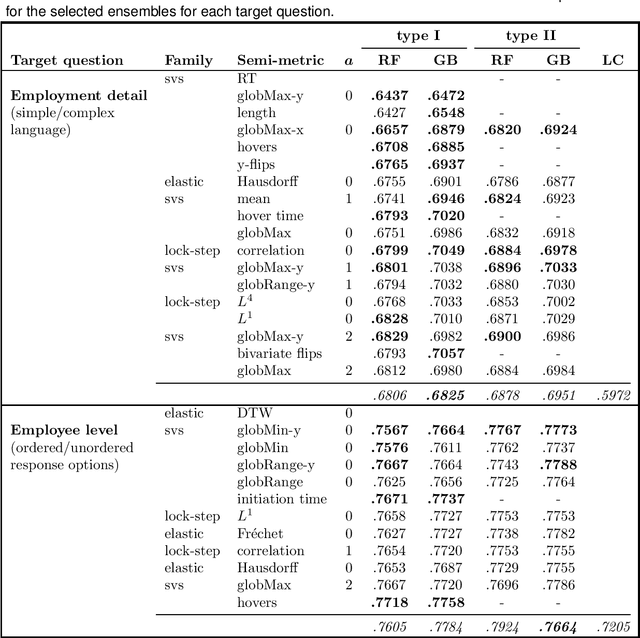
We propose new ensemble models for multivariate functional data classification as combinations of semi-metric-based weak learners. Our models extend current semi-metric-type methods from the univariate to the multivariate case, propose new semi-metrics to compute distances between functions, and consider more flexible options for combining weak learners using stacked generalisation methods. We apply these ensemble models to identify respondents' difficulty with survey questions, with the aim to improve survey data quality. As predictors of difficulty, we use mouse movement trajectories from the respondents' interaction with a web survey, in which several questions were manipulated to create two scenarios with different levels of difficulty.
Predicting respondent difficulty in web surveys: A machine-learning approach based on mouse movement features
Nov 05, 2020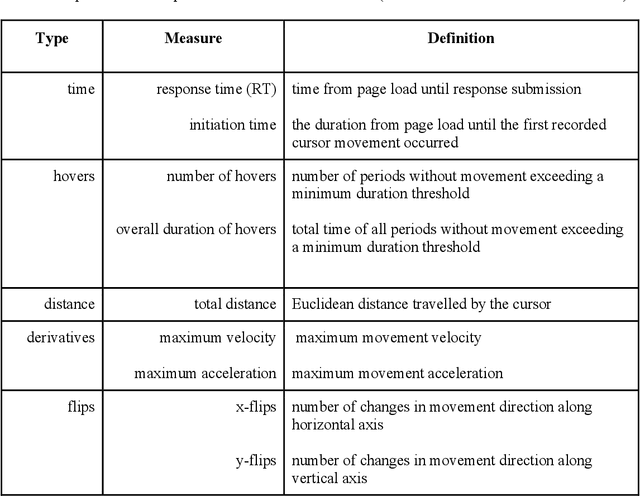
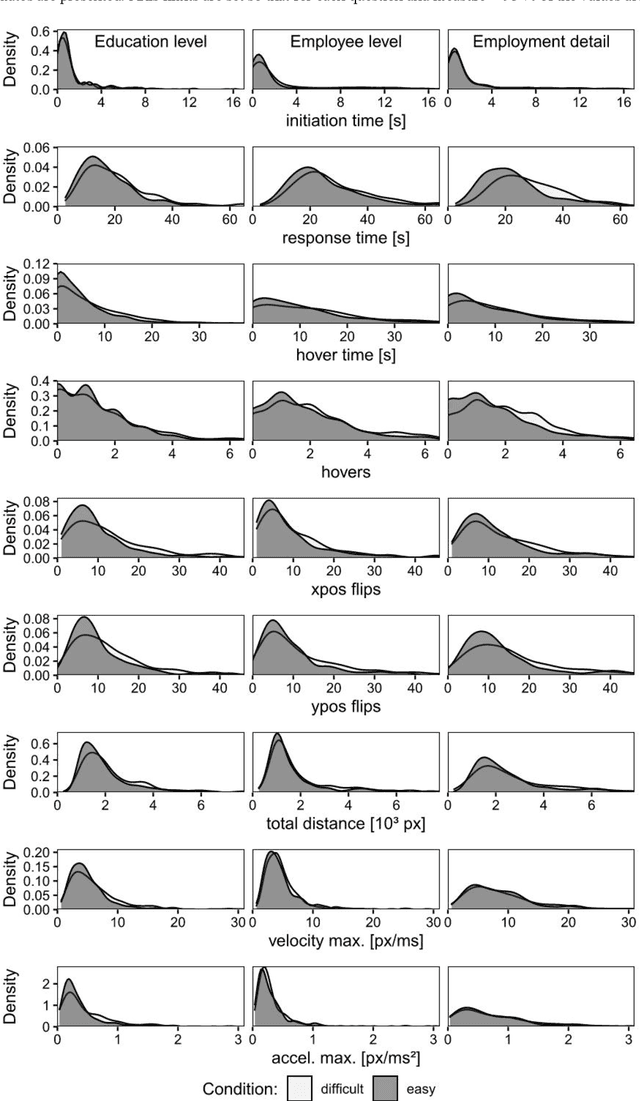
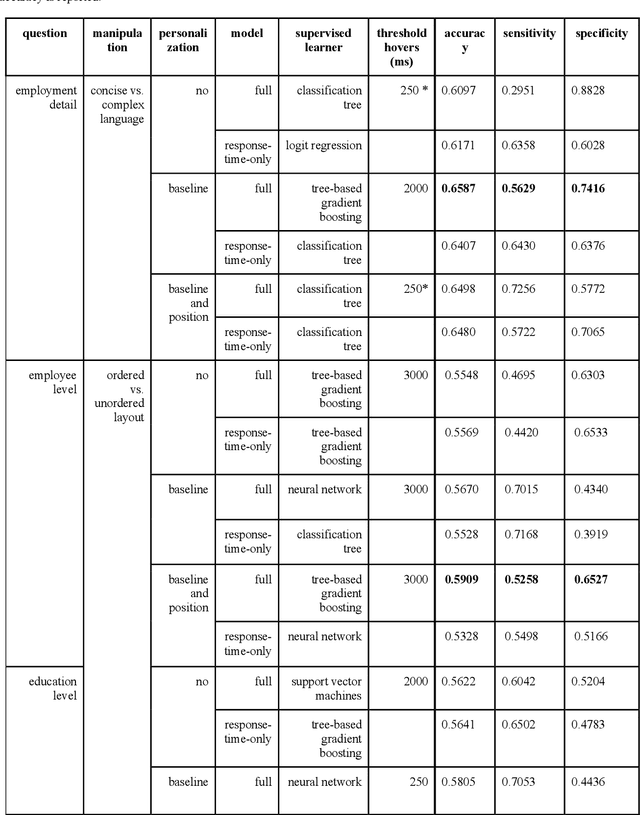
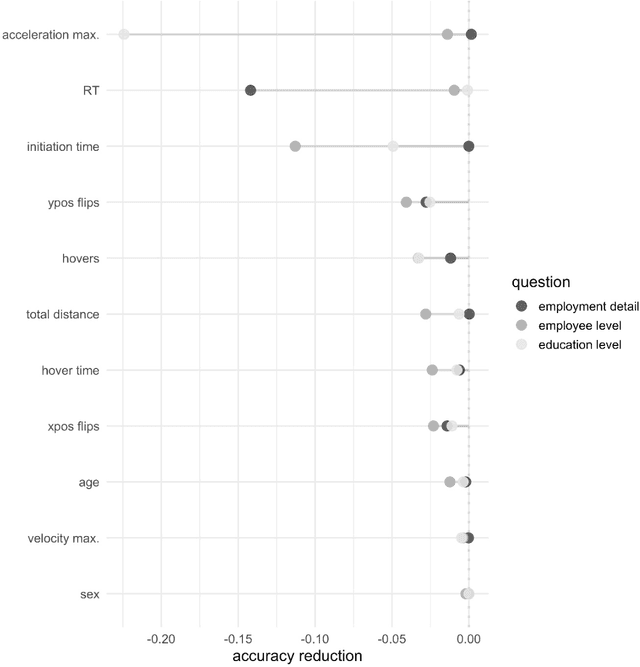
A central goal of survey research is to collect robust and reliable data from respondents. However, despite researchers' best efforts in designing questionnaires, respondents may experience difficulty understanding questions' intent and therefore may struggle to respond appropriately. If it were possible to detect such difficulty, this knowledge could be used to inform real-time interventions through responsive questionnaire design, or to indicate and correct measurement error after the fact. Previous research in the context of web surveys has used paradata, specifically response times, to detect difficulties and to help improve user experience and data quality. However, richer data sources are now available, in the form of the movements respondents make with the mouse, as an additional and far more detailed indicator for the respondent-survey interaction. This paper uses machine learning techniques to explore the predictive value of mouse-tracking data with regard to respondents' difficulty. We use data from a survey on respondents' employment history and demographic information, in which we experimentally manipulate the difficulty of several questions. Using features derived from the cursor movements, we predict whether respondents answered the easy or difficult version of a question, using and comparing several state-of-the-art supervised learning methods. In addition, we develop a personalization method that adjusts for respondents' baseline mouse behavior and evaluate its performance. For all three manipulated survey questions, we find that including the full set of mouse movement features improved prediction performance over response-time-only models in nested cross-validation. Accounting for individual differences in mouse movements led to further improvements.