 Add to Chrome
 Add to Firefox
 Add to Edge
Between Gradient and Natural Gradient: A Continuum of LoRA Initializations
Jul 28, 2026
Low-rank adaptation (LoRA) fine-tunes large pretrained models at a fraction of the cost of full fine-tuning, but its performance depends strongly on how the adapters are initialized. Recent schemes initialize the adapters from the downstream loss gradient: some project the raw gradient onto its top directions, while others first whiten it with an estimate of the loss curvature. We show that these seemingly distinct methods are points on a single continuum: a two-parameter family of preconditioned gradient initializations, which we call Unified LoRA (ULoRA), governed by a spectral whitening exponent and an Adam-like diagonal exponent. Sweeping this family under a full learning-rate search, we find that no single fixed preconditioning strength dominates: the best operating point is task-dependent and frequently lies strictly inside the family, away from the published endpoints. Treated as an upper bound of this family, a tuned ULoRA configuration matches or exceeds full fine-tuning on all five GLUE tasks with RoBERTa-base and is competitive with the strongest baselines on GSM8K with LLaMA-2-7B. Our deployable, search-free variant, ULoRA-Auto, selects per-layer exponents from measured spectral statistics, approaches this upper bound at no additional search cost, and ranks at or near the top among deployable LoRA methods. Our results show that a principled design space for LoRA initialization and curvature preconditioning should be treated as a tunable dimension rather than a fixed design decision.

Machine Learning Applications in Spine Biomechanics
Jan 10, 2024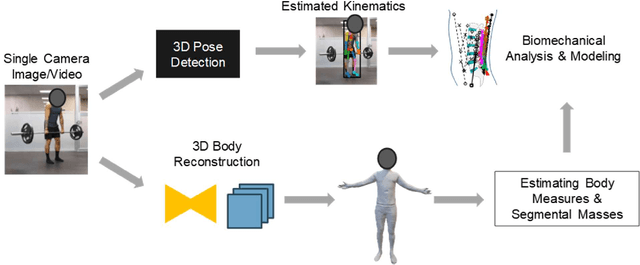
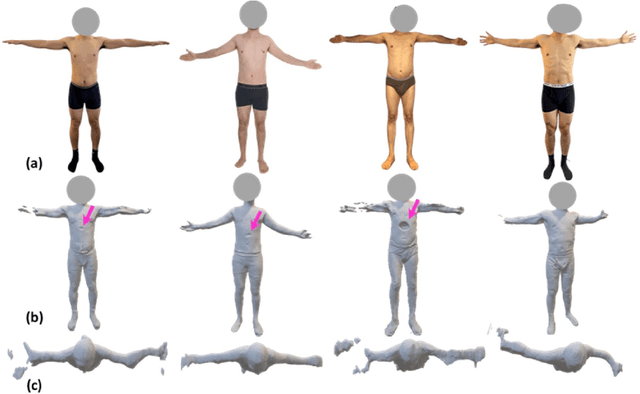
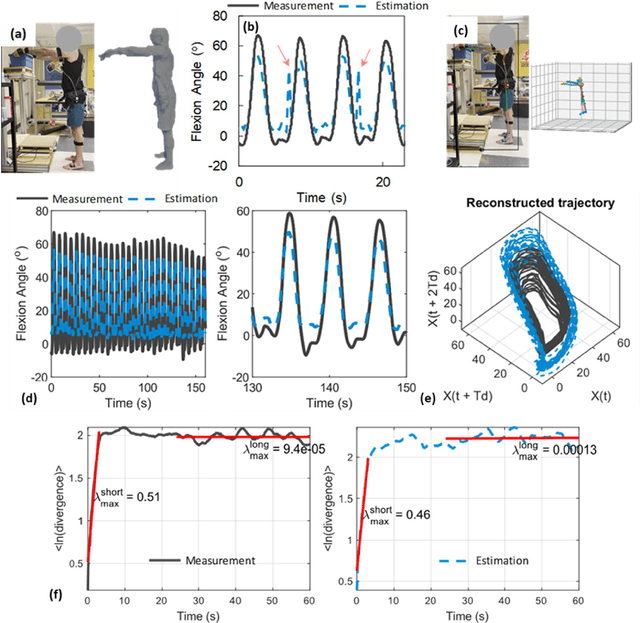
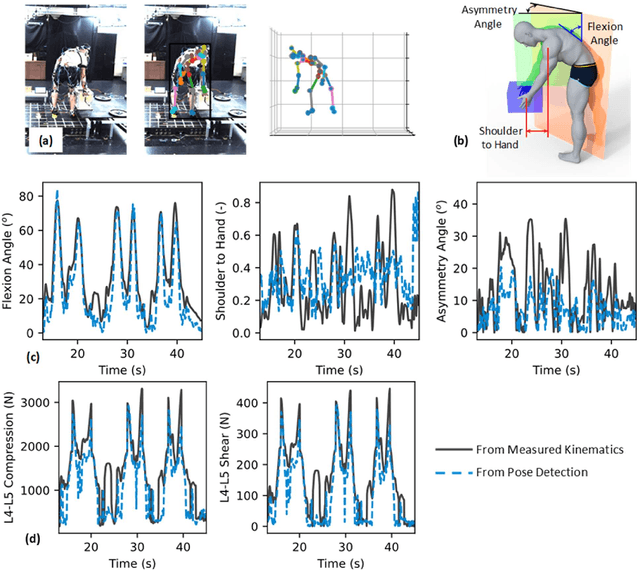
Spine biomechanics is at a transformation with the advent and integration of machine learning and computer vision technologies. These novel techniques facilitate the estimation of 3D body shapes, anthropometrics, and kinematics from as simple as a single-camera image, making them more accessible and practical for a diverse range of applications. This study introduces a framework that merges these methodologies with traditional musculoskeletal modeling, enabling comprehensive analysis of spinal biomechanics during complex activities from a single camera. Additionally, we aim to evaluate their performance and limitations in spine biomechanics applications. The real-world applications explored in this study include assessment in workplace lifting, evaluation of whiplash injuries in car accidents, and biomechanical analysis in professional sports. Our results demonstrate potential and limitations of various algorithms in estimating body shape, kinematics, and conducting in-field biomechanical analyses. In industrial settings, the potential to utilize these new technologies for biomechanical risk assessments offers a pathway for preventive measures against back injuries. In sports activities, the proposed framework provides new opportunities for performance optimization, injury prevention, and rehabilitation. The application in forensic domain further underscores the wide-reaching implications of this technology. While certain limitations were identified, particularly in accuracy of predictions, complex interactions, and external load estimation, this study demonstrates their potential for advancement in spine biomechanics, heralding an optimistic future in both research and practical applications.