 Add to Chrome
 Add to Firefox
 Add to Edge
A Coin Flip Per Token: Bernoulli Sparse Steering of Large Language Models
Jul 06, 2026
Activation steering via sparse autoencoders (SAEs) enables behavioral control of large language models without task-specific fine-tuning, but standard methods apply the steering signal at every generated token, incurring constant per-token perturbation that risks degrading fluency. We ask: is dense intervention necessary? We introduce Stochastic Token Steering (STS), which gates each token independently with probability $p$, and Stochastic Block Steering (SBS), which gates a leading window once per sequence; neither requires a reward model or learned gating policy. Across two model families and two behavioral tasks, steering only 50% of the tokens recovers most of the dense-steering effect while preserving fluency, and steering as few as 30% surpasses prompt-based control. The optimal steering magnitude scales inversely with the intervention ratio, revealing that SAE-mediated control is rate-limited: the behavioral outcome depends on cumulative signal dosage across a sequence.

Texterial: A Text-as-Material Interaction Paradigm for LLM-Mediated Writing
Feb 28, 2026What if text could be sculpted and refined like clay -- or cultivated and pruned like a plant? Texterial reimagines text as a material that users can grow, sculpt, and transform. Current generative-AI models enable rich text operations, yet rigid, linear interfaces often mask such capabilities. We explore how the text-as-material metaphor can reveal AI-enabled operations, reshape the writing process, and foster compelling user experiences. A formative study shows that users readily reason with text-as-material, informing a conceptual framework that explains how material metaphors shift mental models and bridge gulfs of envisioning, execution, and evaluation in LLM-mediated writing. We present the design and evaluation of two technical probes: Text as Clay, where users refine text through gestural sculpting, and Text as Plants, where ideas grow serendipitously over time. This work expands the design space of writing tools by treating text as a living, malleable medium.
Computational Skills by Stealth in Secondary School Data Science
Oct 08, 2020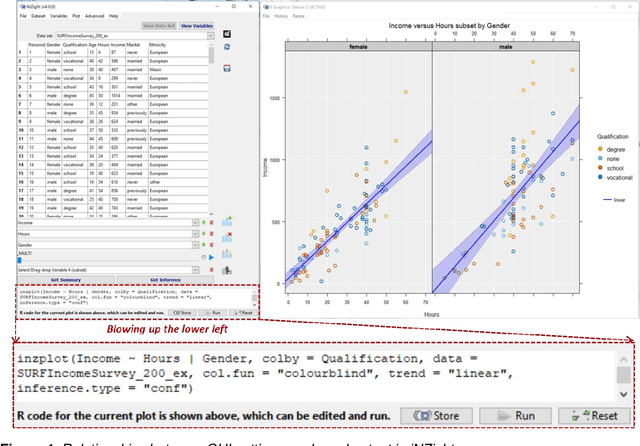
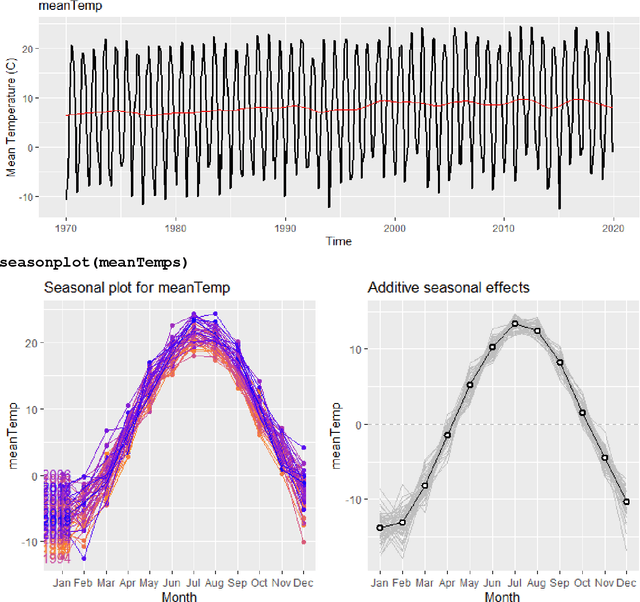
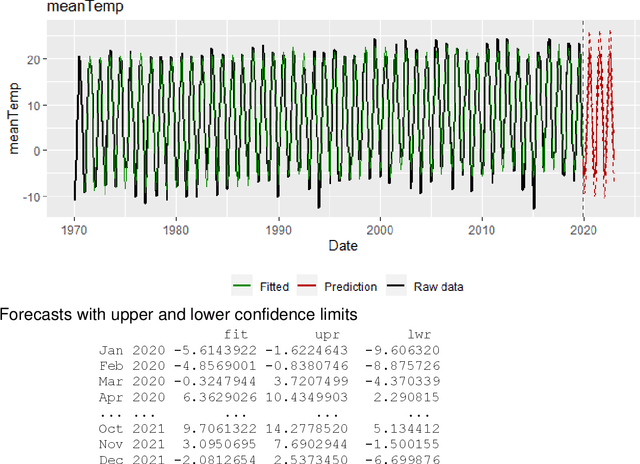
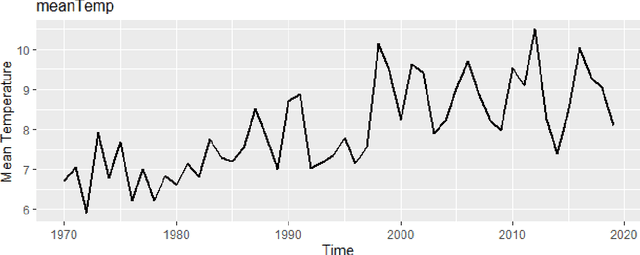
The unprecedented growth in the availability of data of all types and qualities and the emergence of the field of data science has provided an impetus to finally realizing the implementation of the full breadth of the Nolan and Temple Lang proposed integration of computing concepts into statistics curricula at all levels in statistics and new data science programs and courses. Moreover, data science, implemented carefully, opens accessible pathways to stem for students for whom neither mathematics nor computer science are natural affinities, and who would traditionally be excluded. We discuss a proposal for the stealth development of computational skills in students' first exposure to data science through careful, scaffolded exposure to computation and its power. The intent of this approach is to support students, regardless of interest and self-efficacy in coding, in becoming data-driven learners, who are capable of asking complex questions about the world around them, and then answering those questions through the use of data-driven inquiry. This discussion is presented in the context of the International Data Science in Schools Project which recently published computer science and statistics consensus curriculum frameworks for a two-year secondary school data science program, designed to make data science accessible to all.