 Add to Chrome
 Add to Firefox
 Add to Edge
Shearlet Neural Operators for Anisotropic-Shock-Dominated and Multi-scale parametric partial differential equations
Apr 28, 2026
Neural operators have emerged as powerful data-driven surrogates for learning solution operators of parametric partial differential equations (PDEs). However, widely used Fourier Neural Operators (FNOs) rely on global Fourier representations, which can be inefficient for resolving anisotropic structures, sharp gradients, and spatially localized discontinuities that arise in shock-dominated and multiscale regimes. To address these limitations, we introduce the Shearlet Neural Operator (SNO), a neural operator architecture that replaces the Fourier transform with a shearlet-based representation. Shearlets offer directional, multiscale, and spatially localized atoms with near-optimal sparse approximation of anisotropic features, providing an inductive bias aligned with PDE solutions containing edges, fronts, and shocks. SNO learns in the shearlet domain and reconstructs predictions via the inverse transform, retaining efficient spectral computation while improving locality and directional selectivity. Across seven benchmark PDE families, including strongly anisotropic advection, anisotropic diffusion, and nonlinear conservation laws with straight, curved, interacting, spiral, and polygonal shock structures, SNO consistently improves predictive accuracy and feature fidelity over FNO baselines, with the largest gains observed in anisotropic and discontinuity-dominated settings.

Computational Fluid Dynamics and Machine Learning as tools for Optimization of Micromixers geometry
Mar 04, 2022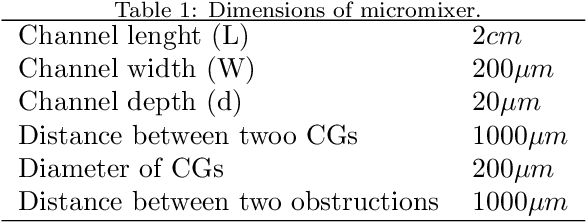

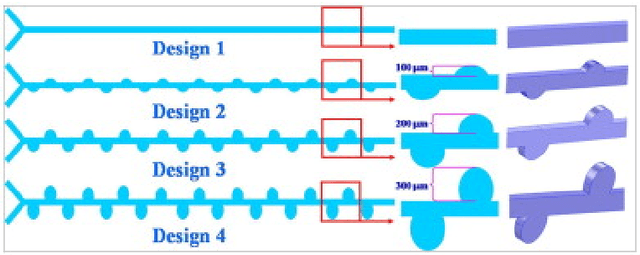
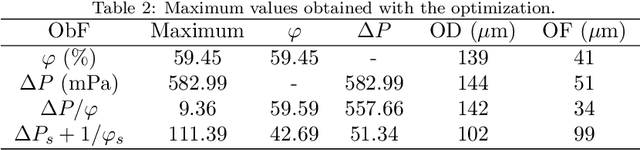
This work explores a new approach for optimization in the field of microfluidics, using the combination of CFD (Computational Fluid Dynamics), and Machine Learning techniques. The objective of this combination is to enable global optimization with lower computational cost. The initial geometry is inspired in a Y-type micromixer with cylindrical grooves on the surface of the main channel and obstructions inside it. Simulations for circular obstructions were carried out using the OpenFOAM software to observe the influences of obstacles. The effects of obstruction diameter (OD), and offset (OF) in the range of [20,140] mm and [10,160] mm, respectively, on percentage of mixing ($\varphi$), pressure drop ($\Delta P$) and energy cost ($\Delta P/\varphi$) were investigated. Numerical experiments were analyzed using machine learning. Firstly, a neural network was used to train the dataset composed by the inputs OD and OF and outputs $\varphi$ and $\Delta P$. The objective functions (ObF) chosen to numerically optimize the performance of micromixers with grooves and obstructions were $\varphi$, $\Delta P$, $\Delta P/\varphi$. The genetic algorithm obtained the geometry that offers the maximum value of $\varphi$ and the minimum value of $\Delta P_s$. The results show that $\varphi$ increases monotonically with increasing OD at all values of OF. The inverse is observed with increasing offset. Furthermore, the results reveal that $\Delta P$ e $\Delta P/\varphi$ also increase with OD. On the other hand, the pressure drop and the cost of mixing energy present a maximum close to the lowest values of OF. Finally, the optimal value obtained for the diameter was OD=131 mm and for the offset OF=10 mm, which corresponds to obstruction of medium size close to the channel wall.