 Add to Chrome
 Add to Firefox
 Add to Edge
Time-Series Forecasting in Safety-Critical Environments: An EU-AI-Act-Compliant Open-Source Package / Zeitreihenprognose in sicherheitskritischen Umgebungen: Ein KI-VO-konformes Open-Source-Paket
Apr 26, 2026
With spotforecast2-safe we present an integrated Compliance-by-Design approach to Python-based point forecasting of time series in safety-critical environments. A review of the relevant open-source tooling shows that existing compliance solutions operate consistently outside of the library to be used - e.g. as scanners, templates, or runtime layers. spotforecast2-safe takes the inverse approach and anchors the requirements of Regulation (EU) 2024/1689 (the EU AI Act, in German: KI-VO), of IEC 61508, of the ISA/IEC 62443 standards series, and of the Cyber Resilience Act within the library: in application-programming-interface contracts, persistence formats, and continuous-integration gates. The approach is operationalised by four non-negotiable code-development rules (zero dead code, deterministic processing, fail-safe handling, minimal dependencies) together with the corresponding process rules (model card, executable docstrings, CI workflows, Common-Platform-Enumeration (CPE) identifier, REUSE-conformant licensing, release pipeline). Interactive visualisation, hyperparameter tuning and automated machine learning (AutoML), as well as deep-learning and large-language-model backends are deliberately excluded, because each of these components either enlarges the attack surface, introduces non-determinism, or impairs reproducibility. A bidirectional traceability matrix maps every regulatory provision onto the corresponding mechanism in the code; an end-to-end example of European-market electricity generation, transmission, and consumption forecasting demonstrates the application. The package is open-source and available under Affero General Public License (AGPL) 3.0-or-later.

Experimental Investigation and Evaluation of Model-based Hyperparameter Optimization
Jul 19, 2021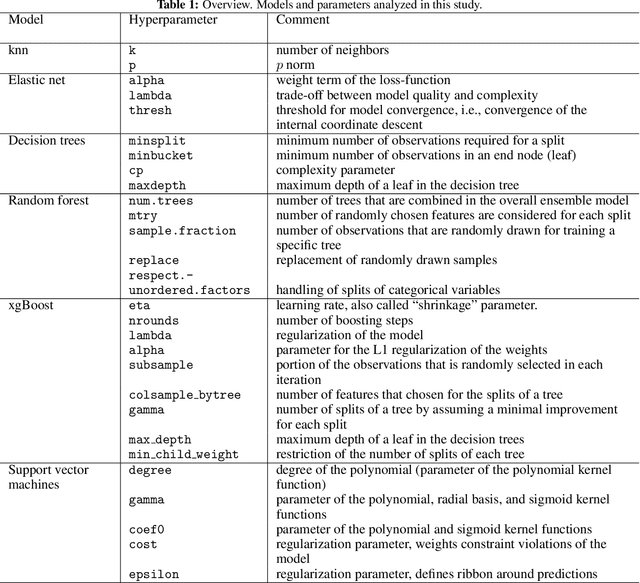
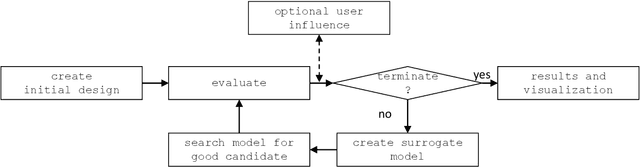
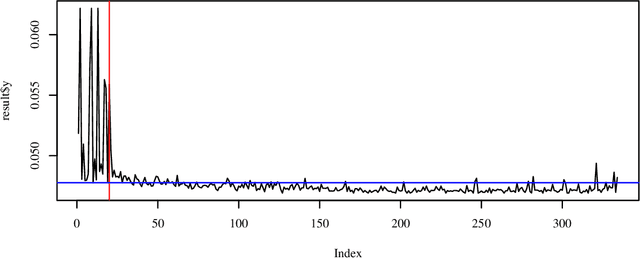
Machine learning algorithms such as random forests or xgboost are gaining more importance and are increasingly incorporated into production processes in order to enable comprehensive digitization and, if possible, automation of processes. Hyperparameters of these algorithms used have to be set appropriately, which can be referred to as hyperparameter tuning or optimization. Based on the concept of tunability, this article presents an overview of theoretical and practical results for popular machine learning algorithms. This overview is accompanied by an experimental analysis of 30 hyperparameters from six relevant machine learning algorithms. In particular, it provides (i) a survey of important hyperparameters, (ii) two parameter tuning studies, and (iii) one extensive global parameter tuning study, as well as (iv) a new way, based on consensus ranking, to analyze results from multiple algorithms. The R package mlr is used as a uniform interface to the machine learning models. The R package SPOT is used to perform the actual tuning (optimization). All additional code is provided together with this paper.
Hospital Capacity Planning Using Discrete Event Simulation Under Special Consideration of the COVID-19 Pandemic
Dec 14, 2020We present a resource-planning tool for hospitals under special consideration of the COVID-19 pandemic, called babsim.hospital. It provides many advantages for crisis teams, e.g., comparison with their own local planning, simulation of local events, simulation of several scenarios (worst / best case). There are benefits for medical professionals, e.g, analysis of the pandemic at local, regional, state and federal level, the consideration of special risk groups, tools for validating the length of stays and transition probabilities. Finally, there are potential advantages for administration, management, e.g., assessment of the situation of individual hospitals taking local events into account, consideration of relevant resources such as beds, ventilators, rooms, protective clothing, and personnel planning, e.g., medical and nursing staff. babsim.hospital combines simulation, optimization, statistics, and artificial intelligence processes in a very efficient way. The core is a discrete, event-based simulation model.