 Add to Chrome
 Add to Firefox
 Add to Edge
Parallelizing Node-Level Explainability in Graph Neural Networks
Jan 08, 2026
Graph Neural Networks (GNNs) have demonstrated remarkable performance in a wide range of tasks, such as node classification, link prediction, and graph classification, by exploiting the structural information in graph-structured data. However, in node classification, computing node-level explainability becomes extremely time-consuming as the size of the graph increases, while batching strategies often degrade explanation quality. This paper introduces a novel approach to parallelizing node-level explainability in GNNs through graph partitioning. By decomposing the graph into disjoint subgraphs, we enable parallel computation of explainability for node neighbors, significantly improving the scalability and efficiency without affecting the correctness of the results, provided sufficient memory is available. For scenarios where memory is limited, we further propose a dropout-based reconstruction mechanism that offers a controllable trade-off between memory usage and explanation fidelity. Experimental results on real-world datasets demonstrate substantial speedups, enabling scalable and transparent explainability for large-scale GNN models.

A matter of attitude: Focusing on positive and active gradients to boost saliency maps
Sep 22, 2023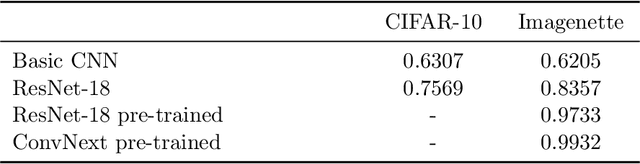
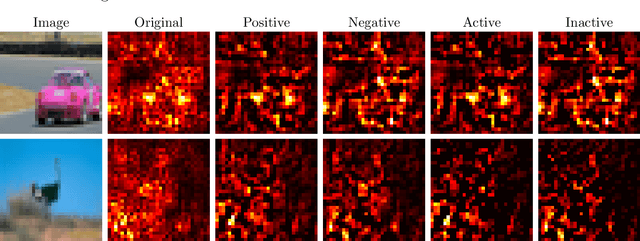
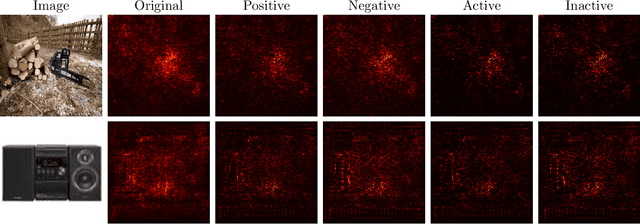

Saliency maps have become one of the most widely used interpretability techniques for convolutional neural networks (CNN) due to their simplicity and the quality of the insights they provide. However, there are still some doubts about whether these insights are a trustworthy representation of what CNNs use to come up with their predictions. This paper explores how rescuing the sign of the gradients from the saliency map can lead to a deeper understanding of multi-class classification problems. Using both pretrained and trained from scratch CNNs we unveil that considering the sign and the effect not only of the correct class, but also the influence of the other classes, allows to better identify the pixels of the image that the network is really focusing on. Furthermore, how occluding or altering those pixels is expected to affect the outcome also becomes clearer.