 Add to Chrome
 Add to Firefox
 Add to Edge
Deep learning-guided evolutionary optimization for protein design
Mar 03, 2026
Designing novel proteins with desired characteristics remains a significant challenge due to the large sequence space and the complexity of sequence-function relationships. Efficient exploration of this space to identify sequences that meet specific design criteria is crucial for advancing therapeutics and biotechnology. Here, we present BoGA (Bayesian Optimization Genetic Algorithm), a framework that combines evolutionary search with Bayesian optimization to efficiently navigate the sequence space. By integrating a genetic algorithm as a stochastic proposal generator within a surrogate modeling loop, BoGA prioritizes candidates based on prior evaluations and surrogate model predictions, enabling data-efficient optimization. We demonstrate the utility of BoGA through benchmarking on sequence and structure design tasks, followed by its application in designing peptide binders against pneumolysin, a key virulence factor of \textit{Streptococcus pneumoniae}. BoGA accelerates the discovery of high-confidence binders, demonstrating the potential for efficient protein design across diverse objectives. The algorithm is implemented within the BoPep suite and is available under an MIT license at \href{https://github.com/ErikHartman/bopep}{GitHub}.

Controllable protein design through Feynman-Kac steering
Nov 12, 2025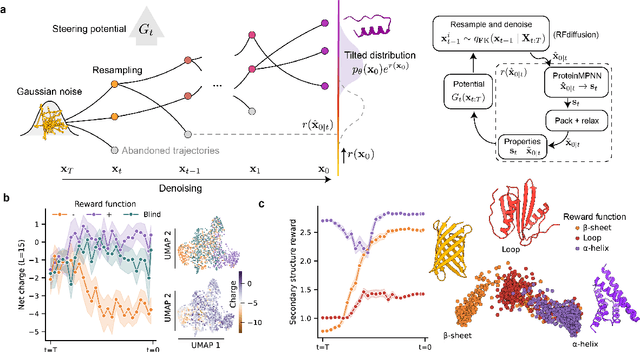

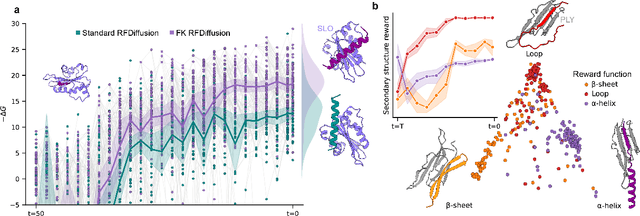
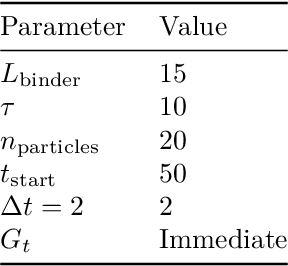
Diffusion-based models have recently enabled the generation of realistic and diverse protein structures, yet they remain limited in their ability to steer outcomes toward specific functional or biochemical objectives, such as binding affinity or sequence composition. Here we extend the Feynman-Kac (FK) steering framework, an inference-time control approach, to diffusion-based protein design. By coupling FK steering with structure generation, the method guides sampling toward desirable structural or energetic features while maintaining the diversity of the underlying diffusion process. To enable simultaneous generation of both sequence and structure properties, rewards are computed on models refined through ProteinMPNN and all-atom relaxation. Applied to binder design, FK steering consistently improves predicted interface energetics across diverse targets with minimal computational overhead. More broadly, this work demonstrates that inference-time FK control generalizes diffusion-based protein design to arbitrary, non-differentiable, and reward-agnostic objectives, providing a unified and model-independent framework for guided molecular generation.