 Add to Chrome
 Add to Firefox
 Add to Edge
On the Condition Monitoring of Bolted Joints through Acoustic Emission and Deep Transfer Learning: Generalization, Ordinal Loss and Super-Convergence
May 29, 2024
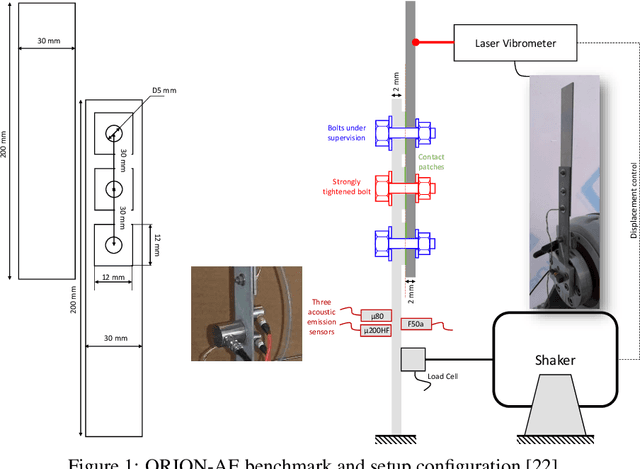

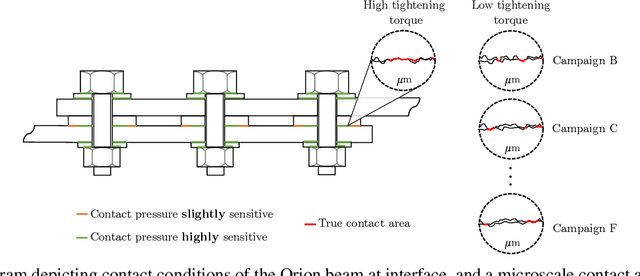
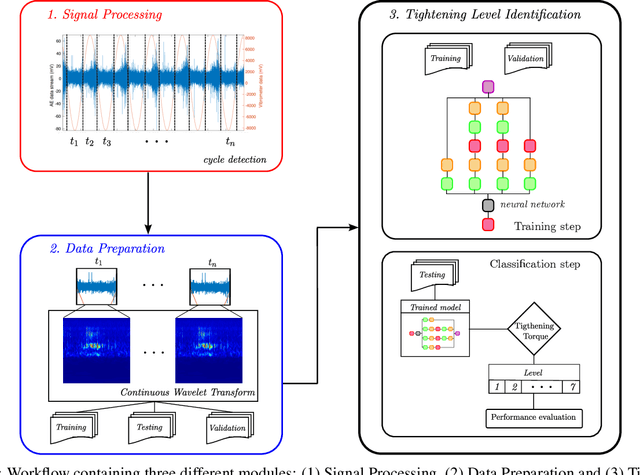
This paper investigates the use of deep transfer learning based on convolutional neural networks (CNNs) to monitor the condition of bolted joints using acoustic emissions. Bolted structures are critical components in many mechanical systems, and the ability to monitor their condition status is crucial for effective structural health monitoring. We evaluated the performance of our methodology using the ORION-AE benchmark, a structure composed of two thin beams connected by three bolts, where highly noisy acoustic emission measurements were taken to detect changes in the applied tightening torque of the bolts. The data used from this structure is derived from the transformation of acoustic emission data streams into images using continuous wavelet transform, and leveraging pretrained CNNs for feature extraction and denoising. Our experiments compared single-sensor versus multiple-sensor fusion for estimating the tightening level (loosening) of bolts and evaluated the use of raw versus prefiltered data on the performance. We particularly focused on the generalization capabilities of CNN-based transfer learning across different measurement campaigns and we studied ordinal loss functions to penalize incorrect predictions less severely when close to the ground truth, thereby encouraging misclassification errors to be in adjacent classes. Network configurations as well as learning rate schedulers are also investigated, and super-convergence is obtained, i.e., high classification accuracy is achieved in a few number of iterations with different networks. Furthermore, results demonstrate the generalization capabilities of CNN-based transfer learning for monitoring bolted structures by acoustic emission with varying amounts of prior information required during training.

Clustering acoustic emission data streams with sequentially appearing clusters using mixture models
Aug 25, 2021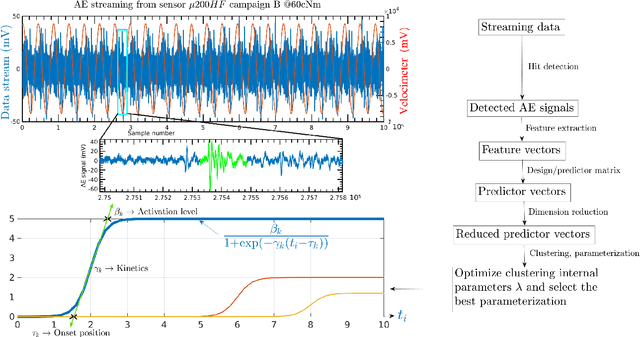
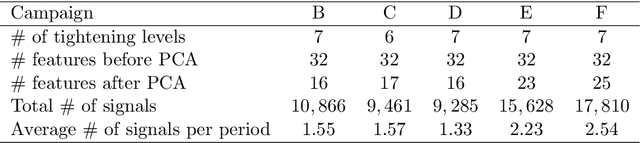
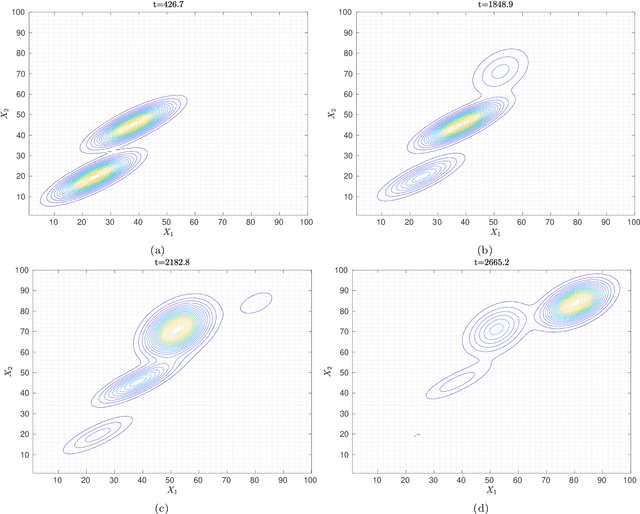
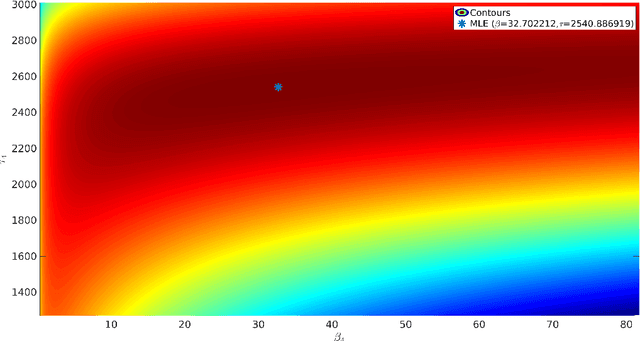
The interpretation of unlabeled acoustic emission (AE) data classically relies on general-purpose clustering methods. While several external criteria have been used in the past to select the hyperparameters of those algorithms, few studies have paid attention to the development of dedicated objective functions in clustering methods able to cope with the specificities of AE data. We investigate how to explicitly represent clusters onsets in mixture models in general, and in Gaussian Mixture Models (GMM) in particular. By modifying the internal criterion of such models, we propose the first clustering method able to provide, through parameters estimated by an expectation-maximization procedure, information about when clusters occur (onsets), how they grow (kinetics) and their level of activation through time. This new objective function accommodates continuous timestamps of AE signals and, thus, their order of occurrence. The method, called GMMSEQ, is experimentally validated to characterize the loosening phenomenon in bolted structure under vibrations. A comparison with three standard clustering methods on raw streaming data from five experimental campaigns shows that GMMSEQ not only provides useful qualitative information about the timeline of clusters, but also shows better performance in terms of cluster characterization. In view of developing an open acoustic emission initiative and according to the FAIR principles, the datasets and the codes are made available to reproduce the research of this paper.
Autoregressive Hidden Markov Models with partial knowledge on latent space applied to aero-engines prognostics
May 01, 2021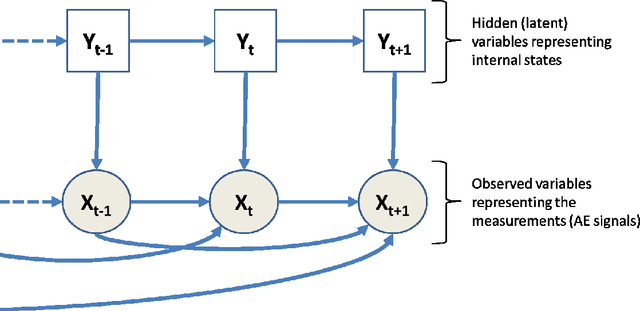
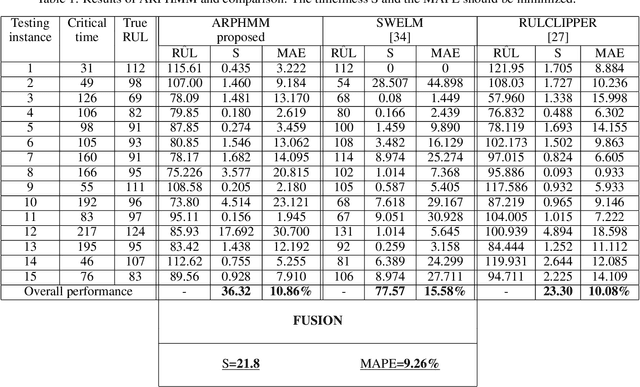
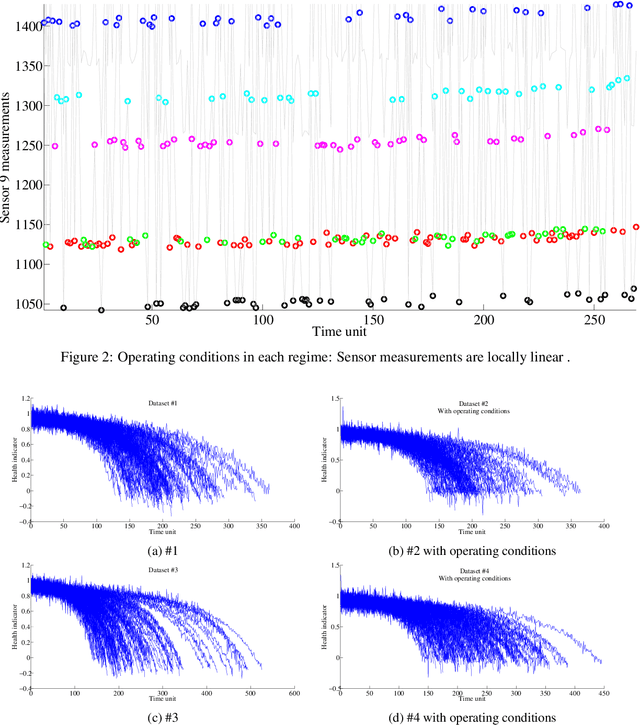
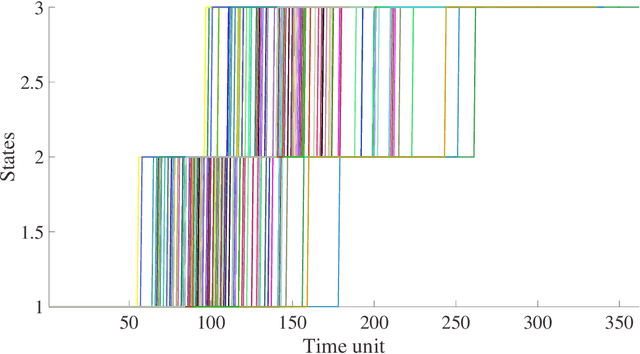
[This paper was initially published in PHME conference in 2016, selected for further publication in International Journal of Prognostics and Health Management.] This paper describes an Autoregressive Partially-hidden Markov model (ARPHMM) for fault detection and prognostics of equipments based on sensors' data. It is a particular dynamic Bayesian network that allows to represent the dynamics of a system by means of a Hidden Markov Model (HMM) and an autoregressive (AR) process. The Markov chain assumes that the system is switching back and forth between internal states while the AR process ensures a temporal coherence on sensor measurements. A sound learning procedure of standard ARHMM based on maximum likelihood allows to iteratively estimate all parameters simultaneously. This paper suggests a modification of the learning procedure considering that one may have prior knowledge about the structure which becomes partially hidden. The integration of the prior is based on the Theory of Weighted Distributions which is compatible with the Expectation-Maximization algorithm in the sense that the convergence properties are still satisfied. We show how to apply this model to estimate the remaining useful life based on health indicators. The autoregressive parameters can indeed be used for prediction while the latent structure can be used to get information about the degradation level. The interest of the proposed method for prognostics and health assessment is demonstrated on CMAPSS datasets.