 Add to Chrome
 Add to Firefox
 Add to Edge
Generating Attacks for LLMs with GFlowNets
Aug 10, 2026
The rapid advancement of Large Language Models (LLMs) has facilitated their ubiquitous integration into various domains, leading to widespread adoption. However, this escalating trend has introduced significant security vulnerabilities, necessitating the identification and mitigation of flaws arising from malicious exploitation. Red teaming assessments, conducted to evaluate model robustness through diverse adversarial inputs, are essential for exposing security risks and implementing countermeasures. Currently, red teaming is performed either manually by experts or automatically using predefined attack datasets. Nevertheless, manual testing remains time-consuming, while existing automated methods suffer from limited creativity due to their inherent dependency on fixed datasets. In this study, we propose an automated, human-independent, and adaptive approach leveraging GFlowNets to identify LLM vulnerabilities by utilizing one large language model to test another. Within this framework, an attacker model is trained against a specified victim model to perform automated red teaming and provide a quantitative robustness score. This research aims to generate more effective adversarial attacks in English compared to existing benchmarks and, as a novel contribution to the literature, introduces a model capable of generating attack inputs in the Turkish language.

Detecting Cybersecurity Events from Noisy Short Text
Apr 10, 2019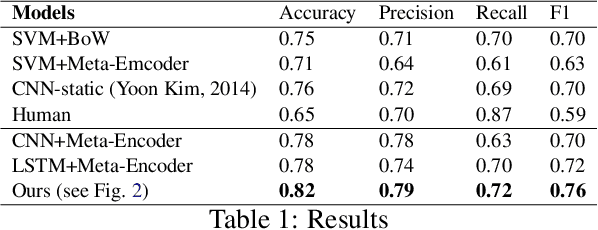
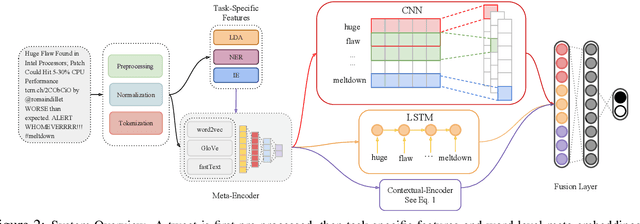
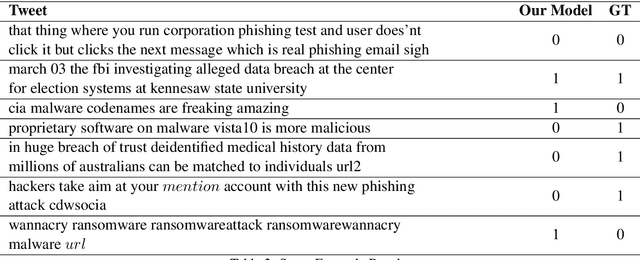
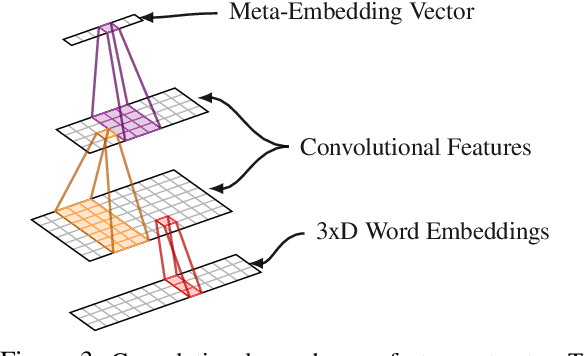
It is very critical to analyze messages shared over social networks for cyber threat intelligence and cyber-crime prevention. In this study, we propose a method that leverages both domain-specific word embeddings and task-specific features to detect cyber security events from tweets. Our model employs a convolutional neural network (CNN) and a long short-term memory (LSTM) recurrent neural network which takes word level meta-embeddings as inputs and incorporates contextual embeddings to classify noisy short text. We collected a new dataset of cyber security related tweets from Twitter and manually annotated a subset of 2K of them. We experimented with this dataset and concluded that the proposed model outperforms both traditional and neural baselines. The results suggest that our method works well for detecting cyber security events from noisy short text.