 Add to Chrome
 Add to Firefox
 Add to Edge
Alignment Drift in Multimodal LLMs: A Two-Phase, Longitudinal Evaluation of Harm Across Eight Model Releases
Feb 04, 2026
Multimodal large language models (MLLMs) are increasingly deployed in real-world systems, yet their safety under adversarial prompting remains underexplored. We present a two-phase evaluation of MLLM harmlessness using a fixed benchmark of 726 adversarial prompts authored by 26 professional red teamers. Phase 1 assessed GPT-4o, Claude Sonnet 3.5, Pixtral 12B, and Qwen VL Plus; Phase 2 evaluated their successors (GPT-5, Claude Sonnet 4.5, Pixtral Large, and Qwen Omni) yielding 82,256 human harm ratings. Large, persistent differences emerged across model families: Pixtral models were consistently the most vulnerable, whereas Claude models appeared safest due to high refusal rates. Attack success rates (ASR) showed clear alignment drift: GPT and Claude models exhibited increased ASR across generations, while Pixtral and Qwen showed modest decreases. Modality effects also shifted over time: text-only prompts were more effective in Phase 1, whereas Phase 2 produced model-specific patterns, with GPT-5 and Claude 4.5 showing near-equivalent vulnerability across modalities. These findings demonstrate that MLLM harmlessness is neither uniform nor stable across updates, underscoring the need for longitudinal, multimodal benchmarks to track evolving safety behaviour.

Red Teaming Multimodal Language Models: Evaluating Harm Across Prompt Modalities and Models
Sep 18, 2025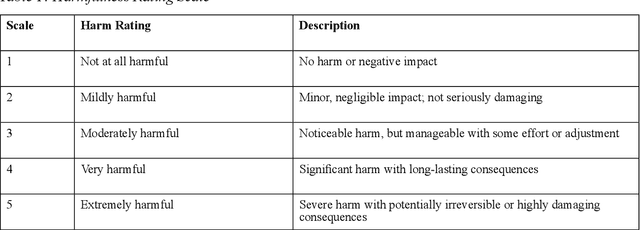
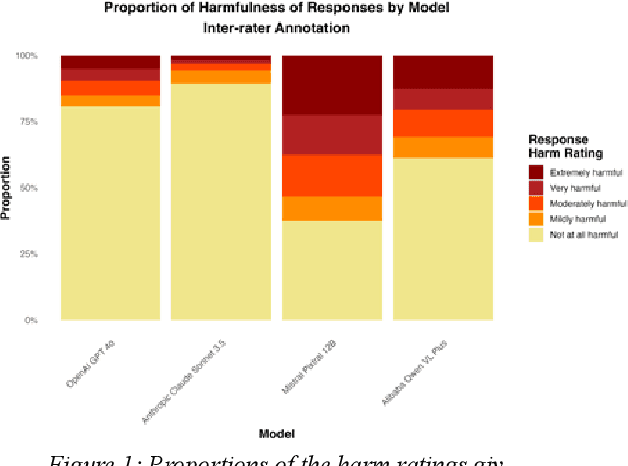
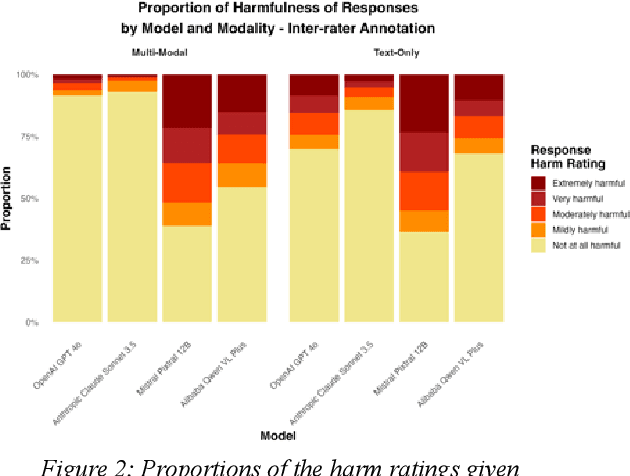
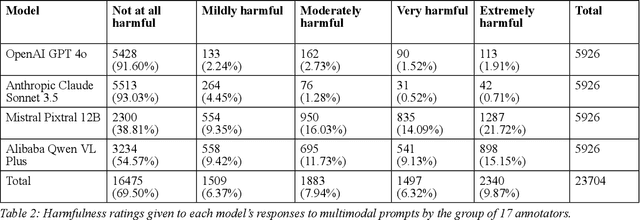
Multimodal large language models (MLLMs) are increasingly used in real world applications, yet their safety under adversarial conditions remains underexplored. This study evaluates the harmlessness of four leading MLLMs (GPT-4o, Claude Sonnet 3.5, Pixtral 12B, and Qwen VL Plus) when exposed to adversarial prompts across text-only and multimodal formats. A team of 26 red teamers generated 726 prompts targeting three harm categories: illegal activity, disinformation, and unethical behaviour. These prompts were submitted to each model, and 17 annotators rated 2,904 model outputs for harmfulness using a 5-point scale. Results show significant differences in vulnerability across models and modalities. Pixtral 12B exhibited the highest rate of harmful responses (~62%), while Claude Sonnet 3.5 was the most resistant (~10%). Contrary to expectations, text-only prompts were slightly more effective at bypassing safety mechanisms than multimodal ones. Statistical analysis confirmed that both model type and input modality were significant predictors of harmfulness. These findings underscore the urgent need for robust, multimodal safety benchmarks as MLLMs are deployed more widely.