 Add to Chrome
 Add to Firefox
 Add to Edge
Architectures for Robust Self-Organizing Energy Systems under Information and Control Constraints
Apr 23, 2026
Applying the concept of controlled self-organization in agent-based Cyber-Physical Energy Systems (CPES) is a promising approach to ensure system robustness. By introducing an observer/controller architecture to the system, this concept allows for self-organization while still enabling intervention when disturbances occur. Thus, it is possible to respond to effects of cyber attacks, a major threat to current energy systems. However, when implementing an observer to monitor the system and a controller to execute actions for controlled self-organization in CPES, it is essential to take into account restrictions on information and actions resulting from the privacy of local distributed energy resources, regulatory constraints, and data exchange requirements. For this reason, this paper presents architecture variants for the observer and controller that take into account restrictions on access to information and limited actions. In addition, it evaluates possible controller actions in various architectures. The results underscore the importance of considering observer/controller architectures when designing agent-based systems to ensure their robustness for real-world applications.

The Adversarial Resilience Learning Architecture for AI-based Modelling, Exploration, and Operation of Complex Cyber-Physical Systems
May 27, 2020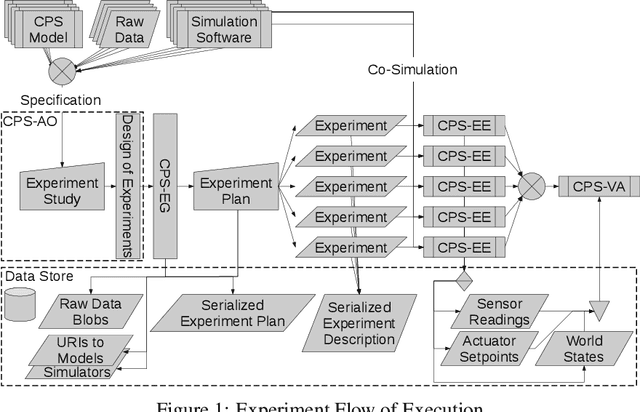
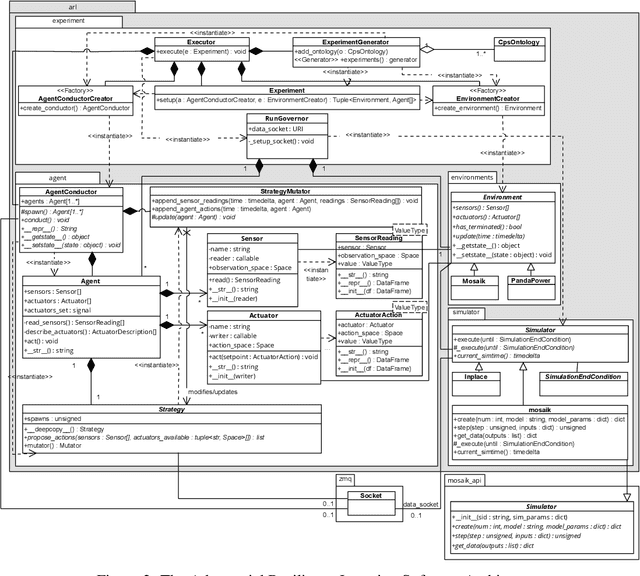
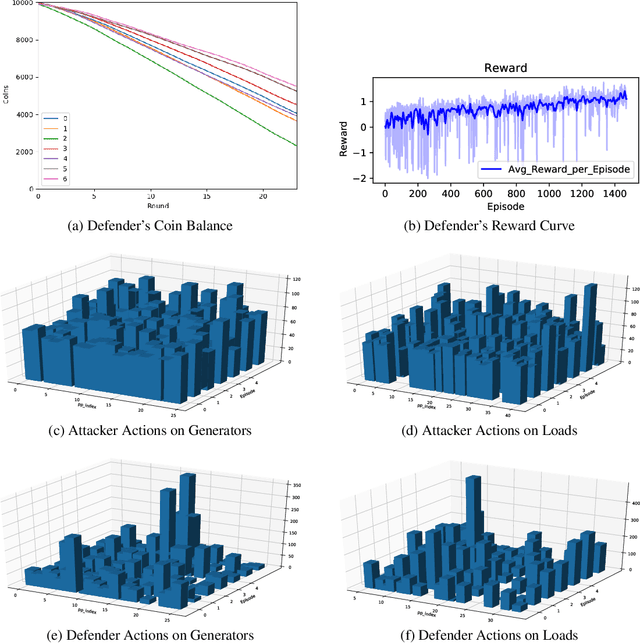
Modern algorithms in the domain of Deep Reinforcement Learning (DRL) demonstrated remarkable successes; most widely known are those in game-based scenarios, from ATARI video games to Go and the StarCraft~\textsc{II} real-time strategy game. However, applications in the domain of modern Cyber-Physical Systems (CPS) that take advantage a vast variety of DRL algorithms are few. We assume that the benefits would be considerable: Modern CPS have become increasingly complex and evolved beyond traditional methods of modelling and analysis. At the same time, these CPS are confronted with an increasing amount of stochastic inputs, from volatile energy sources in power grids to broad user participation stemming from markets. Approaches of system modelling that use techniques from the domain of Artificial Intelligence (AI) do not focus on analysis and operation. In this paper, we describe the concept of Adversarial Resilience Learning (ARL) that formulates a new approach to complex environment checking and resilient operation: It defines two agent classes, attacker and defender agents. The quintessence of ARL lies in both agents exploring the system and training each other without any domain knowledge. Here, we introduce the ARL software architecture that allows to use a wide range of model-free as well as model-based DRL-based algorithms, and document results of concrete experiment runs on a complex power grid.