 Add to Chrome
 Add to Firefox
 Add to Edge
SAGA: Score-Weighted Adaptive Generation Alignment for Low-Resource Nordic Language Models
Aug 06, 2026
Preference optimisation has proven effective for improving large language models but typically relies on costly human preference annotations. Extending these methods to morphologically rich, low-resource languages remains challenging because such annotations are scarce. We present SAGA (Score-weighted Adaptive Generation Alignment), a parser-guided preference optimisation framework that replaces human labels with dependency-parser supervision. SAGA converts parser judgements into preference pairs for delta-DPO, combines parser quality with lexical diversity in a composite reward, filters low-information pairs using a reward-gap criterion, and monitors reward hacking to maintain reliable supervision. Across Danish, Icelandic, and Norwegian Bokmål using GPT-SW3-1.3B, SAGA consistently improves grammatical quality without requiring human preference labels. Danish parse success increases from 69.0% to 93.8%, Icelandic achieves a +4.5 percentage-point improvement on an independent Stanza evaluation (three-run mean +3.3 percentage points) while native speakers prefer SAGA outputs in 80% of pairwise comparisons, and Norwegian Bokmål improves by +28 percentage points. These results demonstrate that parser-derived supervision is a practical alternative to human preference annotation for grammatical alignment in low-resource languages where high-quality dependency parsers are available.

Autonomous 3D Exploration in Large-Scale Environments with Dynamic Obstacles
Oct 27, 2023
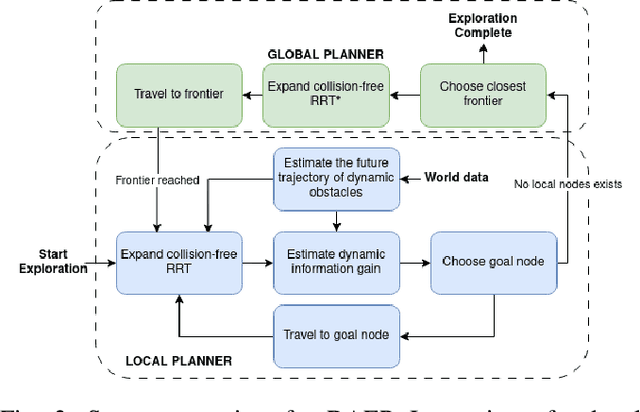

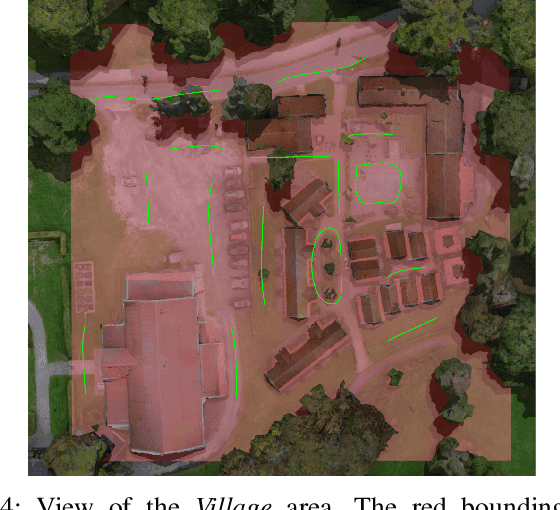
Exploration in dynamic and uncertain real-world environments is an open problem in robotics and constitutes a foundational capability of autonomous systems operating in most of the real world. While 3D exploration planning has been extensively studied, the environments are assumed static or only reactive collision avoidance is carried out. We propose a novel approach to not only avoid dynamic obstacles but also include them in the plan itself, to exploit the dynamic environment in the agent's favor. The proposed planner, Dynamic Autonomous Exploration Planner (DAEP), extends AEP to explicitly plan with respect to dynamic obstacles. To thoroughly evaluate exploration planners in such settings we propose a new enhanced benchmark suite with several dynamic environments, including large-scale outdoor environments. DAEP outperform state-of-the-art planners in dynamic and large-scale environments. DAEP is shown to be more effective at both exploration and collision avoidance.