 Add to Chrome
 Add to Firefox
 Add to Edge
Enhancing AI-Based ECG Delineation with Deep Learning Denoising Techniques
May 04, 2026
Evaluating canine electrocardiograms (ECGs) is challenging due to noise that can obscure clinically relevant cardiac electrical activity. Common sources of interference include respiration, muscle activity, poor lead contact, and external electrical artifacts. Classical signal denoising techniques, such as filtering and wavelet-based methods, struggle to suppress diverse noise patterns while preserving morphological features critical for accurate ECG delineation. We propose an autoencoder-based neural network model and training strategy for ECG denoising as a preprocessing step for canine ECG analysis. The model is trained to reconstruct clean cardiac signals from noisy inputs, enabling effective noise reduction without degrading diagnostically important waveforms. Our approach demonstrates strong performance across both noisy and clean ECG recordings, indicating robustness to varying signal conditions and suitability for downstream delineation tasks.

PulseNet: Deep Learning ECG-signal classification using random augmentation policy and continous wavelet transform for canines
May 17, 2023
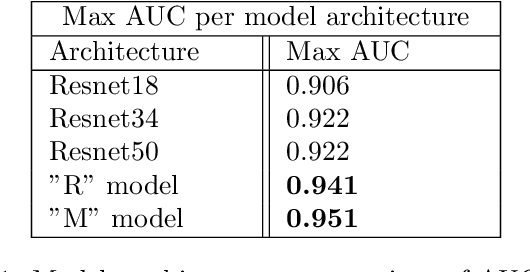
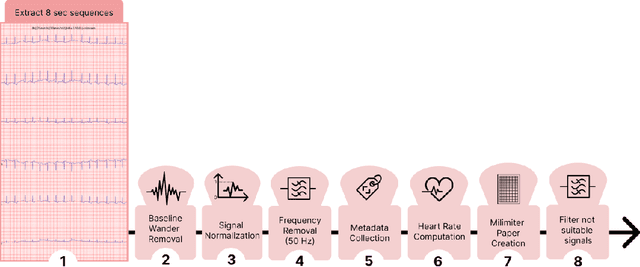

Evaluating canine electrocardiograms (ECG) require skilled veterinarians, but current availability of veterinary cardiologists for ECG interpretation and diagnostic support is limited. Developing tools for automated assessment of ECG sequences can improve veterinary care by providing clinicians real-time results and decision support tools. We implement a deep convolutional neural network (CNN) approach for classifying canine electrocardiogram sequences as either normal or abnormal. ECG records are converted into 8 second Lead II sequences and classified as either normal (no evidence of cardiac abnormalities) or abnormal (presence of one or more cardiac abnormalities). For training ECG sequences are randomly augmented using RandomAugmentECG, a new augmentation library implemented specifically for this project. Each chunk is then is converted using a continuous wavelet transform into a 2D scalogram. The 2D scalogram are then classified as either normal or abnormal by a binary CNN classifier. Experimental results are validated against three boarded veterinary cardiologists achieving an AUC-ROC score of 0.9506 on test dataset matching human level performance. Additionally, we describe model deployment to Microsoft Azure using an MLOps approach. To our knowledge, this work is one of the first attempts to implement a deep learning model to automatically classify ECG sequences for canines.Implementing automated ECG classification will enhance veterinary care through improved diagnostic performance and increased clinic efficiency.