 Add to Chrome
 Add to Firefox
 Add to Edge
Evaluating FrameNet-Based Semantic Modeling for Gender-Based Violence Detection in Clinical Records
Mar 18, 2026
Gender-based violence (GBV) is a major public health issue, with the World Health Organization estimating that one in three women experiences physical or sexual violence by an intimate partner during her lifetime. In Brazil, although healthcare professionals are legally required to report such cases, underreporting remains significant due to difficulties in identifying abuse and limited integration between public information systems. This study investigates whether FrameNet-based semantic annotation of open-text fields in electronic medical records can support the identification of patterns of GBV. We compare the performance of an SVM classifier for GBV cases trained on (1) frame-annotated text, (2) annotated text combined with parameterized data, and (3) parameterized data alone. Quantitative and qualitative analyses show that models incorporating semantic annotation outperform categorical models, achieving over 0.3 improvement in F1 score and demonstrating that domain-specific semantic representations provide meaningful signals beyond structured demographic data. The findings support the hypothesis that semantic analysis of clinical narratives can enhance early identification strategies and support more informed public health interventions.

Frame Semantic Patterns for Identifying Underreporting of Notifiable Events in Healthcare: The Case of Gender-Based Violence
Oct 30, 2025We introduce a methodology for the identification of notifiable events in the domain of healthcare. The methodology harnesses semantic frames to define fine-grained patterns and search them in unstructured data, namely, open-text fields in e-medical records. We apply the methodology to the problem of underreporting of gender-based violence (GBV) in e-medical records produced during patients' visits to primary care units. A total of eight patterns are defined and searched on a corpus of 21 million sentences in Brazilian Portuguese extracted from e-SUS APS. The results are manually evaluated by linguists and the precision of each pattern measured. Our findings reveal that the methodology effectively identifies reports of violence with a precision of 0.726, confirming its robustness. Designed as a transparent, efficient, low-carbon, and language-agnostic pipeline, the approach can be easily adapted to other health surveillance contexts, contributing to the broader, ethical, and explainable use of NLP in public health systems.
Evaluating the Impact of LLM-Assisted Annotation in a Perspectivized Setting: the Case of FrameNet Annotation
Oct 29, 2025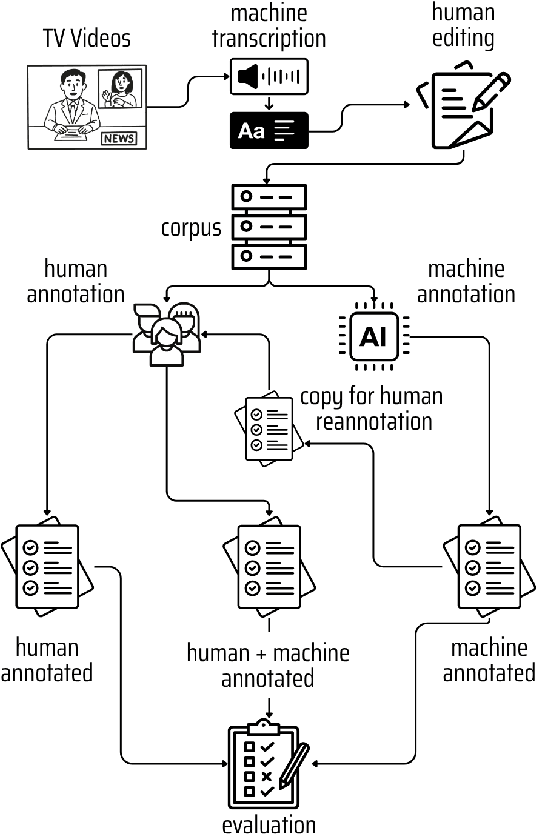
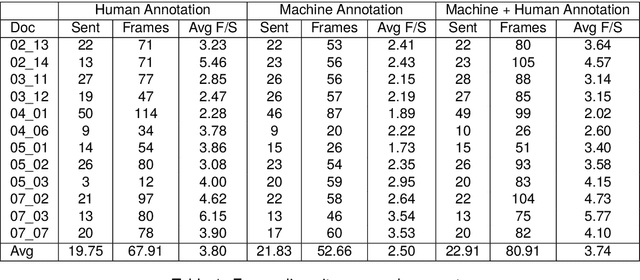
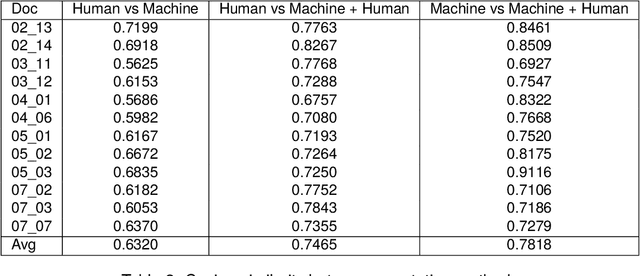
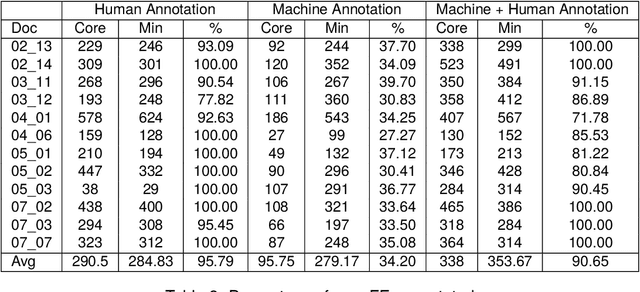
The use of LLM-based applications as a means to accelerate and/or substitute human labor in the creation of language resources and dataset is a reality. Nonetheless, despite the potential of such tools for linguistic research, comprehensive evaluation of their performance and impact on the creation of annotated datasets, especially under a perspectivized approach to NLP, is still missing. This paper contributes to reduction of this gap by reporting on an extensive evaluation of the (semi-)automatization of FrameNet-like semantic annotation by the use of an LLM-based semantic role labeler. The methodology employed compares annotation time, coverage and diversity in three experimental settings: manual, automatic and semi-automatic annotation. Results show that the hybrid, semi-automatic annotation setting leads to increased frame diversity and similar annotation coverage, when compared to the human-only setting, while the automatic setting performs considerably worse in all metrics, except for annotation time.