 Add to Chrome
 Add to Firefox
 Add to Edge
Meteoroid stream identification with HDBSCAN unsupervised clustering algorithm
Jul 02, 2025
Accurate identification of meteoroid streams is central to understanding their origins and evolution. However, overlapping clusters and background noise hinder classification, an issue amplified for missions such as ESA's LUMIO that rely on meteor shower observations to infer lunar meteoroid impact parameters. This study evaluates the performance of the Hierarchical Density-Based Spatial Clustering of Applications with Noise (HDBSCAN) algorithm for unsupervised meteoroid stream identification, comparing its outcomes with the established Cameras for All-Sky Meteor Surveillance (CAMS) look-up table method. We analyze the CAMS Meteoroid Orbit Database v3.0 using three feature vectors: LUTAB (CAMS geocentric parameters), ORBIT (heliocentric orbital elements), and GEO (adapted geocentric parameters). HDBSCAN is applied with varying minimum cluster sizes and two cluster selection methods (eom and leaf). To align HDBSCAN clusters with CAMS classifications, the Hungarian algorithm determines the optimal mapping. Clustering performance is assessed via the Silhouette score, Normalized Mutual Information, and F1 score, with Principal Component Analysis further supporting the analysis. With the GEO vector, HDBSCAN confirms 39 meteoroid streams, 21 strongly aligning with CAMS. The ORBIT vector identifies 30 streams, 13 with high matching scores. Less active showers pose identification challenges. The eom method consistently yields superior performance and agreement with CAMS. Although HDBSCAN requires careful selection of the minimum cluster size, it delivers robust, internally consistent clusters and outperforms the look-up table method in statistical coherence. These results underscore HDBSCAN's potential as a mathematically consistent alternative for meteoroid stream identification, although further validation is needed to assess physical validity.

Deep machine learning for meteor monitoring: advances with transfer learning and gradient-weighted class activation mapping
Oct 26, 2023

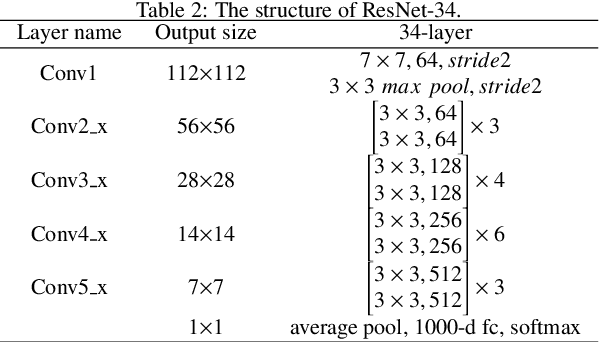
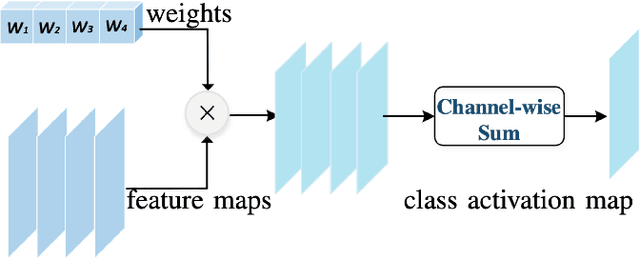
In recent decades, the use of optical detection systems for meteor studies has increased dramatically, resulting in huge amounts of data being analyzed. Automated meteor detection tools are essential for studying the continuous meteoroid incoming flux, recovering fresh meteorites, and achieving a better understanding of our Solar System. Concerning meteor detection, distinguishing false positives between meteor and non-meteor images has traditionally been performed by hand, which is significantly time-consuming. To address this issue, we developed a fully automated pipeline that uses Convolutional Neural Networks (CNNs) to classify candidate meteor detections. Our new method is able to detect meteors even in images that contain static elements such as clouds, the Moon, and buildings. To accurately locate the meteor within each frame, we employ the Gradient-weighted Class Activation Mapping (Grad-CAM) technique. This method facilitates the identification of the region of interest by multiplying the activations from the last convolutional layer with the average of the gradients across the feature map of that layer. By combining these findings with the activation map derived from the first convolutional layer, we effectively pinpoint the most probable pixel location of the meteor. We trained and evaluated our model on a large dataset collected by the Spanish Meteor Network (SPMN) and achieved a precision of 98\%. Our new methodology presented here has the potential to reduce the workload of meteor scientists and station operators and improve the accuracy of meteor tracking and classification.