 Add to Chrome
 Add to Firefox
 Add to Edge
Multistakeholder Impacts of Profile Portability in a Recommender Ecosystem
Apr 23, 2026
Optimizing outcomes for multiple stakeholders in recommender systems has historically focused on algorithmic interventions, such as developing multi-objective models or re-ranking results from existing algorithms. However, structural changes to the recommendation ecosystem itself remain understudied. This paper explores the implications of algorithmic pluralism (also known as "middleware" in the governance literature), in which recommendation algorithms are decoupled from platforms, enabling users to select their preferred algorithm. Prior simulation work demonstrates that algorithmic choice benefits niche consumers and providers. Yet this approach raises critical questions about user modeling in the context of data portability: when users switch algorithms, what happens to their data? Noting that multiple data portability regulations have emerged to strengthen user data ownership and control. We examine how such policies affect user models and stakeholders' outcomes in recommendation setting. Our findings reveal that data portability scenarios produce varying effects on user utility across different recommendation algorithms. We highlight key policy considerations and implications for designing equitable recommendation ecosystems.

Decoupled Recommender Systems: Exploring Alternative Recommender Ecosystem Designs
Mar 05, 2025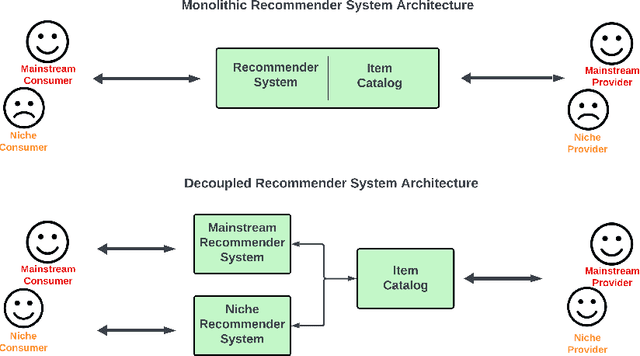
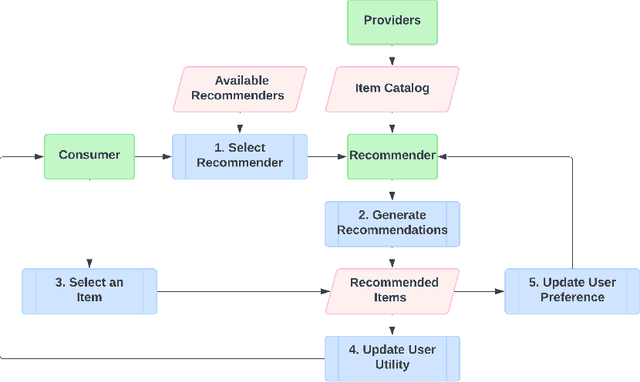
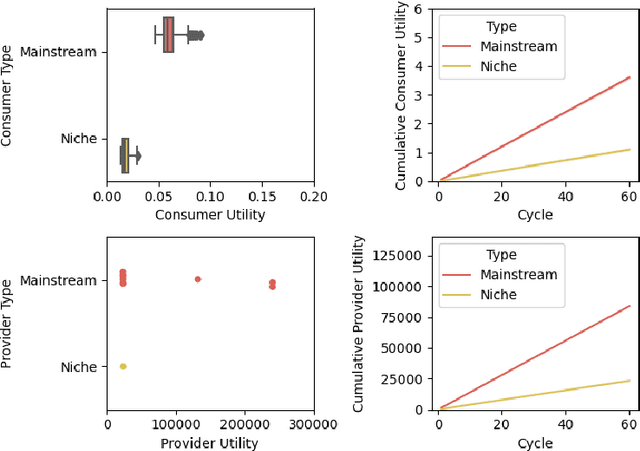
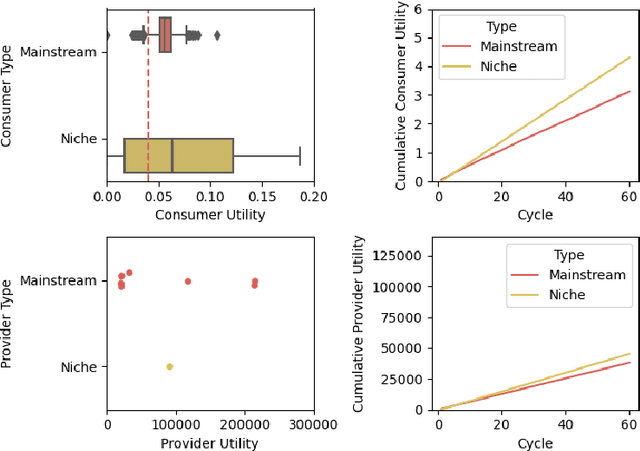
Recommender ecosystems are an emerging subject of research. Such research examines how the characteristics of algorithms, recommendation consumers, and item providers influence system dynamics and long-term outcomes. One architectural possibility that has not yet been widely explored in this line of research is the consequences of a configuration in which recommendation algorithms are decoupled from the platforms they serve. This is sometimes called "the friendly neighborhood algorithm store" or "middleware" model. We are particularly interested in how such architectures might offer a range of different distributions of utility across consumers, providers, and recommendation platforms. In this paper, we create a model of a recommendation ecosystem that incorporates algorithm choice and examine the outcomes of such a design.