 Add to Chrome
 Add to Firefox
 Add to Edge
PSO-Optimized Hopfield Neural Network-Based Multipath Routing for Mobile Ad-hoc Networks
Nov 16, 2017
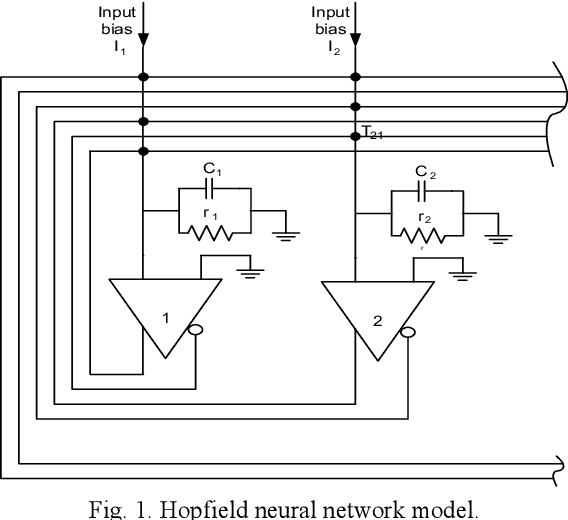
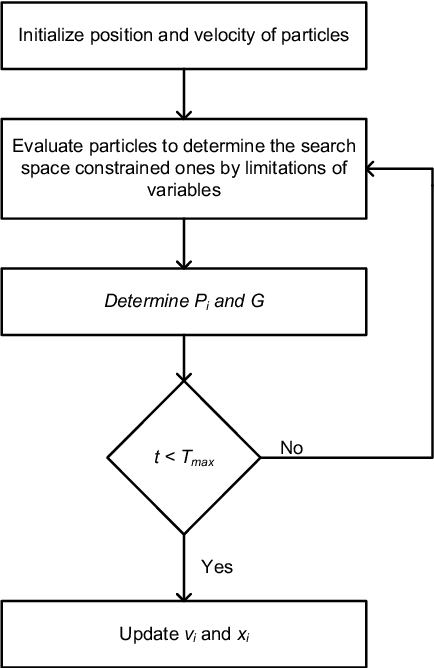
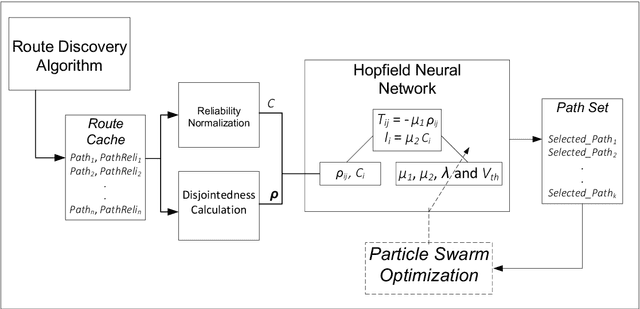
Mobile ad-hoc network (MANET) is a dynamic collection of mobile computers without the need for any existing infrastructure. Nodes in a MANET act as hosts and routers. Designing of robust routing algorithms for MANETs is a challenging task. Disjoint multipath routing protocols address this problem and increase the reliability, security and lifetime of network. However, selecting an optimal multipath is an NP-complete problem. In this paper, Hopfield neural network (HNN) which its parameters are optimized by particle swarm optimization (PSO) algorithm is proposed as multipath routing algorithm. Link expiration time (LET) between each two nodes is used as the link reliability estimation metric. This approach can find either node-disjoint or link-disjoint paths in single phase route discovery. Simulation results confirm that PSO-HNN routing algorithm has better performance as compared to backup path set selection algorithm (BPSA) in terms of the path set reliability and number of paths in the set.
* Mobile ad-hoc networks; Reliability; Multipath routing; Neural networks; Particle swarm optimization (PSO)

GA-PSO-Optimized Neural-Based Control Scheme for Adaptive Congestion Control to Improve Performance in Multimedia Applications
Nov 16, 2017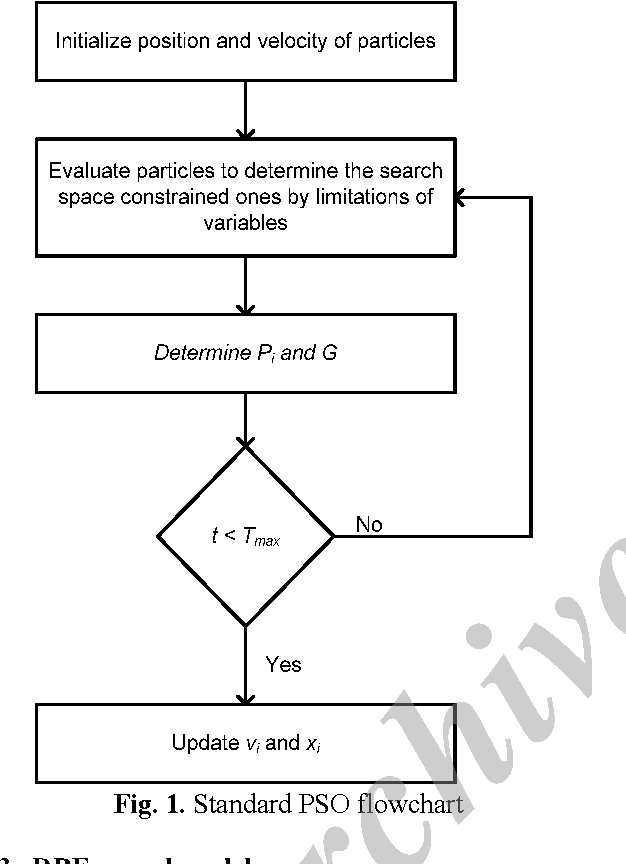
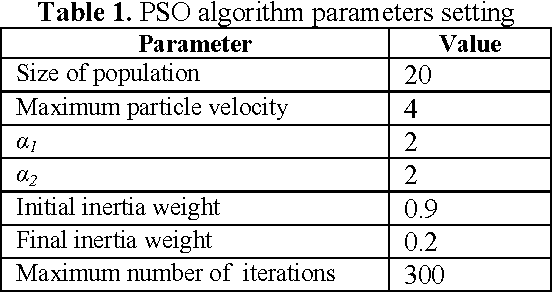
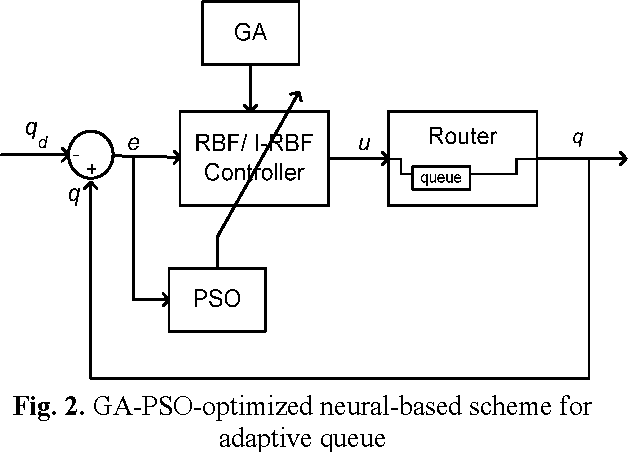
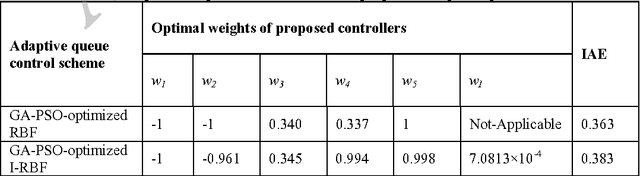
Active queue control aims to improve the overall communication network throughput while providing lower delay and small packet loss rate. The basic idea is to actively trigger packet dropping (or marking provided by explicit congestion notification (ECN)) before buffer overflow. In this paper, two artificial neural networks (ANN)-based control schemes are proposed for adaptive queue control in TCP communication networks. The structure of these controllers is optimized using genetic algorithm (GA) and the output weights of ANNs are optimized using particle swarm optimization (PSO) algorithm. The controllers are radial bias function (RBF)-based, but to improve the robustness of RBF controller, an error-integral term is added to RBF equation in the second scheme. Experimental results show that GA- PSO-optimized improved RBF (I-RBF) model controls network congestion effectively in terms of link utilization with a low packet loss rate and outperform Drop Tail, proportional-integral (PI), random exponential marking (REM), and adaptive random early detection (ARED) controllers.
* arXiv admin note: text overlap with arXiv:1711.06356