 Add to Chrome
 Add to Firefox
 Add to Edge
BotVerse: Real-Time Event-Driven Simulation of Social Agents
Mar 31, 2026
BotVerse is a scalable, event-driven framework for high-fidelity social simulation using LLM-based agents. It addresses the ethical risks of studying autonomous agents on live networks by isolating interactions within a controlled environment while grounding them in real-time content streams from the Bluesky ecosystem. The system features an asynchronous orchestration API and a simulation engine that emulates human-like temporal patterns and cognitive memory. Through the Synthetic Social Observatory, researchers can deploy customizable personas and observe multimodal interactions at scale. We demonstrate BotVersevia a coordinated disinformation scenario, providing a safe, experimental framework for red-teaming and computational social scientists. A video demonstration of the framework is available at https://youtu.be/eZSzO5Jarqk.

From Online Behaviours to Images: A Novel Approach to Social Bot Detection
Apr 15, 2023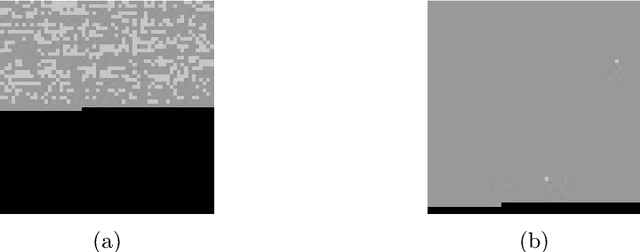
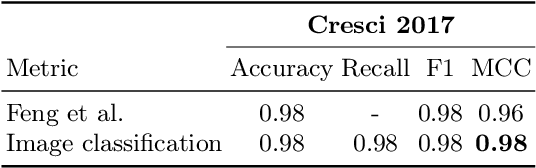
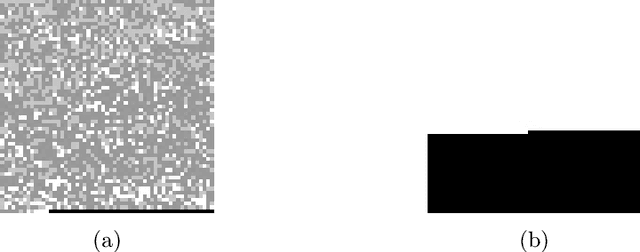

Online Social Networks have revolutionized how we consume and share information, but they have also led to a proliferation of content not always reliable and accurate. One particular type of social accounts is known to promote unreputable content, hyperpartisan, and propagandistic information. They are automated accounts, commonly called bots. Focusing on Twitter accounts, we propose a novel approach to bot detection: we first propose a new algorithm that transforms the sequence of actions that an account performs into an image; then, we leverage the strength of Convolutional Neural Networks to proceed with image classification. We compare our performances with state-of-the-art results for bot detection on genuine accounts / bot accounts datasets well known in the literature. The results confirm the effectiveness of the proposal, because the detection capability is on par with the state of the art, if not better in some cases.