 Add to Chrome
 Add to Firefox
 Add to Edge
Clustering Survival Data using a Mixture of Non-parametric Experts
May 24, 2024
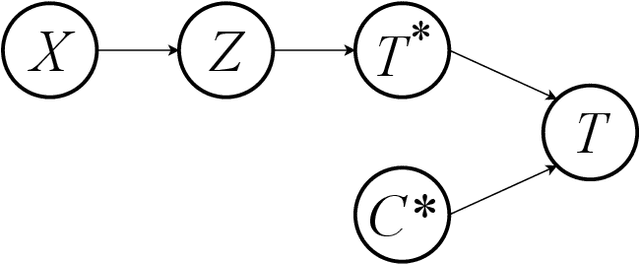
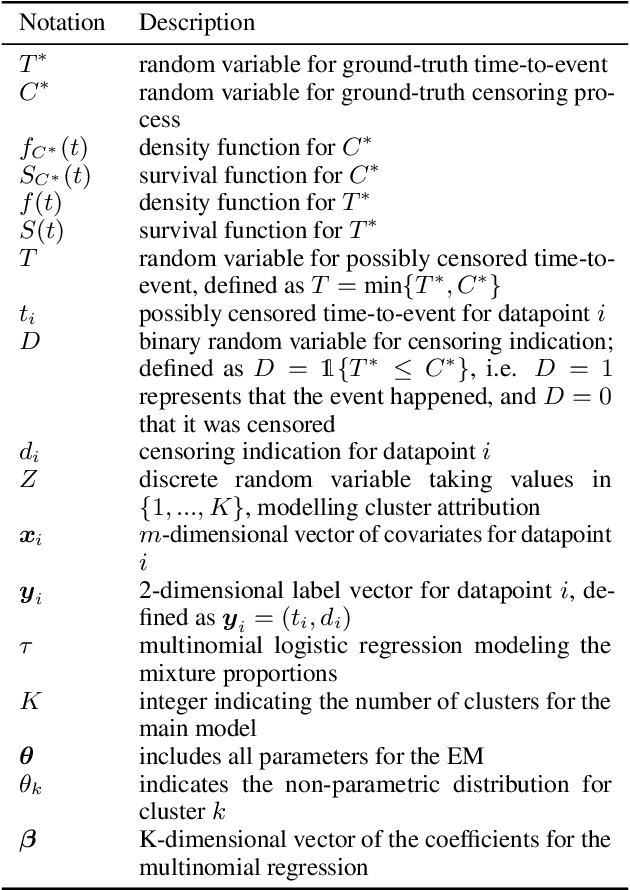
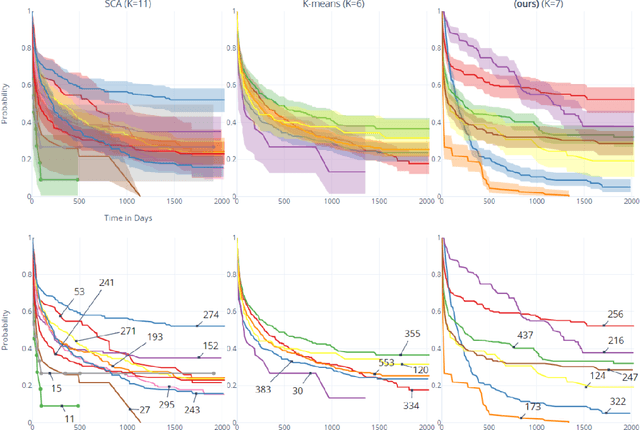
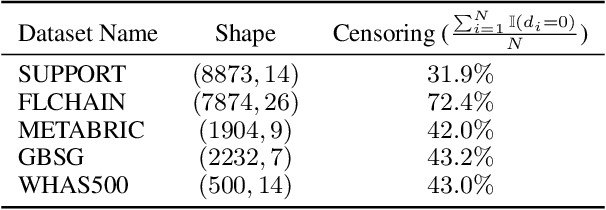
Survival analysis aims to predict the timing of future events across various fields, from medical outcomes to customer churn. However, the integration of clustering into survival analysis, particularly for precision medicine, remains underexplored. This study introduces SurvMixClust, a novel algorithm for survival analysis that integrates clustering with survival function prediction within a unified framework. SurvMixClust learns latent representations for clustering while also predicting individual survival functions using a mixture of non-parametric experts. Our evaluations on five public datasets show that SurvMixClust creates balanced clusters with distinct survival curves, outperforms clustering baselines, and competes with non-clustering survival models in predictive accuracy, as measured by the time-dependent c-index and log-rank metrics.

Network Anomaly Detection based on Tensor Decomposition
Apr 20, 2020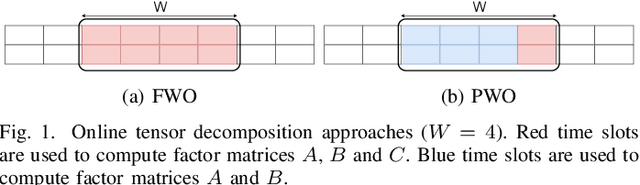
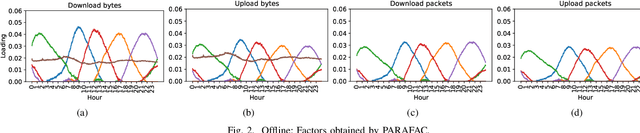
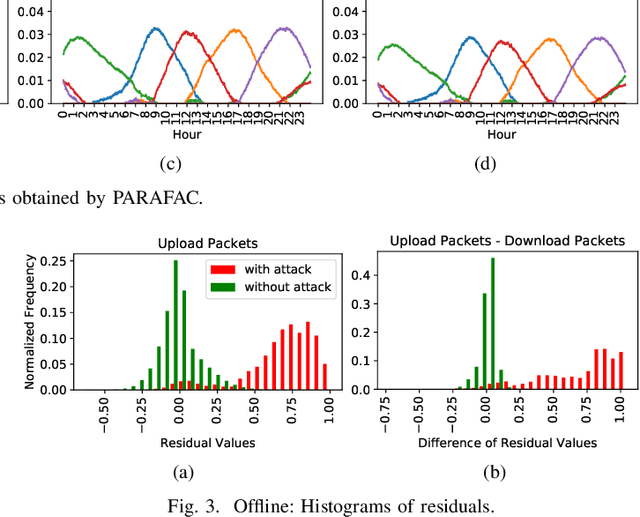
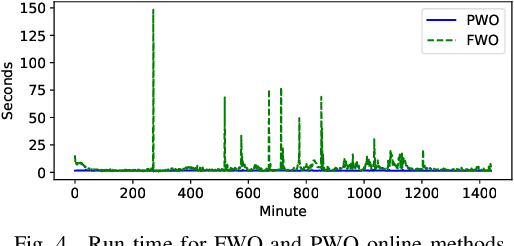
The problem of detecting anomalies in time series from network measurements has been widely studied and is a topic of fundamental importance. Many anomaly detection methods are based on packet inspection collected at the network core routers, with consequent disadvantages in terms of computational cost and privacy. We propose an alternative method in which packet header inspection is not needed. The method is based on the extraction of a normal subspace obtained by the tensor decomposition technique considering the correlation between different metrics. We propose a new approach for online tensor decomposition where changes in the normal subspace can be tracked efficiently. Another advantage of our proposal is the interpretability of the obtained models. The flexibility of the method is illustrated by applying it to two distinct examples, both using actual data collected on residential routers.