 Add to Chrome
 Add to Firefox
 Add to Edge
An Open-Source Tool for Reproducible Freeway Network Extraction from OpenStreetMap
Jun 30, 2026
Freeway simulation is often difficult to deploy at scale not only because of model formulation, but because preparing road network inputs remains a manual, corridor-specific, and difficult-to-reproduce task. This paper presents an open-source tool that extracts freeway networks from OpenStreetMap (OSM) and converts them into a compact, station-referenced representation suitable for downstream freeway simulation. Unlike existing tools that primarily support arterial or general network conversion tasks, the proposed workflow is designed around the specific requirements of freeway traffic studies. The tool supports not only OSM data cleaning and conversion, but also the broader workflow required in practice: corridor-specific querying, visual inspection of extracted segments, extraction validation against OSM, and source-data validation against aerial imagery. A locally hosted frontend allows users to define corridor-specific queries, select endpoints visually, and inspect extracted segments. The extraction logic is designed to address several recurring challenges in freeway OSM data, including inconsistent route references, ambiguous path selection through interchanges, managed-lane interference, incomplete corridor capture from naive bounding-box queries, and inconsistent ramp classifications. The workflow was first tested on two prototype corridors, where the extract-first-then-validate approach proposed here required roughly one-third the analyst effort of manual ramp encoding from scratch. It was then deployed across 359.6 miles of freeway in Orange County, California, with total processing and validation averaging about 41 seconds per mile. This deployment also suggests that, in a well-mapped region, OSM is sufficiently accurate for many freeway traffic studies. Overall, the tool provides a more scalable and reproducible foundation for freeway network preparation.

Overarching Computation Model (OCM)
Aug 13, 2018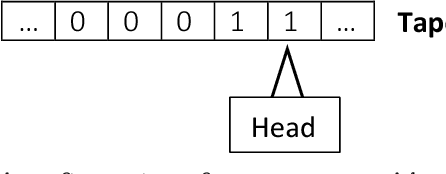
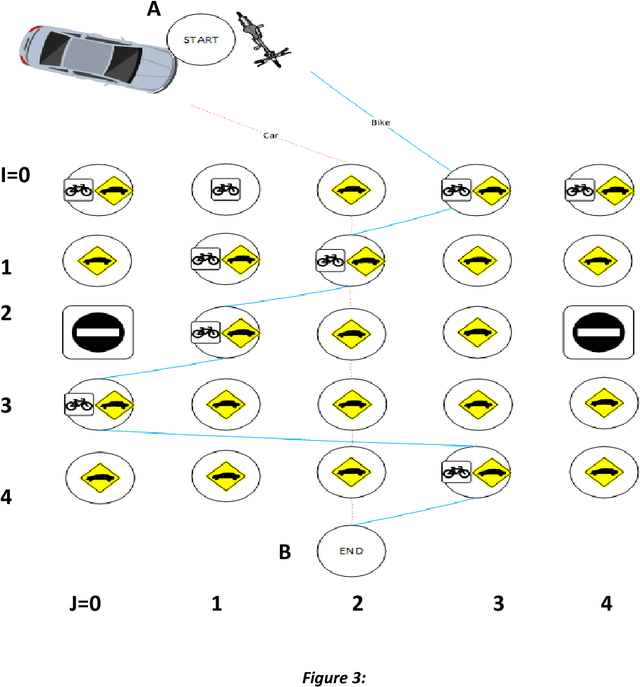
Existing models of computation, such as a Turing machine (hereafter, TM), do not consider the agent involved in interpreting the outcome of the computation. We argue that a TM, or any other computation model, has no significance if its output is not interpreted by some agent. Furthermore, we argue that including the interpreter in the model definition sheds light on some of the difficult problems faced in computation and mathematics. We provide an analytic process framework to address this limitation. The framework can be overlaid on existing concepts of computation to address many practical and philosophical concerns such as the P vs NP problem. In addition, we argue that the P vs NP problem is reminiscent of existing computation model which does not account for the person that initiates the computation and interprets the intermediate and final output. We utilize the observation that deterministic computational procedures lack fundamental capacity to fully simulate their non-deterministic variant to conclude that the set NP cannot be fully contained in P. Deterministic procedure can approximate non-deterministic variant to some degree. However, the logical implication of the fundamental differences between determinism and non-determinism is that equivalence of the two classes is impossible to establish.