 Add to Chrome
 Add to Firefox
 Add to Edge
Multiprocessor Scheduling For Tasks With Priority Using GA
Jan 12, 2010


Multiprocessors have emerged as a powerful computing means for running realtime applications, especially where a uniprocessor system would not be sufficient enough to execute all the tasks. The high performance and reliability of multiprocessors have made them a powerful computing resource. Such computing environment requires an efficient algorithm to determine when and on which processor a given task should execute. In multiprocessor systems, an efficient scheduling of a parallel program onto the processors that minimizes the entire execution time is vital for achieving a high performance. This scheduling problem is known to be NPHard. In multiprocessor scheduling problem, a given program is to be scheduled in a given multiprocessor system such that the programs execution time is minimized. The last job must be completed as early as possible. Genetic algorithm (GA) is one of the widely used techniques for constrained optimization problems. Genetic algorithms are basically search algorithms based on the mechanics of natural selection and natural genesis. The main goal behind research on genetic algorithms is robustness i.e. balance between efficiency and efficacy. This paper proposes Genetic algorithm to solve scheduling problem of multiprocessors that minimizes the make span.
* 8 pages IEEE format, International Journal of Computer Science and Information Security, IJCSIS December 2009, ISSN 1947 5500, http://sites.google.com/site/ijcsis/

Performance analysis of Non Linear Filtering Algorithms for underwater images
Dec 05, 2009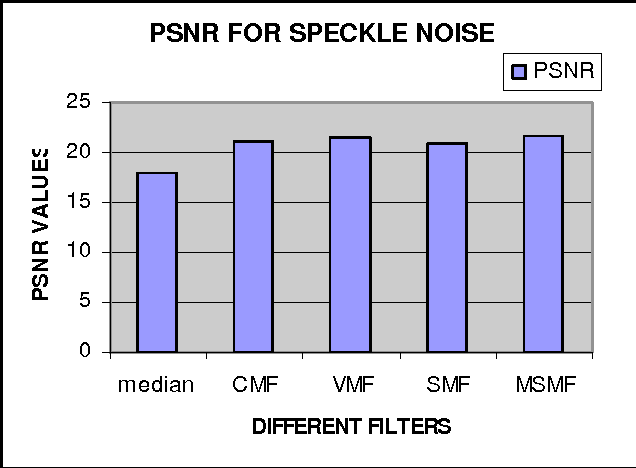
Image filtering algorithms are applied on images to remove the different types of noise that are either present in the image during capturing or injected in to the image during transmission. Underwater images when captured usually have Gaussian noise, speckle noise and salt and pepper noise. In this work, five different image filtering algorithms are compared for the three different noise types. The performances of the filters are compared using the Peak Signal to Noise Ratio (PSNR) and Mean Square Error (MSE). The modified spatial median filter gives desirable results in terms of the above two parameters for the three different noise. Forty underwater images are taken for study.
* 7 pages IEEE format, International Journal of Computer Science and Information Security, IJCSIS November 2009, ISSN 1947 5500, http://sites.google.com/site/ijcsis/