 Add to Chrome
 Add to Firefox
 Add to Edge
AE-ViT: Stable Long-Horizon Parametric Partial Differential Equations Modeling
Apr 07, 2026
Deep Learning Reduced Order Models (ROMs) are becoming increasingly popular as surrogate models for parametric partial differential equations (PDEs) due to their ability to handle high-dimensional data, approximate highly nonlinear mappings, and utilize GPUs. Existing approaches typically learn evolution either on the full solution field, which requires capturing long-range spatial interactions at high computational cost, or on compressed latent representations obtained from autoencoders, which reduces the cost but often yields latent vectors that are difficult to evolve, since they primarily encode spatial information. Moreover, in parametric PDEs, the initial condition alone is not sufficient to determine the trajectory, and most current approaches are not evaluated on jointly predicting multiple solution components with differing magnitudes and parameter sensitivities. To address these challenges, we propose a joint model consisting of a convolutional encoder, a transformer operating on latent representations, and a decoder for reconstruction. The main novelties are joint training with multi-stage parameter injection and coordinate channel injection. Parameters are injected at multiple stages to improve conditioning. Physical coordinates are encoded to provide spatial information. This allows the model to dynamically adapt its computations to the specific PDE parameters governing each system, rather than learning a single fixed response. Experiments on the Advection-Diffusion-Reaction equation and Navier-Stokes flow around the cylinder wake demonstrate that our approach combines the efficiency of latent evolution with the fidelity of full-field models, outperforming DL-ROMs, latent transformers, and plain ViTs in multi-field prediction, reducing the relative rollout error by approximately $5$ times.

Reconstruction of Incomplete Wildfire Data using Deep Generative Models
Jan 16, 2022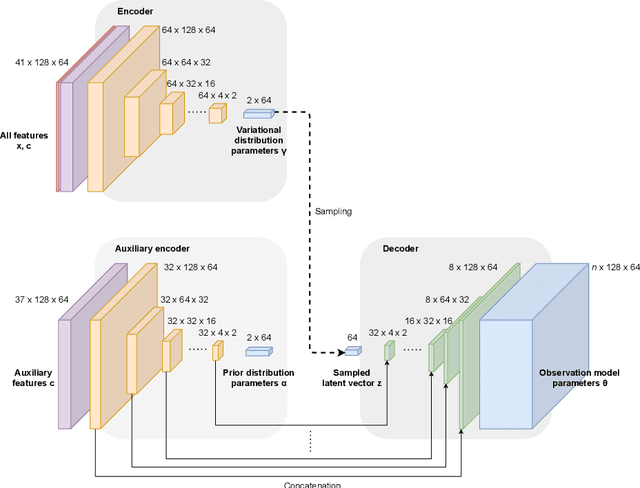
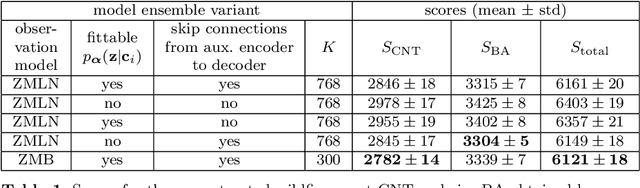
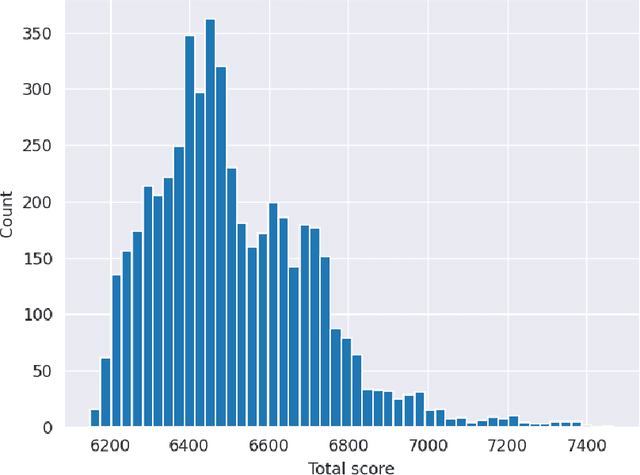
We present our submission to the Extreme Value Analysis 2021 Data Challenge in which teams were asked to accurately predict distributions of wildfire frequency and size within spatio-temporal regions of missing data. For the purpose of this competition we developed a variant of the powerful variational autoencoder models dubbed the Conditional Missing data Importance-Weighted Autoencoder (CMIWAE). Our deep latent variable generative model requires little to no feature engineering and does not necessarily rely on the specifics of scoring in the Data Challenge. It is fully trained on incomplete data, with the single objective to maximize log-likelihood of the observed wildfire information. We mitigate the effects of the relatively low number of training samples by stochastic sampling from a variational latent variable distribution, as well as by ensembling a set of CMIWAE models trained and validated on different splits of the provided data. The presented approach is not domain-specific and is amenable to application in other missing data recovery tasks with tabular or image-like information conditioned on auxiliary information.
BlackBox: Generalizable Reconstruction of Extremal Values from Incomplete Spatio-Temporal Data
Apr 30, 2020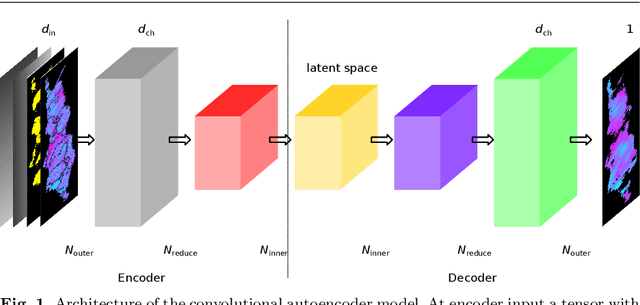
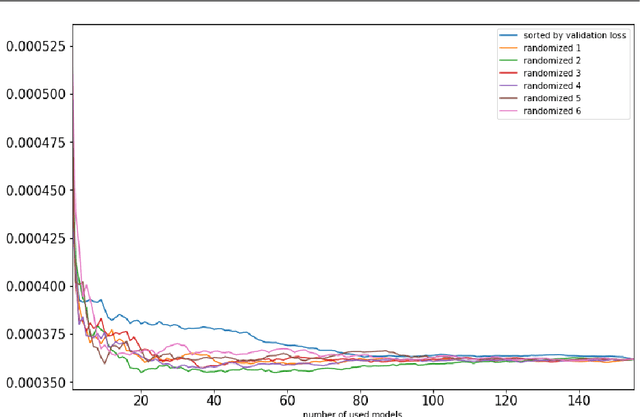
We describe our submission to the Extreme Value Analysis 2019 Data Challenge in which teams were asked to predict extremes of sea surface temperature anomaly within spatio-temporal regions of missing data. We present a computational framework which reconstructs missing data using convolutional deep neural networks. Conditioned on incomplete data, we employ autoencoder-like models as multivariate conditional distributions from which possible reconstructions of the complete dataset are sampled using imputed noise. In order to mitigate bias introduced by any one particular model, a prediction ensemble is constructed to create the final distribution of extremal values. Our method does not rely on expert knowledge in order to accurately reproduce dynamic features of a complex oceanographic system with minimal assumptions. The obtained results promise reusability and generalization to other domains.