 Add to Chrome
 Add to Firefox
 Add to Edge
A Fair Evaluation of Graph Foundation Models for Node Property Prediction
Jun 23, 2026
Due to the wide use of graph-structured data in different fields of industry and science, the development of Graph Foundation Models (GFMs) has recently attracted a lot of attention. While many different types of models are called GFMs, particular interest has been paid to GFMs designed for node property prediction tasks, which is one of the most popular settings in Graph ML with lots of real-world applications from fraud detection in financial and social networks to recommendation systems for e-commerce and user-generated content platforms. While a number of GFMs for this task have been recently proposed, the field has not converged to a unified evaluation setting, and different works evaluate their models in widely different ways, preventing reliable comparison of GFMs with each other and with other types of models. In this work, we conduct a fair and rigorous reevaluation of 9 recent GFMs for node property prediction, comparing them to strong Graph Neural Network (GNN) baselines. We find that, among these GFMs, only the most recent ones based on the Prior-data Fitted Networks paradigm outperform well-tuned GNNs in predictive performance, although at a higher inference cost.

Heat and Matérn Kernels on Matchings
Apr 15, 2026Applying kernel methods to matchings is challenging due to their discrete, non-Euclidean nature. In this paper, we develop a principled framework for constructing geometric kernels that respect the natural geometry of the space of matchings. To this end, we first provide a complete characterization of stationary kernels, i.e. kernels that respect the inherent symmetries of this space. Because the class of stationary kernels is too broad, we specifically focus on the heat and Matérn kernel families, adding an appropriate inductive bias of smoothness to stationarity. While these families successfully extend widely popular Euclidean kernels to matchings, evaluating them naively incurs a prohibitive super-exponential computational cost. To overcome this difficulty, we introduce and analyze a novel, sub-exponential algorithm leveraging zonal polynomials for efficient kernel evaluation. Finally, motivated by the known bijective correspondence between matchings and phylogenetic trees-a crucial data modality in biology-we explore whether our framework can be seamlessly transferred to the space of trees, establishing novel negative results and identifying a significant open problem.
Turning Tabular Foundation Models into Graph Foundation Models
Aug 28, 2025While foundation models have revolutionized such fields as natural language processing and computer vision, their application and potential within graph machine learning remain largely unexplored. One of the key challenges in designing graph foundation models (GFMs) is handling diverse node features that can vary across different graph datasets. Although many works on GFMs have been focused exclusively on text-attributed graphs, the problem of handling arbitrary features of other types in GFMs has not been fully addressed. However, this problem is not unique to the graph domain, as it also arises in the field of machine learning for tabular data. In this work, motivated by the recent success of tabular foundation models like TabPFNv2, we propose G2T-FM, a simple graph foundation model that employs TabPFNv2 as a backbone. Specifically, G2T-FM augments the original node features with neighborhood feature aggregation, adds structural embeddings, and then applies TabPFNv2 to the constructed node representations. Even in a fully in-context regime, our model achieves strong results, significantly outperforming publicly available GFMs and performing on par with well-tuned GNNs trained from scratch. Moreover, after finetuning, G2T-FM surpasses well-tuned GNN baselines, highlighting the potential of the proposed approach. More broadly, our paper reveals a previously overlooked direction of utilizing tabular foundation models for graph machine learning tasks.
Estimating Uncertainty For Vehicle Motion Prediction on Yandex Shifts Dataset
Dec 15, 2021


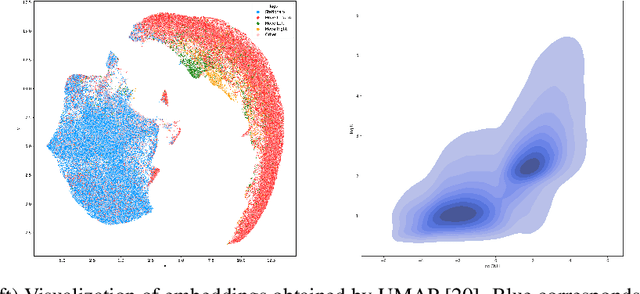
Motion prediction of surrounding agents is an important task in context of autonomous driving since it is closely related to driver's safety. Vehicle Motion Prediction (VMP) track of Shifts Challenge focuses on developing models which are robust to distributional shift and able to measure uncertainty of their predictions. In this work we present the approach that significantly improved provided benchmark and took 2nd place on the leaderboard.