 Add to Chrome
 Add to Firefox
 Add to Edge
Evidence Lock Before Commitment: A Frozen Interface Degrades LLM-as-Judge Evaluation
Aug 05, 2026
LLM judges are often asked to extract criteria and evidence before choosing between candidate answers. This workflow assumes that the intermediate record preserves the information needed for a later verdict. For reasoning-capable models, visible field order does not reveal internal decision order, so we test an observable alternative: persist the evidence in one call and make it the exclusive input to the next. Across 24,000 judgments over HelpSteer3, FeedbackQA, and CoVal, we compare standard pairwise judging, structured one-call judging, two-call evidence locking, and three-call pointwise locking with Claude Sonnet 4.5 and GPT-5. Evidence locking reduces agreement with released human preferences by 4 to 6 percentage points and increases answer-order inconsistency by 8 to 10 points relative to structured one-call judging. Pointwise locking is also harmful, while structured evidence elicitation remains close to standard judging. The result holds for both judges and all three datasets. Persisted evidence can support auditability, but it should not replace the source answers at decision time.

RADAR: Rubric-Aware Dependency and Redundancy Analysis for LLM-as-Judge Evaluation
Aug 03, 2026Rubric-based LLM-as-judge pipelines often assume that evaluation criteria provide independent signals. In practice, however, criteria can be behaviorally coupled: improving one criterion may systematically change scores on another, distorting aggregate scores used in model-release or product-update decisions. We introduce RADAR, a lightweight preflight diagnostic framework for estimating such coupling before large-scale evaluation. Given a rubric, RADAR generates targeted synthetic probes, scores each probe on all criteria, and produces a directional coupling matrix that shows which criteria co-score and how. We validate RADAR on three industry-relevant evaluation settings: NVIDIA HelpSteer2, SumPubMed, and the Yale-Salesforce SummEval benchmark. Using only a small number of probes per criterion, RADAR recovers human inter-criterion correlation structure (Pearson r > 0.84) and provides practitioners with concrete audit signals about redundancy, hierarchy, and aggregation sensitivity before committing to large-scale judging.
Detection of Emotions in Hindi-English Code Mixed Text Data
May 28, 2021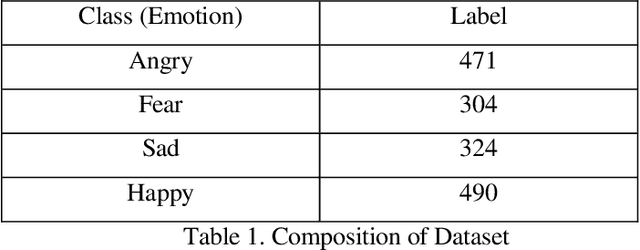


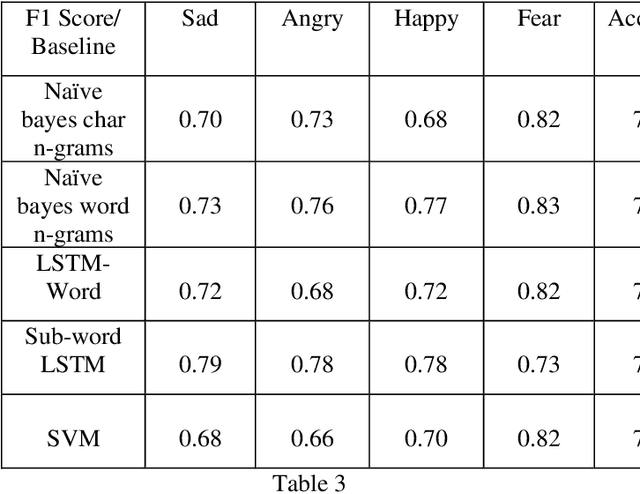
In recent times, we have seen an increased use of text chat for communication on social networks and smartphones. This particularly involves the use of Hindi-English code-mixed text which contains words which are not recognized in English vocabulary. We have worked on detecting emotions in these mixed data and classify the sentences in human emotions which are angry, fear, happy or sad. We have used state of the art natural language processing models and compared their performance on the dataset comprising sentences in this mixed data. The dataset was collected and annotated from sources and then used to train the models.
Polyth-Net: Classification of Polythene Bags for Garbage Segregation Using Deep Learning
Aug 12, 2020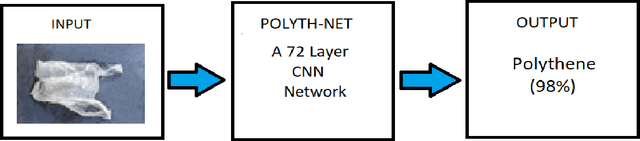
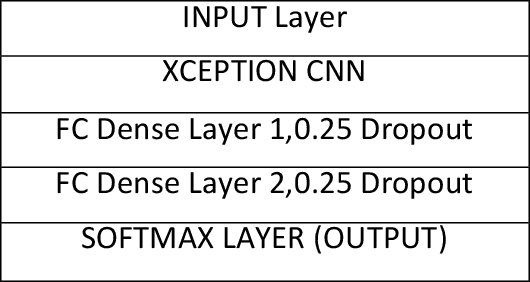
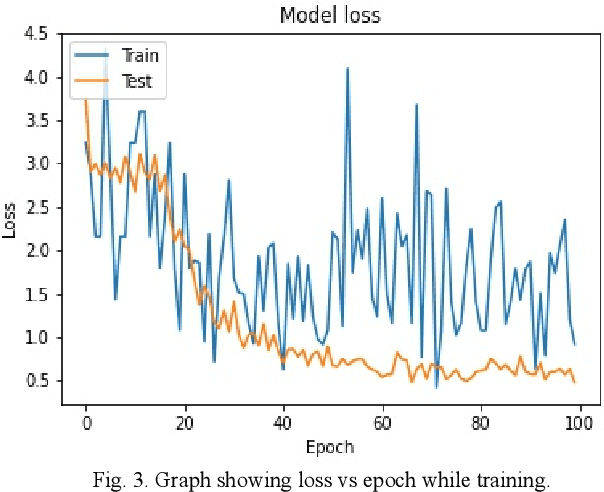
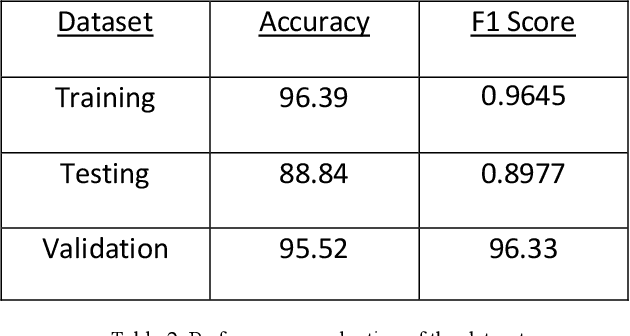
Polythene has always been a threat to the environment since its invention. It is non-biodegradable and very difficult to recycle. Even after many awareness campaigns and practices, Separation of polythene bags from waste has been a challenge for human civilization. The primary method of segregation deployed is manual handpicking, which causes a dangerous health hazards to the workers and is also highly inefficient due to human errors. In this paper I have designed and researched on image-based classification of polythene bags using a deep-learning model and its efficiency. This paper focuses on the architecture and statistical analysis of its performance on the data set as well as problems experienced in the classification. It also suggests a modified loss function to specifically detect polythene irrespective of its individual features. It aims to help the current environment protection endeavours and save countless lives lost to the hazards caused by current methods.