 Add to Chrome
 Add to Firefox
 Add to Edge
Beyond Templates: Revisiting Zero-Shot Remote Sensing through Meta-Prompting
Jun 15, 2026
Vision-language models (VLMs) have sparked growing interest in zero-shot Earth Observation (EO) downstream tasks, with further gains enabled by remote-sensing-adapted models. We examine this setting across 17 VLM variants and 12 remote sensing (RS) datasets under Meta-Prompting for Visual Recognition (MPVR), and show that zero-shot performance remains highly sensitive to textual design choices, from the meta-prompts used to guide the LLM in generating class descriptions to the descriptions themselves. We explore why semantically rich LLM-generated class descriptions do not translate into consistent gains over simple domain-adapted CLIP-style descriptions. While LLM descriptions are more semantically expressive, they can also introduce noise in the text embedding space, reducing robustness in downstream tasks. We support this observation through a text log-likelihood analysis in the whitened CLIP feature space, comparing LLM-generated and template-based descriptions. Building on this finding, we study query embedding calibration and show that lightweight calibration of the query space consistently yields strong improvements in zero-shot classification and retrieval. Overall, our results provide practical insight into the trade-off between semantic richness and robustness, and identify embedding calibration as a simple and effective tool for improving zero-shot remote sensing performance.

Benchmarking Composed Image Retrieval for Applied Earth Observation
May 23, 2026Remote sensing composed image retrieval (RSCIR) enables search in large satellite image archives using composed queries that combine a reference image with a textual modifier. Although RSCIR offers a flexible interface for expressing targeted retrieval intent, the transferability of modern composition methods to Earth observation (EO) imagery and their relevance to operational EO workflows remain underexplored. We address this gap through a unified benchmark and an application-oriented study. First, we systematically adapt and evaluate representative composed image retrieval methods with six vision-language backbones on PatternCom under a standardized protocol, analyzing their behavior across backbones, composition strategies, and query types. Second, we introduce xView2-CIR, a change-centric dataset for disaster and damage monitoring, where retrieval is conditioned on scene identity and a target post-event state. Our results show that training-free composition methods provide strong and scalable baselines for EO retrieval, while change-centric retrieval presents different challenges from attribute-based retrieval, particularly due to the need to preserve scene identity. Overall, this study establishes a practical benchmark for RSCIR and positions composed retrieval as a complementary tool for remote sensing image retrieval, archive exploration, and change analysis. The dataset and code are available at https://github.com/billpsomas/rscir.
Attention, Please! Revisiting Attentive Probing for Masked Image Modeling
Jun 11, 2025As fine-tuning (FT) becomes increasingly impractical at scale, probing is emerging as the preferred evaluation protocol for self-supervised learning (SSL). Yet, the standard linear probing (LP) fails to adequately reflect the potential of models trained with Masked Image Modeling (MIM), due to the distributed nature of patch tokens. This motivates the need for attentive probing, an alternative that uses attention to selectively aggregate patch-level features. Despite its growing adoption, attentive probing remains under-explored, with existing methods suffering from excessive parameterization and poor computational efficiency. In this work, we revisit attentive probing through the lens of the accuracy-efficiency trade-off. We conduct a systematic study of existing methods, analyzing their mechanisms and benchmarking their performance. We introduce efficient probing (EP), a multi-query cross-attention mechanism that eliminates redundant projections, reduces the number of trainable parameters, and achieves up to a 10$\times$ speed-up over conventional multi-head attention. Despite its simplicity, EP outperforms LP and prior attentive probing approaches across seven benchmarks, generalizes well beyond MIM to diverse pre-training paradigms, produces interpretable attention maps, and achieves strong gains in low-shot and layer-wise settings. Code available at https://github.com/billpsomas/efficient-probing.
Skin Lesion Phenotyping via Nested Multi-modal Contrastive Learning
May 29, 2025We introduce SLIMP (Skin Lesion Image-Metadata Pre-training) for learning rich representations of skin lesions through a novel nested contrastive learning approach that captures complex relationships between images and metadata. Melanoma detection and skin lesion classification based solely on images, pose significant challenges due to large variations in imaging conditions (lighting, color, resolution, distance, etc.) and lack of clinical and phenotypical context. Clinicians typically follow a holistic approach for assessing the risk level of the patient and for deciding which lesions may be malignant and need to be excised, by considering the patient's medical history as well as the appearance of other lesions of the patient. Inspired by this, SLIMP combines the appearance and the metadata of individual skin lesions with patient-level metadata relating to their medical record and other clinically relevant information. By fully exploiting all available data modalities throughout the learning process, the proposed pre-training strategy improves performance compared to other pre-training strategies on downstream skin lesions classification tasks highlighting the learned representations quality.
TRACE: Transformer-based Risk Assessment for Clinical Evaluation
Nov 13, 2024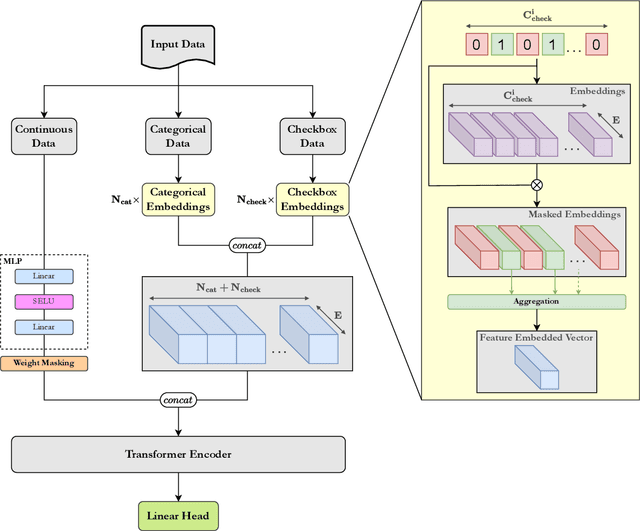
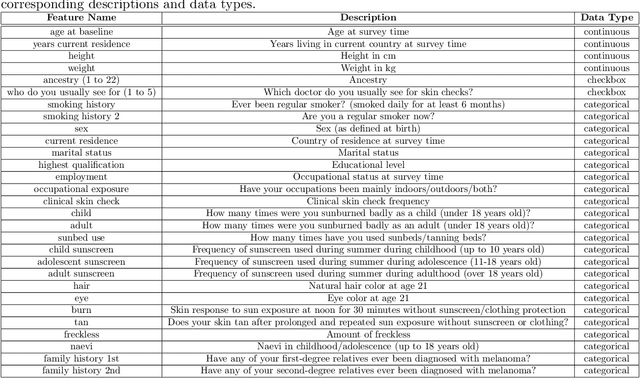
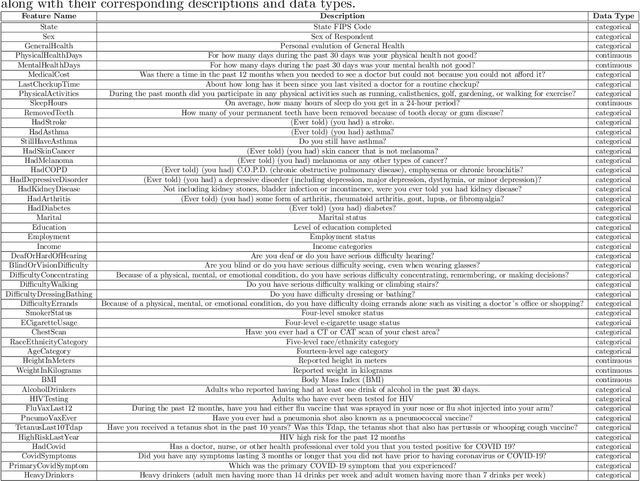
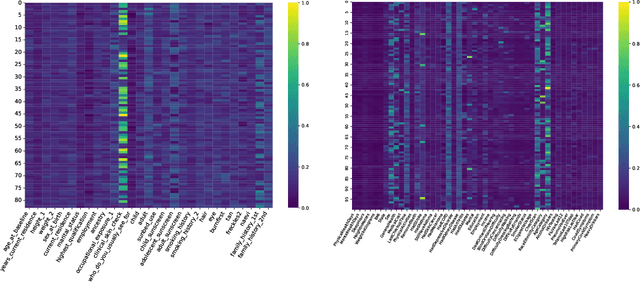
We present TRACE (Transformer-based Risk Assessment for Clinical Evaluation), a novel method for clinical risk assessment based on clinical data, leveraging the self-attention mechanism for enhanced feature interaction and result interpretation. Our approach is able to handle different data modalities, including continuous, categorical and multiple-choice (checkbox) attributes. The proposed architecture features a shared representation of the clinical data obtained by integrating specialized embeddings of each data modality, enabling the detection of high-risk individuals using Transformer encoder layers. To assess the effectiveness of the proposed method, a strong baseline based on non-negative multi-layer perceptrons (MLPs) is introduced. The proposed method outperforms various baselines widely used in the domain of clinical risk assessment, while effectively handling missing values. In terms of explainability, our Transformer-based method offers easily interpretable results via attention weights, further enhancing the clinicians' decision-making process.