 Add to Chrome
 Add to Firefox
 Add to Edge
Establishing the Minimal Clinically Important Difference (MCID) for Smartphone-Derived Gait Measures in Multiple Sclerosis
Jun 26, 2026
Background: Digital health technologies allow for frequent, remote gait monitoring in people with multiple sclerosis (MS). However, to differentiate daily variability from actual disease progression in longitudinal data, established minimal clinically important differences (MCID) are required. Currently, there is limited literature defining these thresholds for digital gait metrics. Objective: To establish MCIDs for digital gait measures reflecting progression in MS. Methods: Digital gait measures were captured via daily, remote, smartphone-based Two-Minute Walk Tests in CONSONANCE (NCT03523858), a phase 3b study of ocrelizumab in progressive MS. Using an anchor-based approach, median changes from baseline at Week 96 on digital gait measures were computed for patients showing clinically meaningful worsening on either Timed 25-Foot Walk, Ambulation Score, Expanded Disability Status Scale, or 12-item Multiple Sclerosis Walking Scale. These changes were subsequently triangulated to derive the MCID estimates. Results: 243 patients with progressive MS (female: n=125 (51%); mean [SD] age: 49.3 [9.3]; mean [SD] EDSS: 4.8 [1.4]) had digital gait data available at baseline and Week 96. Median changes were generally consistent across anchors. Triangulated MCIDs are: Step Velocity = -0.16 m/s, Step Velocity Scaled to Walking Time = -0.18 m/s, Step Duration = 0.06 s, Step Length = -0.07 m, Total Number of Steps = -28, and Total Distance Walked = -24 m. Conclusion: These MCIDs provide a framework for interpreting meaningful gait changes and integrating digital measures into MS outcome evaluation. Beyond facilitating novel clinical trial endpoints to evaluate treatment efficacy, they enable objective, real-world monitoring to advance personalized patient care.

Adaptive and robust smartphone-based step detection in multiple sclerosis
Sep 17, 2025Background: Many attempts to validate gait pipelines that process sensor data to detect gait events have focused on the detection of initial contacts only in supervised settings using a single sensor. Objective: To evaluate the performance of a gait pipeline in detecting initial/final contacts using a step detection algorithm adaptive to different test settings, smartphone wear locations, and gait impairment levels. Methods: In GaitLab (ISRCTN15993728), healthy controls (HC) and people with multiple sclerosis (PwMS; Expanded Disability Status Scale 0.0-6.5) performed supervised Two-Minute Walk Test [2MWT] (structured in-lab overground and treadmill 2MWT) during two on-site visits carrying six smartphones and unsupervised walking activities (structured and unstructured real-world walking) daily for 10-14 days using a single smartphone. Reference gait data were collected with a motion capture system or Gait Up sensors. The pipeline's performance in detecting initial/final contacts was evaluated through F1 scores and absolute temporal error with respect to reference measurement systems. Results: We studied 35 HC and 93 PwMS. Initial/final contacts were accurately detected across all smartphone wear locations. Median F1 scores for initial/final contacts on in-lab 2MWT were >=98.2%/96.5% in HC and >=98.5%/97.7% in PwMS. F1 scores remained high on structured (HC: 100% [0.3%]/100% [0.2%]; PwMS: 99.5% [1.9%]/99.4% [2.5%]) and unstructured real-world walking (HC: 97.8% [2.6%]/97.8% [2.8%]; PwMS: 94.4% [6.2%]/94.0% [6.5%]). Median temporal errors were <=0.08 s. Neither age, sex, disease severity, walking aid use, nor setting (outdoor/indoor) impacted pipeline performance (all p>0.05). Conclusion: This gait pipeline accurately and consistently detects initial and final contacts in PwMS across different smartphone locations and environments, highlighting its potential for real-world gait assessment.
Human Activity Recognition from Smartphone Sensor Data for Clinical Trials
Aug 07, 2025We developed a ResNet-based human activity recognition (HAR) model with minimal overhead to detect gait versus non-gait activities and everyday activities (walking, running, stairs, standing, sitting, lying, sit-to-stand transitions). The model was trained and evaluated using smartphone sensor data from adult healthy controls (HC) and people with multiple sclerosis (PwMS) with Expanded Disability Status Scale (EDSS) scores between 0.0-6.5. Datasets included the GaitLab study (ISRCTN15993728), an internal Roche dataset, and publicly available data sources (training only). Data from 34 HC and 68 PwMS (mean [SD] EDSS: 4.7 [1.5]) were included in the evaluation. The HAR model showed 98.4% and 99.6% accuracy in detecting gait versus non-gait activities in the GaitLab and Roche datasets, respectively, similar to a comparative state-of-the-art ResNet model (99.3% and 99.4%). For everyday activities, the proposed model not only demonstrated higher accuracy than the state-of-the-art model (96.2% vs 91.9%; internal Roche dataset) but also maintained high performance across 9 smartphone wear locations (handbag, shopping bag, crossbody bag, backpack, hoodie pocket, coat/jacket pocket, hand, neck, belt), outperforming the state-of-the-art model by 2.8% - 9.0%. In conclusion, the proposed HAR model accurately detects everyday activities and shows high robustness to various smartphone wear locations, demonstrating its practical applicability.
Annotation and synchronization of smartphone inertial measurement unit and motion capture data collected in a laboratory setting to study gait and balance
Nov 11, 2024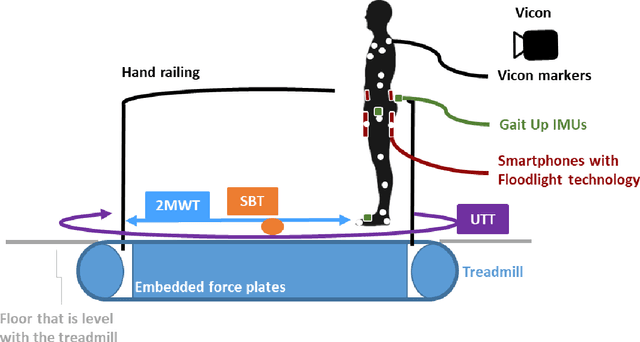
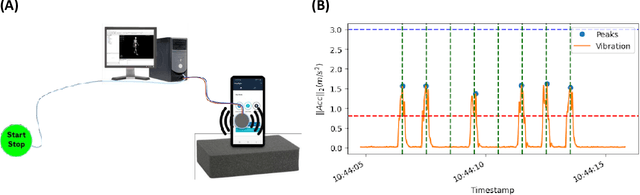
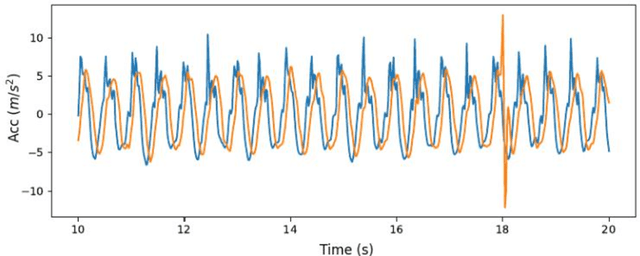
Validating smartphone sensor-based tests to study gait and balance against reference measurement systems in a laboratory setting poses several technical challenges related to data quality and data processing. One challenge is to guarantee the correct annotation of the data, which is required to ensure that only data collected during the same test execution are compared across measurement systems in subsequent analyses. A second challenge is to accurately synchronize the data across the different systems. Here, we propose innovative solutions for both challenges and illustrate their use in the example of comparing smartphone sensor data collected with the Floodlight technology with data collected with a motion capture system. These solutions form important tools for guaranteeing the data quality and data integrity required for the validation of gait and balance characteristics measured by digital health technology tools such as the Floodlight technology.