 Add to Chrome
 Add to Firefox
 Add to Edge
FAD-SA-GRU: Enhancing Hate Speech Detection in Algerian Dialect Through Feature-Augmented Self-Attention GRU Networks
Jul 13, 2026
The widespread adoption of social media platforms has transformed online communication by enabling users to exchange information and opinions instantly. However, these platforms have also facilitated the dissemination of abusive and hateful content, posing major social, psychological, and ethical challenges. Hate speech can incite discrimination, harassment, and violence against individuals or communities based on attributes such as ethnicity, religion, gender, nationality, or political affiliation. Consequently, automatic hate speech detection has become a major research topic in natural language processing (NLP) and an essential component of content moderation systems. This paper investigates automatic hate speech detection in the Algerian Arabic dialect (Darija) on social media. This task remains challenging because of the dialect's linguistic diversity, characterized by the coexistence of Arabic, French, and Arabizi (Arabic written using the Latin alphabet). We compare four categories of text classification approaches: (1) traditional machine learning models using TF-IDF features, (2) deep learning models based on recurrent neural networks, (3) Transformer-based language models, including DziriBERT and multilingual BERT, and (4) a novel hybrid architecture, FAD-SA-GRU, which combines semantic representations from DZ FastText, DZ AraVec, and DziriBERT through multi-embedding fusion, followed by a self-attention-enhanced GRU encoder. Experiments on an annotated dataset of Algerian Darija social media comments for binary hate speech classification show that FAD-SA-GRU outperforms all baselines, achieving 93.2% accuracy, 93.4% precision, 91.0% recall, 92.1% F1-score, and 97.0% ROC-AUC. Results demonstrate the effectiveness of combining complementary embedding representations with attention-based sequence modeling for robust hate speech detection in low-resource dialectal Arabic.

Dziri Voicebot: An End-to-End Low-Resource Speech-to-Speech Conversational System for Algerian Dialect
Jun 24, 2026Automatic speech and language technologies are still heavily biased toward high-resource languages, limiting their applicability to dialectal and low-resource settings such as Algerian Dialect. This language presents additional challenges including lack of standardized orthography, frequent codeswitching with French, and scarcity of annotated speech resources. This paper addresses the problem of building a complete speech-to-speech conversational system for Algerian Dialect. We propose a modular pipeline integrating automatic speech recognition, natural language understanding, retrieval-augmented generation, and text-to-speech synthesis within a unified architecture. This work is the continuation of our previous work on Algerian dialectal conversational systems Bechiri and Lanasri [2026], extending it from text-based dialogue modeling to full speech-based interaction. We constructed dedicated datasets for ASR, NLU, and TTS in the telecom domain and fine-tune pretrained models for each component. The ASR system is built on Whisper-based adaptation, while the NLU module combines transformer-based embeddings with a task-oriented dialogue framework. A neural TTS system is trained on a newly collected dialectal corpus to enable spoken response generation. Experimental results show strong performance across all components, including low word error rate for ASR, high intent classification and entity recognition scores for NLU, and stable speech synthesis quality. The proposed system provides a reproducible baseline for end-to-end conversational modeling in Algerian Dialect.
An End-to-End Hybrid Framework for Rumour Detection in Low-Resources Algerian Dialect
Jun 11, 2026The rapid growth of social media has intensified the spread of rumours. This issue is more challenging in the Algerian context due to the informal and code-switched nature of dialectal content, the scarcity of annotated resources, and the limited effectiveness of standard Arabic NLP tools on dialect text. This paper presents an end-to-end rumour detection hybrid framework for Algerian dialect social media content. We build a domain-specific annotated dataset by combining real social media posts, synthetic data, and the FASSILA corpus, with automatic labeling based on a similarity-based annotation process. A transliteration pipeline is also introduced to generate parallel datasets in Arabic script and Arabizi. We evaluate multiple approaches, including classical machine learning, deep learning, transformers, and hybrid models. Experimental results show that a hybrid approach combining transformer embeddings with a classical classifier achieves the best performance, reaching an F1-score of 0.84. We also find that domain-specific pre-training is more important than model size, with social media-trained models outperforming larger models trained on formal Arabic corpora. These results demonstrate the feasibility of rumour detection in low-resource Algerian dialect settings.
dziribot: rag based intelligent conversational agent for algerian arabic dialect
Feb 02, 2026The rapid digitalization of customer service has intensified the demand for conversational agents capable of providing accurate and natural interactions. In the Algerian context, this is complicated by the linguistic complexity of Darja, a dialect characterized by non-standardized orthography, extensive code-switching with French, and the simultaneous use of Arabic and Latin (Arabizi) scripts. This paper introduces DziriBOT, a hybrid intelligent conversational agent specifically engineered to overcome these challenges. We propose a multi-layered architecture that integrates specialized Natural Language Understanding (NLU) with Retrieval-Augmented Generation (RAG), allowing for both structured service flows and dynamic, knowledge-intensive responses grounded in curated enterprise documentation. To address the low-resource nature of Darja, we systematically evaluate three distinct approaches: a sparse-feature Rasa pipeline, classical machine learning baselines, and transformer-based fine-tuning. Our experimental results demonstrate that the fine-tuned DziriBERT model achieves state-of-the-art performance. These results significantly outperform traditional baselines, particularly in handling orthographic noise and rare intents. Ultimately, DziriBOT provides a robust, scalable solution that bridges the gap between formal language models and the linguistic realities of Algerian users, offering a blueprint for dialect-aware automation in the regional market.
T-curator: a trust based curation tool for LOD logs
May 11, 2024Nowadays, companies are racing towards Linked Open Data (LOD) to improve their added value, but they are ignoring their SPARQL query logs. If well curated, these logs can present an asset for decision makers. A naive and straightforward use of these logs is too risky because their provenance and quality are highly questionable. Users of these logs in a trusted way have to be assisted by providing them with in-depth knowledge of the whole LOD environment and tools to curate these logs. In this paper, we propose an interactive and intuitive trust based tool that can be used to curate these LOD logs before exploiting them. This tool is proposed to support our approach proposed in our previous work Lanasri et al. [2020].
End-to-end solution for linked open data query logs analytics
Mar 09, 2024Important advances in pillar domains are derived from exploiting query-logs which represents users interest and preferences. Deep understanding of users provides useful knowledge which can influence strongly decision-making. In this work, we want to extract valuable information from Linked Open Data (LOD) query-logs. LOD logs have experienced significant growth due to the large exploitation of LOD datasets. However, exploiting these logs is a difficult task because of their complex structure. Moreover, these logs suffer from many risks related to their Quality and Provenance, impacting their trust. To tackle these issues, we start by clearly defining the ecosystem of LOD query-logs. Then, we provide an end-to-end solution to exploit these logs. At the end, real LOD logs are used and a set of experiments are conducted to validate the proposed solution.
Hate speech detection in algerian dialect using deep learning
Sep 20, 2023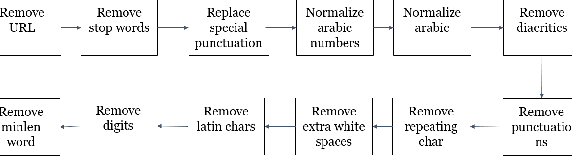

With the proliferation of hate speech on social networks under different formats, such as abusive language, cyberbullying, and violence, etc., people have experienced a significant increase in violence, putting them in uncomfortable situations and threats. Plenty of efforts have been dedicated in the last few years to overcome this phenomenon to detect hate speech in different structured languages like English, French, Arabic, and others. However, a reduced number of works deal with Arabic dialects like Tunisian, Egyptian, and Gulf, mainly the Algerian ones. To fill in the gap, we propose in this work a complete approach for detecting hate speech on online Algerian messages. Many deep learning architectures have been evaluated on the corpus we created from some Algerian social networks (Facebook, YouTube, and Twitter). This corpus contains more than 13.5K documents in Algerian dialect written in Arabic, labeled as hateful or non-hateful. Promising results are obtained, which show the efficiency of our approach.