 Add to Chrome
 Add to Firefox
 Add to Edge
AdaLens: Interactive Storyline for Monitoring and Steering Long-Running Agentic Data Analysis
Aug 18, 2026
Large language models are pushing data science toward increasingly autonomous and agentic workflows, with recent systems already supporting multi-step and long-running analyses. As these workflows become more autonomous, conventional interfaces no longer provide adequate support for two critical requirements: observability for understanding an agent's evolving reasoning and evidence, and steerability for redirecting low-value directions or deepening promising ones during execution. Existing interactive approaches improve process visibility and open intervention points, but they remain largely designed for discrete, turn-by-turn exchanges rather than the parallel branches and evolving decision structures of long-running agentic analysis. We study this need as interactive oversight in long-running agentic data analysis and present AdaLens, an interactive system for monitoring and steering ongoing runs. AdaLens combines a storyline-based representation that unifies analytical plans, execution progress, intermediate findings, and data-column involvement with steering interactions grounded in these analytical elements for directional guidance and execution control. We evaluate AdaLens through two case studies and a user study, examining how it supports analysts in monitoring and steering long-running agentic data analysis.

POEM: Phase-Aware $\mathrm{SO}(2)$ Feature Rotation for Time Series Forecasting Under Periodicity Drift
Aug 04, 2026Deep learning has advanced time series forecasting, but periodicity drift, in which cycle timing and phase vary over time, remains a challenging problem. Existing methods predominantly model these sequences on fixed time grids, suffering from a limited ability to accommodate phase-related variation. To address this limitation, we propose \textbf{POEM}, a phase-aware forecasting framework based on latent feature rotation using the special orthogonal group in two dimensions, denoted by $\mathrm{SO}(2)$. POEM aims to reduce the phase-related variability by learning a phase-correction coordinate and applying an invertible $\mathrm{SO}(2)$-based rotation to paired latent features. To extrapolate this correction coordinate, Directional Phase Increment Attention (DPIA) retrieves historical phase increments from similar temporal contexts and integrates them into future phase corrections. Experiments demonstrate that POEM achieves competitive performance, while qualitative visualizations suggest that the learned phase-aware transformation makes latent trajectories more regular.
MerchantBench: Benchmarking LLM Agents for Long-Term Coherence in E-Commerce Operations
Jul 31, 2026Large language model agents are increasingly evaluated as autonomous tool users, yet most benchmarks focus on bounded tasks with immediate success criteria. Real-world deployments often require Long-Term Coherence, the capacity to preserve purposeful behavior across extended horizons while adapting decisions to accumulated evidence. Evaluating this capacity requires a persistent environment in which actions constrain future choices, feedback arrives at heterogeneous delays, and incoherent behavior produces measurable cumulative effects. Seller-side e-commerce provides a suitable setting for this evaluation through recurrent and interdependent decisions over Product Sourcing, Listing and Pricing Control, Cash-Flow Management, and Mixed-Latency Feedback Adaptation. We introduce MerchantBench, a 365-day order-level simulation grounded in 98,843 real e-commerce product records and equipped with 26 tools for agent interaction. MerchantBench couples promptly observable Upstream Supplier Events with delayed Downstream Order Outcomes, requiring agents to follow individual order lifecycles and revisit earlier decisions. We evaluate eight LLMs under two agent frameworks in 48 runs, each spanning 365 simulated days. Our results reveal a substantial gap between even the latest LLMs and human participants, with the best LLM configuration attaining only 27.3\% of the mean final net assets achieved by human participants.
SKILL-KD: Contrastive Skill Distillation for LLM Agents
Jul 30, 2026Skill-based prompting has become a practical mechanism for improving large language model (LLM) agents, yet existing skill acquisition methods often treat skills as experience summaries, memory entries, or direct summaries of successful demonstrations. This creates a mismatch for weaker student agents: when a student fails because it lacks task knowledge or operational strategy, its failed trajectory may not contain enough evidence to infer the missing behavior, while the teacher trajectory may be too implicit to be internalized as reusable guidance. We propose SKILL-KD, a contrastive skill distillation framework that treats skills as an explicit distillation medium between agents of different capabilities. Given a student failure and the teacher trajectory on the same task, SKILL-KD distills their actionable discrepancy into a textual skill patch, evaluates the patch by re-running the student, and iteratively refines the patch when the student still fails. To prevent repeated local updates from causing skill drift, SKILL-KD further maintains trace-linked edit histories and performs Drift-Aware Skill Consolidation, deciding whether each patch should add a new rule, delete or modify an existing rule, or be skipped. Across five agent benchmarks and two student settings, SKILL-KD consistently improves frozen student agents over fixed-model adaptation baselines.
SPADER: Step-wise Peer Advantage with Diversity-Aware Exploration Rewards for Multi-Answer Question Answering
May 30, 2026Large language models are increasingly deployed as tool-augmented agents to acquire information beyond parametric knowledge. While recent work has improved long-horizon tool-use reasoning, most approaches focus on tasks with a single correct answer. In contrast, many real-world queries require discovering a comprehensive set of valid answers, a setting known as Multi-Answer QA. This setting raises two challenges: fine-grained credit assignment over long search trajectories and reward alignment for sustained exploration beyond easy high-frequency entities. We propose SPADER, a reinforcement learning framework for long-horizon tool use in Multi-Answer QA. SPADER includes Step-wise Peer Advantage (SPA), a critic-free step-level credit assignment mechanism that aligns parallel trajectories by decision step and estimates advantages from peer returns. It also includes a diversity-aware exploration reward that promotes long-tail entity discovery by upweighting rare findings and downweighting redundant ones. Experiments on QAMPARI, Mintaka, WebQSP, and QUEST show that SPADER generally improves recall and overall F1 over prompting-based agents, outcome-supervised RL methods, and recent step-level supervision approaches. Our code and model weights are available at https://github.com/KhanCold/spader.
Dynamic TMoE: A Drift-Aware Dynamic Mixture of Experts Framework for Non-Stationary Time Series Forecasting
May 20, 2026Non-stationary time series forecasting is challenged by evolving distribution shifts that static models struggle to capture. While Mixture-of-Experts (MoE) architectures offer a promising paradigm for decoupling complex drift patterns, existing approaches are limited by fixed expert pools and memoryless routing, hampering their ability to adapt to abrupt regime shifts. To address this, we propose Dynamic TMoE, a framework that unifies architectural evolution with temporal continuity during learning phase. By detecting distribution shifts via Maximum Mean Discrepancy (MMD), we dynamically instantiate heterogeneous experts and prune redundant ones to optimize capacity. Additionally, a temporal memory router leverages recurrent states and an anomaly repository to ensure stable, context-aware expert selection without requiring test-time updates. Experiments on nine benchmarks demonstrate state-of-the-art performance, reducing MSE by 10.4% and MAE by 7.8%. Code is available at https://github.com/andone-07/Dynamic-TMoE.
KEditVis: A Visual Analytics System for Knowledge Editing of Large Language Models
Mar 31, 2026Large Language Models (LLMs) demonstrate exceptional capabilities in factual question answering, yet they sometimes provide incorrect responses. To address this issue, knowledge editing techniques have emerged as effective methods for correcting factual information in LLMs. However, typical knowledge editing workflows struggle with identifying the optimal set of model layers for editing and rely on summary indicators that provide insufficient guidance. This lack of transparency hinders effective comparison and identification of optimal editing strategies. In this paper, we present KEditVis, a novel visual analytics system designed to assist users in gaining a deeper understanding of knowledge editing through interactive visualizations, improving editing outcomes, and discovering valuable insights for the future development of knowledge editing algorithms. With KEditVis, users can select appropriate layers as the editing target, explore the reasons behind ineffective edits, and perform more targeted and effective edits. Our evaluation, including usage scenarios, expert interviews, and a user study, validates the effectiveness and usability of the system.
EASLT: Emotion-Aware Sign Language Translation
Jan 07, 2026Sign Language Translation (SLT) is a complex cross-modal task requiring the integration of Manual Signals (MS) and Non-Manual Signals (NMS). While recent gloss-free SLT methods have made strides in translating manual gestures, they frequently overlook the semantic criticality of facial expressions, resulting in ambiguity when distinct concepts share identical manual articulations. To address this, we present **EASLT** (**E**motion-**A**ware **S**ign **L**anguage **T**ranslation), a framework that treats facial affect not as auxiliary information, but as a robust semantic anchor. Unlike methods that relegate facial expressions to a secondary role, EASLT incorporates a dedicated emotional encoder to capture continuous affective dynamics. These representations are integrated via a novel *Emotion-Aware Fusion* (EAF) module, which adaptively recalibrates spatio-temporal sign features based on affective context to resolve semantic ambiguities. Extensive evaluations on the PHOENIX14T and CSL-Daily benchmarks demonstrate that EASLT establishes advanced performance among gloss-free methods, achieving BLEU-4 scores of 26.15 and 22.80, and BLEURT scores of 61.0 and 57.8, respectively. Ablation studies confirm that explicitly modeling emotion effectively decouples affective semantics from manual dynamics, significantly enhancing translation fidelity. Code is available at https://github.com/TuGuobin/EASLT.
Positive emotions help rank negative reviews in e-commerce
May 20, 2020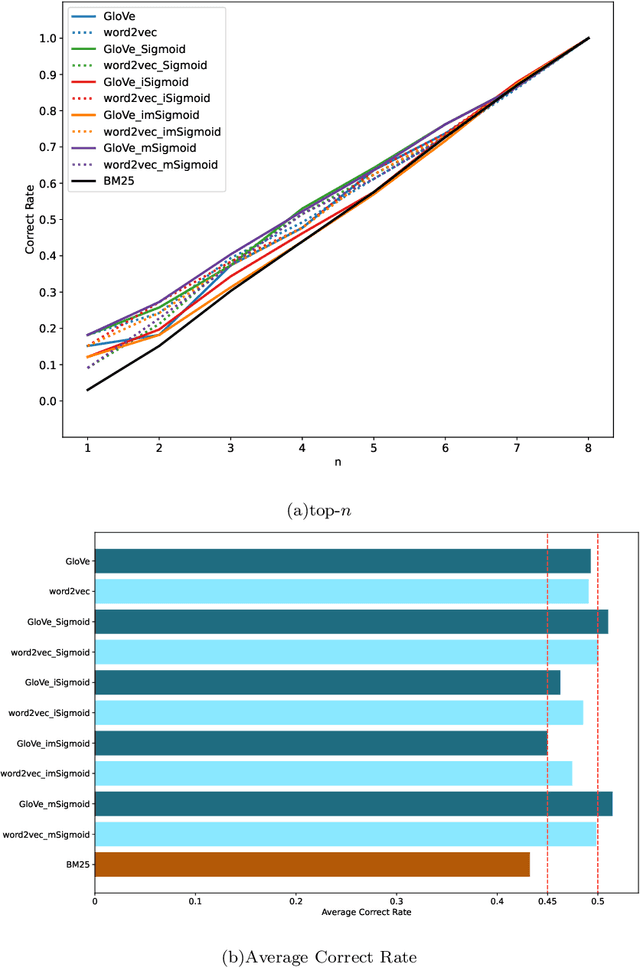
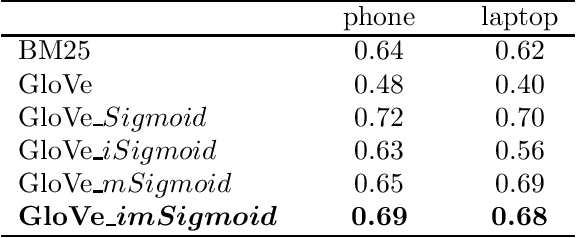
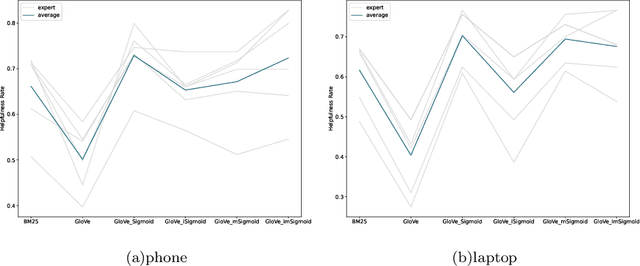
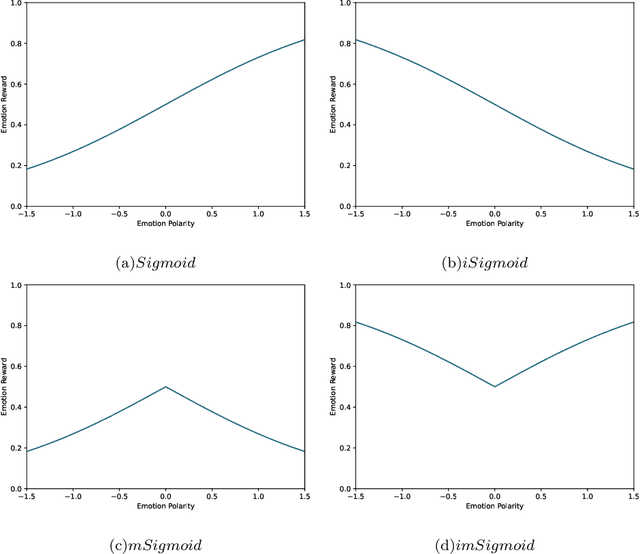
Negative reviews, the poor ratings in postpurchase evaluation, play an indispensable role in e-commerce, especially in shaping future sales and firm equities. However, extant studies seldom examine their potential value for sellers and producers in enhancing capabilities of providing better services and products. For those who exploited the helpfulness of reviews in the view of e-commerce keepers, the ranking approaches were developed for customers instead. To fill this gap, in terms of combining description texts and emotion polarities, the aim of the ranking method in this study is to provide the most helpful negative reviews under a certain product attribute for online sellers and producers. By applying a more reasonable evaluating procedure, experts with related backgrounds are hired to vote for the ranking approaches. Our ranking method turns out to be more reliable for ranking negative reviews for sellers and producers, demonstrating a better performance than the baselines like BM25 with a result of 8% higher. In this paper, we also enrich the previous understandings of emotions in valuing reviews. Specifically, it is surprisingly found that positive emotions are more helpful rather than negative emotions in ranking negative reviews. The unexpected strengthening from positive emotions in ranking suggests that less polarized reviews on negative experience in fact offer more rational feedbacks and thus more helpfulness to the sellers and producers. The presented ranking method could provide e-commerce practitioners with an efficient and effective way to leverage negative reviews from online consumers.